
All Medical Microbiology articles – Page 16
-
 News
NewsNew research reveals a deadly fungal pathogen’s vulnerabilities
Scientists have disovered how the lethal pathogenic fungus, Cryptococcus neoformans, thrives, allowing them to identify potential novel therapeutic targets for treatment.
-
 News
NewsPeople with COVID-like symptoms took up to nine months post-infection to regain mental well-being
New research finds that people with COVID-like symptoms returned to optimal physical well-being an average of three months after infection, but took up to nine months to return to top mental well-being.
-
 News
NewsPregnant women in frontline of measles outbreaks in Canada
Measles is on the rise in Canada and poses serious risks to pregnant women and their newborns, yet discussion about how to protect this vulnerable group is notably lacking. Physicians working directly with measles outbreaks have summarized key points for clinicians.
-
 News
NewsFecal transplants: Promising treatment or potential health risk?
New research shows that transplanting microbes from only one section of the digestive tract can have long-lasting, unintended consequences.
-
 News
NewsGlobal phage experts converge in Berlin to shape the future of antimicrobial medicine
The 8th World Congress on Targeting Phage Therapy (June 10–11, 2025) returns to Berlin, bringing together over 75 international speakers and contributors from 27 countries.
-
 News
NewsSmart plastics are key to curbing healthcare infection rates, says Symphony Environmental
A leading plastics innovator urges hospitals and care-homes to adopt antimicrobial smart plastic solutions to address infection rates.
-
 News
NewsInsect protein blocks bacterial infection
A protein that gives fleas their bounce has been used to boot out bacteria cells, with lab results demonstrating the material’s potential for preventing medical implant infection.
-
 News
NewsMultiple testing for infectious diseases among migrants key to cutting onward transmission
Routine testing for multiple infectious diseases among migrants will benefit healthcare systems by identifying key infections earlier, a new study finds.
-
 News
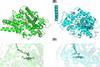
NewsUncovering the shield: gene duplication behind antifungal resistance in Madurella fahalii
Researchers used advanced genetic and biomolecular chemistry tools to uncover why itraconazole treatment fails against Madurella fahalii but not other Madurella species.
-
 News
NewsHow gut microbiota and isoflavones may alleviate geniposide hepatotoxicity
A study has shed light on the relationship between gut microbiota, isoflavones, and geniposide hepatotoxicity. Geniposide, used in many traditional Chinese medicine prescriptions, has shown potential hepatotoxic effects due to its metabolite genipin.
-
 News
NewsTuberculous meningitis: study shows that metabolism drives mortality
A new study suggests that dysregulated β-oxidation may be an important and potentially modifiable contributor to mortality in tuberculous meningitis.
-
 News
NewsMicrobial pioneers: how bacteria shape dental implant health from day one
A new study suggests that the earliest microbes to colonize a dental implant may determine its long-term fate. Using high-resolution genomic sequencing and a 12-week clinical timeline, scientists tracked how microbial ecosystems form around new dental implants.
-
 News
NewsNew blood test shows superior sensitivity in detecting HPV-associated head and neck cancers
A new liquid biopsy blood test could help detect cases of human papillomavirus (HPV)-associated head and neck cancers with significantly higher accuracy than currently used methods, including before patients develop symptoms.
-
 News
NewsWHO validates Mauritania for eliminating trachoma as a public health problem
The World Health Organization (WHO) has validated Mauritania as having eliminated trachoma as a public health problem, making it the seventh country in WHO’s African Region to achieve this significant milestone.
-
 News
NewsStudy probes why patients with mitochondrial disease are more susceptible to infections
A new study shows that damaged mitochondria put the immune system in a constant state of alert, leading to dangerous overreactions when patients with rare mitochondrial diseases encounter bacteria.
-
 News
NewsA turning point in medicine: phage therapy moves from promise to practice
From June 10–11, 2025, the international scientific and medical community will gather in Berlin for Targeting Phage Therapy 2025, the leading global event focused on translating phage research into clinical reality.
-
 News
NewsCombining laboratory techniques yields wealth of information about deadly brain tumors
In a new study, researchers injected into the tumor a virus aimed at killing glioblastoma cells. Surgeons took tumor tissue samples and ran them through multiple advanced laboratory techniques to demonstrate that even small tissue samples can yield additional insights.
-
 News
NewsScientists win award for bringing breakthrough HIV treatment lenacapavir into play
Three people have been awarded the AAAS Mani L. Bhaumik Breakthrough of the Year Award for their work on the first HIV drug to offer long-lasting protection from infection — eliminating the need for people to take a daily pill.
-
 News
NewsLong COVID may cause long-term changes in the heart and lungs and may lead to cardiac and pulmonary diseases
Patients suffering from long COVID may exhibit persistent inflammation in the heart and lungs for up to a year following SARS-CoV-2 infection, potentially placing them at elevated risk for future cardiac and pulmonary conditions.
-
 News
NewsNew CDC nPEP Guidelines should become ‘part of general medical practice’
Health experts say the updated CDC HIV Non-Occupational Post Exposure Prophylaxis (nPEP) Guidelines should be part of general medical practice, as incorporating them will reduce new HIV infections and improve public health.