
All Medical Microbiology articles – Page 20
-
 News
NewsWound peptides can help detect dangerous infections more quickly
After identifying unique peptide patterns and changes in these patterns based on different types of bacteria in wounds, researchers can now assess the severity of the infection, a new study reveals.
-
 News
NewsNew guideline for Helicobacter pylori includes change to primary treatment recommendation
New guidelines on the treatment of Helicobacter pylori (H. pylori) infection warn against prescribing PPI triple therapy, instead advising practitioners to use bismuth quadruple therapy or one of the other suggested treatment options.
-
 News
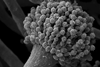
NewsFungus uses surface protein of its spores to weaken human immune system
An international research team discovered a special enzyme on the surface of the spores of Aspergillus fumigatus apparently suppresses the release of pro-inflammatory substances by immune cells, making it easier for the pathogen to spread in the tissue.
-
 News
NewsPublic health experts put out call for collaboration in antiviral therapeutics development coalition
Establishing a global therapeutics development coalition is a vital next step to invigorate the therapeutics pipeline and drive advocacy for increased investment and coordination of end-to-end therapeutics development, say a group of public health experts.
-
 News
NewsResearchers discover key gene regulating virulence of fungus that causes severe lung infections
Scientists have found a potential target for novel therapeutic strategies to combat fungal infections caused by Aspergillus fumigatus and are now looking for a molecule that inactivates the protein expressed by the gene as a basis for a drug.
-
 News
NewsNew study provides insight to why Covid vaccines hit some harder than others
Scientists have highlighted factors that may explain why some people perceived more side effects from the SARS-CoV2 vaccine than others, including stress, exercise, and use of hormonal birth control.
-
 News
NewsInfections following hip replacement associated with an increased risk of death, study finds
Patients who develop a periprosthetic joint infection (PJI) after a total hip replacement have more than a five-fold increased risk of mortality within 10 years, according to new research.
-
 News
NewsSevere COVID-19 can involve either exacerbated lung inflammation or high viral replication
Researchers report a study based on autopsies of 47 patients who died after being infected by the ancestral strain of SARS-CoV-2. The findings will support clinical decisions on the treatment of critical cases.
-
 News
NewsScientists seek more effective treatment for under-the-radar STI
Researchers at Tulane University are leading a groundbreaking study to seek a more effective treatment for trichomoniasis, an infection that, despite being the most common curable sexually transmitted infection (STI) worldwide, continues to fly under the radar.
-
 News
NewsWaging war on ‘superbugs’ in aged care
A new study explores the link between the widespread use of antibiotics in residential aged care and the resulting antibiotic resistant bacteria in the gut that can be passed on to other residents
-
 News
NewsResearchers take inspiration from viruses to improve delivery of nucleic acid-based therapies to cancer cells
A researcher is developing a patent-pending platform technology that mimics the dual-layer structure of viruses to deliver nucleic acid (NA)-based therapies to targeted cancer cells.
-
 News
News Scientists discover superbug’s rapid path to antibiotic resistance
Researchers have discovered how a hospital superbug Clostridioides difficile (C.diff) can rapidly evolve resistance to vancomycin. In less than two months the bacteria could develop resistance to 32 times the initial antibiotic concentration.
-
 News
NewsInnovations in cancer treatment through targeted bacterial vaccines
Scientists outline efforts to create an antibacterial vaccine capable of eliciting robust immune responses to selectively eradicate Fusobacterium nucleatum while preserving other microbiota.
-
 News
NewsA human-centered AI tool to improve sepsis management
A proposed artificial intelligence tool to support clinician decision-making about hospital patients at risk for sepsis has an unusual feature: accounting for its lack of certainty and suggesting what data it needs to improve its predictive performance.
-
 News
NewsNew technology ‘lights up’ bacteria in wounds for better infection prevention
Autofluorescence (AF) imaging uses violet light to illuminate molecules in the cell walls of any bacteria. Different types of bacteria turn different colors, allowing physicians to immediately determine how much and which types of bacteria are in the wound.
-
 News
NewsPeople who recover from dengue are at higher risk of long-term health complications than those who recovered from COVID-19
People who caught dengue and recovered are more likely to face long-term health complications about a year later compared to those who contracted COVID-19, according to the findings of a Singapore-wide study.
-
 News
NewsNIH grant establishes UAB’s Global Research Resource for Human Tuberculosis
A $5.8m grant led by Adrie Steyn, Ph.D., of the University of Alabama at Birmingham and the Africa Health Research Institute, or AHRI, in Durban, South Africa, will provide user-requested infected human lung tissue and analytical services to tuberculosis researchers worldwide.
-
 News
NewsResearchers granted $5m to study antibiotic-resistant wound infections in Ukraine
A new project funded by the U.S. Department of Defense partners emergency medicine faculty with research clinicians in Ukraine to launch a research platform for studying war-related wound infections and inform future clinical trials.
-
 News
NewsNew microbial fermentation manufacturing facility launched in Billingham
The UK’s life science sector has been bolstered by a £100m investment by FUJIFILM Diosynth Biotechnologies. This takes the form of a new microbial fermentation manufacturing facility in Billingham.
-
 News
NewsScientists to investigate why men and women are hit by the flu differently
Turns out that there is a biological reason why women and men suffer viral infections like influenza differently – and a team of scientists are extending their research to better understand why and how to design better, possible sex-specific treatments.