
All Microbial Biotechnology articles – Page 5
-
 News
NewsFrom palm oil to designer enzymes: researchers reprogram yeast cells
Many everyday products contain fatty acids from palm oil or coconut oil, but the extraction of these raw materials is associated with massive environmental issues. Researchers have now developed a biotechnological approach that could enable a more environmentally friendly production method.
-
 News
NewsCommercially viable biomanufacturing: designer yeast turns sugar into lucrative chemical 3-HP
Using a tiny, acid-tolerant yeast, scientists have demonstrated a cost-effective way to produce industial chemical 3-Hydroxypropanoic acid, making disposable diapers, microplastics, and acrylic paint more sustainable through biomanufacturing.
-
 News
NewsBeyond gene scissors: New CRISPR mechanism discovered
Two studies describe how researchers found a novel CRISPR mechanism, Cas12a2, in a family of nucleases that exclusively cleave DNA. In contrast, Cas12a2 was able to broadly cleave both RNA and DNA.
-
 News
NewsRibosomal engineering creates ‘super-probiotic’ bacteria
Using ribosome engineering (RE), researchers introduced mutations affecting the protein synthesis mechanism of probiotic Lacticaseibacillus rhamnosus GG (LGG). These mutant LGGs exhibit altered surface protein expression, including increased presentation of so-called “moonlighting proteins.”
-
 News
NewsCRISPR discovery could lead to single diagnostic test for COVID, flu, RSV
Researchers report newly discovered details about the Cas12a3 immune system that precisely targets transfer RNA in invading pathogens, without destroying host cells.
-
 News
NewsA practical guide for characterization of novel CRISPR-Cas systems with Pro-CRISPR factors
In this protocol, the authors provide a method encompassing protein purification, biochemical characterization, validation of protein-protein interactions, and preliminary in vivo functional assays in bacteria for Cas nuclease and its associated Pro-CRISPR factor.
-
 News
NewsMutated baker’s yeast at the forefront of petroleum substitute tech
Researchers engineering Saccharomyces cerevisiae to produce 2,3-butanediol (2,3-BDO) introduced mutations into the genomic DNA. The researchers engineered four altered strains and subjected them to ethanol, heat, and low pH stressors.
-
 News
NewsBacteria double as Trojan horse for artificial amino acids
Researchers have hijacked a natural transport system of the bacterium E. coli to develop a solution that allows artificial amino acids to be introduced into bacteria efficiently. This means the “amino acid toolbox” can be expanded for widespread use in medicine and the biotech industry.
-
 News
NewsAlgae show how to make two proteins from one messenger RNA
Scientists have uncovered a hidden feature of protein translation in green algae, offering a new perspective on the basic rules of gene expression.
-
 News
NewsUS- & Argentina startup Michroma wins €250k investment with The Future is Fungi Award 2025
A new frontier in biotechnology just crowned its next pioneer. Out of 187 groundbreaking startups from 59 countries, Michroma wins the The Future is Fungi Award 2025, taking home €250,000 / USD 289 000 in investment.
-
 News
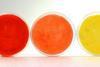
NewsBacteria spin and dye rainbow-colored, sustainable textiles
Researchers demonstrate that bacteria can both create fabric and dye it in every color of the rainbow—all in one pot. The approach offers a sustainable alternative to the chemical-heavy practices used in today’s textile industry.
-
 News
NewsHeatproof microbes reveal molecular secrets of nature’s hottest recycling system
This study reveals how thermophilic bacterial communities withstand temperatures of up to 87°C by remodeling their molecular machinery. Scientists uncovered a heat-defense network centered on heat shock proteins that refold damaged enzymes and preserve protein structure.
-
 News
NewsMicroalgal-bacterial sludge offers sustainable solution for removing hormonal pollutants from wastewater
A team of researchers have revealed how microalgal-bacterial granular sludge (MBGS) can adapt and efficiently degrade estriol, a common endocrine-disrupting compound (EDC), under environmentally relevant conditions.
-
 News
NewsEngineered membraneless organelles boost bioproduction in Corynebacterium glutamicum
Scientists have successfully engineered liquid-liquid phase separation (LLPS)-driven membraneless organelles (MLOs) within the food-grade industrial strain Corynebacterium glutamicum.
-
 News
NewsMicrobes at Red Sea vents show how life and geology shape each other
A new study led by King Abdullah University of Science and Technology (KAUST; Saudi Arabia) Professor Alexandre Rosado has revealed an unusual microbial world in the Hatiba Mons hydrothermal vent fields of the central Red Sea, a site first discovered by one of his co-authors and colleagues, Assistant Professor Froukje ...
-
 News
NewsEngineers solve the sticky-cell problem in bioreactors and other industries
Their system uses electrochemically generated bubbles to detach cells from surfaces, which could accelerate the growth of carbon-absorbing algae and lifesaving cell therapies.
-
 News
NewsIn chromosome of key biotech bacterium, different setups bring different strengths
New research has found that the effectiveness of biotech bacterium Agrobacterium tumefaciens’ virulence varies, depending on how its chromosome is arranged.
-
 News
NewsCompound from Antarctic microorganism can be used to produce food, cosmetics, and medicine
A bioactive compound produced by the microorganism Bacillus licheniformis, found on Deception Island in Antarctica, has properties that qualify it for use in producing food, cosmetics, pharmaceuticals, and biodegradable materials.
-
 News
NewsYeast proteins reveal the secrets of drought resistance
A new study in Cell Systems helps explain how organisms can come back from desiccation (the removal of water or moisture) while others fail by looking at the cell’s proteins. In the first survey of its kind, a team of researchers profiled thousands of proteins at once for their ability to survive dehydration and rehydration.
-
 News
NewsScientists develop rapid and scalable platform for in planta directed evolution
Researchers have developed a new system that enables rapid and scalable directed evolution of diverse genes directly in plant cells. To address the challenge of slow cell division rate in plants, the researchers harnessed geminiviruses.