
All Microbial Biotechnology articles – Page 7
-
 News
NewsMicroalgae and bacteria team up to convert CO2 into useful products
Most methods of genetically modifying the bacterium Escherichia coli and other microbes to convert carbon dioxide into useful biological products require additional carbon sources. A new study overcomes this limitation by combining the photosynthetic finesse of a single-celled algae with the production capabilities of the bacteria E. coli.
-
 Features
Under the microscope: microalgae-based bioremediation
The rapid expansion of the global human population and the increase in industrial and agricultural activities have led to severe environmental contamination. To remedy the situation, green technology has become more prevalent in recent years due to its numerous environmental benefits.
-
 News
NewsAfro-Caribbean Commercial Science Network (ACCSN) named as winner of Dorothy Jones Diversity and Inclusion Achievement Award 2024
The Afro-Caribbean Commercial Science Network (ACCSN), founded by Daniel Similaki, has been named as this year’s winner of the Dorothy Jones Diversity and Inclusion Achievement Award 2024.
-
 News
NewsNew CRISPRs expand upon the original’s abilities
By scouring through a massive bacterial metagenomic databases, researchers have discovered new CRISPR-Cas systems as efficient as the conventional one. One of the candidate system has found with the technological potential to expand its impact in research, biotechnology and medicine.
-
 News
NewsScottish biotech company Lentitek secures £1m funding to advance next generation cancer treatments
Biotech company Lentitek Ltd has secured £700,000 in private funding from Equity Gap, bringing its total investment to £1 million in the last six months. It develops manufacturing technologies for lentiviral vectors, used with CAR-T cell and gene therapies.
-
 News
NewsResearchers reveal key mechanism behind bacterial cancer therapy
A research team has elucidated the mechanism behind bacterial cancer therapy using a genetically engineered bacterial strain.
-
 News
NewsNewly launched Enodia Therapeutics is a biotech company with a new approach for targeted protein degradation
Argobio and the Institut Pasteur have announced the launch of Enodia Therapeutics, a groundbreaking French biotech company dedicated to block and degrade disease-causing proteins for treating cancer, inflammatory diseases and viral infections.
-
 News
NewsScottish bio-tech company secures £3.4m investment
Scottish biotech engineering company uFraction8 has secured £3.4m in new investment following the completion of a funding round led by Foresight Group.
-
 News
NewsBacteria evolved to help neighboring cells after death, new research reveals
A study has shown that a type of E coli bacteria produces an enzyme which breaks the contents of their cells down into nutrients after death. The dead bacteria are therefore offering a banquet of nutrients to the cells that were their neighbours when they were living.
-
 News
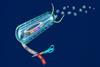
NewsScientists recode the genome for programmable synthetic proteins
Synthetic biologists were able to re-write the genetic code of an organism — a novel genomically recoded organism (GRO) with one stop codon — using a cellular platform that they developed enabling the production of new classes of synthetic proteins.
-
 News
NewsFirst success in overcoming gene therapy challenges deploys nanomachines loaded with wine ingredients
Scientists have demonstrated the ability to overcome significant challenges in gene therapy using adeno-associated virus vectors (AAV) by employing a novel smart nanomachine equipped with AAV.
-
 Features
From Earth to space - exploring fungi in extraterrestrial environments
Fungi are incredible organisms in terms of plasticity, resilience, and adaptation. However, they have the potential to both help and hinder us.
-
 Careers
The true cost of science
Discover valuable insights from three companies in the microbiology field, and their experience of balancing innovation, investment, and sustainability to drive their success.
-
 News
NewsCARB-X funds Melio to develop rapid diagnostic to detect neonatal sepsis
CARB-X will award biotechnology company Melio US$3.5M to develop and execute a technical feasibility workplan for its culture-free platform designed to identify blood stream infections including neonatal sepsis.
-
 Careers
Letters in Applied Microbiology: Racheal reflects on a year in the junior editor programme
One year into our first junior editor training programme with Letters in Applied Microbiology, Racheal Oluwayemisi Fashogbon reveals how signing up has helped to transform her career.
-
 Careers
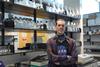
Towards space plastics - and solving a few Earth problems en route
Dr Nils Averesch, Assistant Professor of Space Biology at the Space Life Science Laboratory, Cape Canaveral, reveals how his research on microbial plastic production could pave the way for thriving human settlements in space.
-
 Careers
The Space Microbiology Group
The Space Microbiology Group studies how microorganisms behave in space conditions, using tools such as microbiology, molecular biology, system biology and geomicrobiology to learn how new biotechnologies could be applied to space.
-
 Features
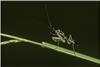
Nature’s pesticides: unleashing the potential of microbial interactions
Discover how scientists leverage knowledge of the microbial interactions that impact plant and animal health.
-
 News
NewsApplication of heavy-ion irradiation mutagenesis to improve the production efficiency of the antifungal drug micafungin
Scientists have used heavy-ion irradiation to improve efforts to produce the semisynthetic echinocandin antifungal agent micafungin which derives from fungal natural product FR901379 produced by Coleophoma empetri.
-
 News
NewsScientists offer user manual for yeast’s genetic switches
Scientists have found three gene regulation design principles that provide a flexible guideline for the effective control of microbiological production using yeast.