
All Middle East & Africa articles – Page 8
-
 Features
Enhancing Nigerian fermented foods for nutrition, health and sustainability
Fermented foods are integral to Nigerian cuisine and culture, providing sustenance, health benefits, and cultural heritage. These foods owe their unique flavours, textures, and health benefits to fermentation, a process driven by a diverse community of microorganisms, including bacteria, yeasts, and moulds.
-
 News
NewsCholera vaccination campaign launched in Darfur to protect over 1.8 million people
A cholera vaccination campaign kicked off on 21 September 2025 in South Darfur, marking the start of a campaign that aims to reach 1.86 million people aged one year and older with oral vaccines in response to the ongoing outbreak.
-
 News
NewsGulf of Aqaba corals survive record-breaking heatwaves, offering hope amid global coral crisis
A new study reveals that corals in the Gulf of Aqaba have withstood four consecutive and intensifying marine heatwaves, including the world’s most extreme 2024 event, without suffering mass bleaching — a resilience unmatched elsewhere.
-
 News
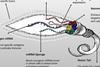
NewsTargeted delivery of microRNA sponge short-hairpin RNA via VIR-inspired biotechnical vector
The Vir-inspired Biotechnical Vector (VIBV) is a novel hybrid platform that combines viral and non-viral elements with nanotechnology to enable personalized, tumor-specific gene therapy.
-
 News
NewsScientists can decode wildlife movement to predict the next pandemic
By equipping wildlife with biologging devices that track movement and behavior in near-real-time, researchers can detect early signs of illness, monitor disease spread, and inform public health interventions before outbreaks reach crisis levels.
-
 News
NewsCoral-inspired pill offers a new window into the hidden world of the gut
Marine corals have evolved intricate, porous structures that shelter diverse microbial communities. Researchers have borrowed this biological blueprint to create an ingestible pill that can sample bacteria from one of the most inaccessible regions of the human body: the small intestine.
-
 News
NewsDesert soils emit greenhouse gases in minutes — even without live microbes
A groundbreaking study reveals that desert soils can emit powerful greenhouse gases within minutes of being wetted—even in the absence of microbial life. It challenges long-standing assumptions that soil microbes are solely responsible for post-rain “pulse emissions” of gases like carbon dioxide (CO₂), nitrous oxide (N₂O), and nitric oxide (NO).
-
 News
NewsUnder The Lens: Raquel Peixoto reveals how tourists armed with probiotics could save world’s coral reefs
A fascinating conversation between Applied Microbiology International President Professor Jack Gilbert and Professor Raquel Peixoto examines how understanding and leveraging coral microbiomes is leading to innovative probiotic solutions to boost coral resilience.
-
 News
NewsBacteria survive dust storms and introduce new genetic traits into our air
Bacterial communities carried from Africa to Israel survive their airborne journey, arriving with genes that may affect human health and the environment, a new study reveals.
-
 News
NewsNext-generation ‘molecular scissors’ may offer hope for chronic hepatitis B sufferers
Researchers have developed engineered precision ’molecular scissors’ that can permanently disable the genetic blueprint of the hepatitis B virus (HBV). The approach directly targets covalently closed circular DNA (cccDNA), the stubborn viral reservoir.
-
 News
NewsNew African swine fever vaccine candidate shows promise against some virus strains
An international team of scientists has found that a promising African swine fever (ASF) vaccine can protect pigs against some strains of the virus but offers little or no protection against others.
-
 News
NewsEpstein-Barr virus protein EBNA1 upregulates oncogenes in cervical cancer cells
New findings suggest that increased expression levels of Derlin1 and PSMD10 genes in HeLa cells by the EBV-EBNA1 might induce cancer cell survival and accelerates the development of cervical cancer (CC).
-
 News
NewsTiny creatures, big insights: The microbial signature of the sea uncovered by copepods
A new study has revealed that tiny planktonic crustaceans carry a unique microbial signature that better reflects ocean currents and environmental gradients than microbes found freely in seawater.
-
 News
NewsBee and frog proteins: nature’s double defense against farm superbugs
A new study reveals that combining natural antimicrobial peptides can significantly slow the development of antimicrobial resistance in bacteria. Using two peptides together prevents harmful bacteria from mutating as quickly, offering a promising alternative to traditional antibiotics.
-
 News
NewsKenya achieves elimination of human African trypanosomiasis as a public health problem
The World Health Organization (WHO) has validated Kenya as having eliminated human African trypanosomiasis (HAT) or sleeping sickness as a public health problem, making it the tenth country to reach this important milestone.
-
 News
NewsThe microbiome of the indri, a critically endangered lemur, has been described
An international study has ascertained the composition of the intestinal microbiome of the indri, a critically endangered lemur in Madagascar. It has found up to 47 unknown species of bacteria, and revealed the indri’s microbiome is transmitted within their social group.
-
 News
NewsM42 announces breakthrough results for its AI-powered tuberculosis screening
A new study is among the largest real-world clinical validations of an AI-driven healthcare solution to date, analyzing over one million chest X-rays (CXRs) to evaluate the efficacy and scalability of AI in TB screening.
-
 News
NewsNew drug combo outperforms Tamiflu in fighting flu (and chocolate is the key)
Scientists have unveiled a new drug pairing - including a compound found in chocolate - that outperforms Tamiflu, the most widely used anti-influenza medication, against even the deadliest flu strains, including avian and swine flu.
-
 News
NewsExperiment on joint NASA and SpaceX mission will study the effect of space travel on disease-causing bacteria
ARC/Sheba Medical Center is launching an Israeli experiment on the International Space Station to investigate how microgravity and space conditions influence bacterial virulence and antibiotic resistance.
-
 News
NewsReviving 80-year-old fungi offers new clues for sustainable agriculture
Researchers who revived 80-year-old fungal pathogens from a museum collection found that these pre-Green Revolution strains differ significantly from modern ones, revealing how decades of pesticide use and intensive farming have reshaped plant pathogens.