
All Middle East & Africa articles – Page 3
-
 News
NewsSoil scientist awarded $1.6 million NSF grant to study ‘living skin’ of arid ecosystems
A soil scientist has received a $1.6 million, five-year grant from the U.S. National Science Foundation (NSF) to fund her team’s study of how increasing temperature fluctuations impact the biocrust microbiome — the complex, thin-layer microbe community that stabilizes soil, fixes nitrogen and drives nutrient cycling in drylands.
-
 News
NewsScientists turn microalgae waste into high-performance membranes for cleaner municipal wastewater
A new study reports a sustainable membrane technology that converts microalgae-derived biochar into an advanced material for municipal wastewater treatment, offering a promising route to cleaner water and waste valorization.
-
 News
NewsGlobal Virus Network experts urge rapid regional action as Bundibugyo Ebola outbreak raises cross-border concerns
The Global Virus Network (GVN) calls for greater global financial, logistical and research support for the local response to the rare Bundibugjo Ebola virus outbreak in Africa. The spread of this virus, largely undetected, was declared a global public health emergency by the World Health Organization.
-
 News
NewsWhy babies are dying and how we can stop it
A study has identified that the vast majority of neonatal deaths caused by infections in South Africa and other low-and-middle-income countries could be prevented through improved clinical care and targeted medical interventions.
-
 News
NewsFungus-powered farming: Bigger harvests, better taste
Researchers have identified a natural, eco-friendly way to significantly increase agricultural yields while also improving the quality and taste of produce. The study focuses on an extract derived from the yeast-like fungus Pseudozyma aphidis.
-
 News
NewsIntestinal stem cells can fight back against salmonella scientists discover
Researchers have shown that intestinal stem cells can directly sense intracellular Salmonella enterica bacteria and activate an inflammasome-dependent response. Following infection, the stem cells differentiate into antimicrobial Paneth cells, which secrete molecules that help limit bacterial persistence in the intestinal crypt.
-
 News
NewsGut microbes actively support immunity in people living with HIV
A new study shows that gut microbes help bolster immunity in people living with HIV – and that, one day, these microbes may be harnessed to protect this population from infections driven by immune deficiency.
-
 News
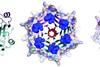
NewsResearchers uncover three families of ‘sponge’ proteins deployed by phages
Using an innovative research approach that combines artificial intelligence with experimental biology, researchers have uncovered new families of sponge proteins in phage genomes that disrupt immune communication in bacteria.
-
 News
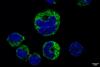
NewsMalaria’s mRNA: Messages that mess with the immune system
A new study uncovers the malaria parasite’s RNA strategies – mechanisms that could inspire unexpected applications for RNA-based tools in multiple areas of medicine.
-
 News
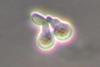
NewsMass mating event reveals how yeast find the perfect match
When choosing mates, yeast organisms tend to pick partners that may increase the chances of their offspring’s success, according to a new study which revealed a link between the success of the parents and the genetic distance between them, and the success of their offspring.
-
 News
NewsStudy confirms effectiveness of medicinal plant against SARS-CoV-2 virus
A study has revealed that galloylquinic acids extracted from the leaves of Copaifera lucens Dwyer, a tree endemic to Brazil primarily found in the Atlantic Forest, have a multi-targeted effect against SARS-CoV-2, the virus that causes COVID-19.
-
 News
News“Tell me who your friends are, and I’ll tell you who you are”
New research reveals that when microbes live together, they can sense one another and actively reduce competition by shifting toward different roles instead of all doing the same thing. It shows that microbes do not just respond to their environment, they respond to each other.
-
 News
NewsResearch gaps and regional disparities revealed in global Lassa virus research landscape
A comprehensive bibliometric analysis spanning 55 years of Lassa virus (LASV) research has uncovered significant disparities in scientific output between high-income and endemic countries, while revealing a persistent shortage of studies addressing environmental factors influencing viral spread.
-
 News
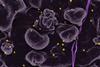
NewsTick threats in the context of climate change: One Health response strategies in the Middle East and North Africa region
A new study examines the multifaceted dimensions of tick-borne disease management in the MENA region through the lens of the One Health approach. The research synthesizes insights from a symposium that brought together experts to assess current threats and identify pathways forward.
-
 News
NewsSeparating signal from noise: How African biostatisticians are reshaping the fight against malaria
Biostatistics is unlocking smarter malaria solutions, linking parasite diversity, vaccines, and human behaviour to drive more effective prevention and protection.
-
 News
NewsGene-sharing myth challenged as bacteria shown to police DNA exchange
A new study reveals that bacteria can actively limit the spread of antibiotic resistance genes, using a newly characterized mechanism that blocks DNA transfer between cells. It focuses on how bacteria exchange genetic material through tiny intercellular bridges known as nanotubes.
-
 News
NewsComputational approach takes the guesswork out of drug development for Chagas disease
Researchers have established a computational protocol that could accelerate the development of more effective treatments for life-threatening parasitic infections such as Chagas disease, by enabling scientists to accurately identify reactions that can result in successful drug candidates without the need for trial and error.
-
 News
NewsYellow food coloring changes gut microbiome in early life
Researchers found that the gut microbiotaof young rats changed with exposure to acceptable daily intake levels of the food coloring tartrazine. The males showed increases in bacteria linked to low-grade inflammation and they also did not gain as much weight as was expected.
-
 News
NewsScientists find a new way coronaviruses can get into human cells
An international team of researchers has identified an East African bat coronavirus capable of entering human cells. Whilst the virus can bind to a cell receptor found in the human lung, preliminary testing in Kenya suggests it has not spilled over into the local human population.
-
 News
NewsNasal spray could transform treatment of deadly cerebral malaria
Master’s student Taznita Kista is exploring whether a nano-enabled nasal spray could change how cerebral malaria is treated. Her work focuses on a nose-to-brain drug delivery system using niosomes.