
Researchers have uncovered how a disease-causing bacterium uses a single protein to interfere with the body’s defenses in more than one way, offering a clearer picture of how infections take hold at the cellular level.
The study was led by Dr. Yaakov Socol together with Profs. Sigal Ben-Yehuda, Yael Litvak, and Ilan Rosenshine from the Hebrew University of Jerusalem, in collaboration with Prof. J. Sivaraman from the National University of Singapore.
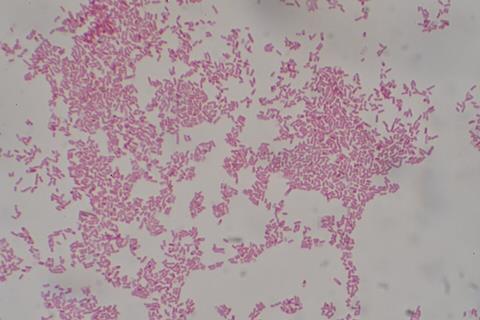
Published in Advanced Science, the research centers on enteropathogenic E. coli (EPEC), a bacterium responsible for intestinal infections. Like many harmful bacteria, EPEC uses a specialized “injection system” to deliver proteins directly into human cells. These proteins then manipulate the cell’s internal machinery to favor the invading microbe.
One of these proteins, called NleD, was already known to weaken the immune response by cutting key signaling molecules inside the cell. These molecules normally act like messengers, helping cells detect infection and mount a response. By disabling them, NleD effectively dampens the alarm system.
The new research shows that NleD goes further.
Second attack
In addition to cutting these signaling proteins, NleD also interferes with another component of the same system—a cellular regulator responsible for fine-tuning immune signals. Rather than destroying this regulator, NleD binds to it and blocks its activity, preventing it from interacting with its normal targets.
This means the protein works on two levels at once: it disrupts the initial immune signal and also prevents the cell from restoring balance afterward.
Together, these actions give the bacteria a significant advantage, allowing it to better adapt to its environment inside the host. The findings highlight how a single bacterial factor can carry out multiple roles, making it more effective than previously assumed.
Double strategy
Understanding this kind of “double strategy” is important because it reveals just how precisely bacteria can manipulate human cells. Instead of relying on brute force, pathogens often interfere with the body’s own regulatory systems, subtly reshaping them to their advantage.
This has practical implications. As antibiotic resistance continues to rise, there is growing interest in alternative approaches to treating infections. One promising direction is to target the specific interactions between bacterial proteins and human cells, rather than the bacteria themselves. Discoveries like this one help identify exactly where those vulnerabilities lie.
READ MORE: Spinning into resistance: the flagella’s hidden role
READ MORE: A hidden control center: How bacteria regulate their attack strategies
More broadly, the study adds to a deeper understanding of how immune signaling works under normal conditions. By seeing how it is disrupted during infection, researchers can better map the pathways that keep cells functioning properly—and what happens when those pathways are thrown off balance.






No comments yet