
In the fight against persistent malaria infections in the world’s most vulnerable populations, intelligent data that separates signal from noise is needed. Malaria remains a major global public health problem and one of the leading causes of illness and death worldwide. The greatest burden is borne by Sub-Saharan Africa, particularly among children and pregnant women.
“The data on malaria is vast, complex, often challenging to interpret and disjointed, but biostatistics turns that complexity into clarity,” said Evalyne Nyambura, a PhD fellow supported by the Sub-Saharan Africa Consortium for Advanced Biostatistics (SSACAB), based at the Wits School of Public Health. Nyambura also works at the KEMRI-Wellcome Trust Research Programme in Kenya.
Over the past few decades, interventions such as insecticide‑treated bed nets, improved diagnostics, and antimalarial drugs have saved millions of lives. Yet transmission persists, especially in high‑burden settings where people experience repeated infections.
Vaccine milestone
Malaria vaccines have marked a historic milestone. The World Health Organization (WHO) has recommended two pre‑erythrocytic vaccines for use in children. Both vaccines have demonstrated a favourable safety profile and have significantly reduced clinical malaria cases and severe disease.
However, their overall efficacy remains moderate. These vaccines are based on a single reference parasite variant, despite the extensive genetic diversity of Plasmodium falciparum circulating in endemic settings.
This mismatch between vaccine design and real‑world parasite diversity may limit the breadth of protection. To turn the tide and reignite progress towards malaria elimination, there is an urgent need to enhance existing vaccines or design better ones.
Broad immunity
In an innovative approach, she links parasite genetic diversity to immune responses and real-world infection patterns to identify variants that can trigger broad, protective immunity.
Her work uses advanced biostatistical methods to map parasite diversity, model how the body responds to multiple variants at once, and track infection risk over time, helping to pinpoint which variants are most likely to protect against disease.
Nyambura is using data from the malaria-endemic region of Kenya, analysing genetic data from parasite samples collected over several years to map how different variants circulate.
If successful, these findings will inform the design of next-generation vaccines. “The goal is to move beyond vaccines that target specific parasite variants, towards those that offer broader protection against heterologous parasite variants,” says Nyambura.
Human behaviour
Meanwhile, Edson Mwebesa, a SSACAB fellow working in Uganda, is tackling malaria prevention from another angle: human behaviour.
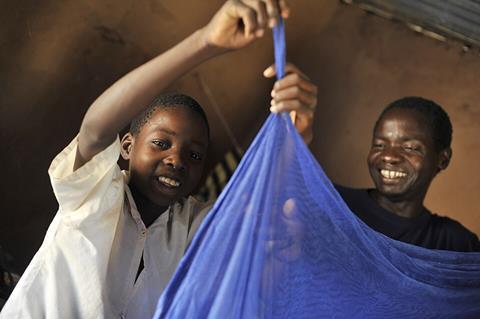
“I wanted to find out whether the existing interventions, such as malaria messaging in influencing prevention behaviours, specifically, the use of insecticide-treated bed nets, and whether the use of nets is optimal in the sub-Saharan African context. We see, however, that in many high-burden settings, consistent use remains below global targets, leaving vulnerable groups at risk,” says Mwebesa.
Using large-scale national data from Uganda, he applies advanced statistical methods to measure the effectiveness of these interventions to prevention behaviour in real-world settings. His research shows that information plays a powerful role. When people are exposed to malaria prevention messages, whether through radio, community health workers, or local events, they are significantly more likely to sleep under mosquito nets.
Source of information
By applying methods that mimic randomised trials to observational data, his work isolates what truly drives behaviour change.
“Another thing became clearer: the source of malaria information matters. When women receive information from trusted, community-based sources (like health workers and at local events), they are far more likely to use mosquito bed nets. This information fared better than mass media.”
Mwebesa adds that this profoundly shifts how malaria programmes should approach interventions. It is not only about distributing nets, but about ensuring people understand why and how to use them, and hearing that message from sources they trust.
Strategies for use
Using information from advanced biostatistics, it is becoming clear that investments in vaccines must be matched by investments in how they are designed for diverse populations. The distribution of prevention messages and equipment must be matched by strategies to ensure their use.
Together with Nyambura’s work on vaccines, SSACAB’s work highlights the full spectrum of malaria research: from the molecular level of parasite diversity to the everyday decisions made in households.
Professor Tobias Chirwa, SSACAB’s Principal Investigator and the Head of the Wits School of Public Health, says biostatistics is becoming indispensable to the future of public health in Africa.
“We have the data, but we need to use it well. Biostatistics, of which we are building continental capacity, allows us to identify what works, for whom, and in which settings, so that interventions are effective. Malaria continues to be endemic, and we can help solve a huge piece of the puzzle.”
Topics
- Edson Mwebesa
- Emerging Threats & Epidemiology
- Evalyne Nyambura
- human behaviour
- Immunology
- Infection Prevention & Control
- Infectious Disease
- KEMRI-Wellcome Trust Research Programme
- malaria
- malaria messaging
- Middle East & Africa
- mosquito nets
- One Health
- Parasites
- Plasmodium falciparum
- Public Health
- Research News
- Sub-Saharan Africa Consortium for Advanced Biostatistics
- Tobias Chirwa
- Vaccinology
- Wits School of Public Health



.jpg)
No comments yet