
More Asia & Oceania News – Page 8
-
 News
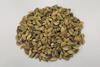
NewsCould cardamom seeds be a potential source of antiviral treatment?
Researchers have found that cardamom seed extract, as well as its main bioactive ingredient, 1,8-cineole, can have potent antiviral effects through its ability to enhance the production of antiviral molecules known as type I interferons via nucleic acid ‘sensors’ inside cells.
-
 News
NewsSafer, more effective vaccines with new mRNA vaccine technology
A new messenger ribonucleic acid (mRNA) vaccine technology could make future vaccines safer, more effective, and less burdensome for patients. The new approach uses albumin-recruiting lipid nanoparticles to deliver mRNA precisely to lymph nodes while bypassing the liver.
-
 News
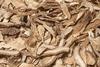
NewsTraditional Chinese medicine combined with peginterferon α-2b in chronic hepatitis B
A new study demonstrates that adjunctive Traditional Chinese Medicine significantly enhances the antiviral efficacy of peginterferon α-2b in HBeAg-positive chronic hepatitis B while concurrently mitigating treatment-limiting myelosuppression.
-
 News
NewsScientists unbolt gateway to sharper CRISPR gene editing
Identifying the passwords for a certain CRISPR tool is a major stumbling block in discovering and characterising the CRISPR tool - but a team of scientists has cracked the code.
-
 News
NewsValorization of soybean-processing wastewater sludge via black soldier fly larvae: performance and bacterial community dynamics
A new study indicates that the valorization of soybean-processing-sourced sludge via black soldier fly larvae was achieved via functionally important BSFL intestinal microbiota, providing an efficient recycling approach for similar waste streams.
-
 News
NewsComparison of E. coli inactivation by UV222-ADPs and UV254-ADPs in water
A new study investigates advanced disinfection processes (ADPs) that use 222 and 254 nm far-ultraviolet radiation in conjunction with hydrogen peroxide (H2O2), sodium percarbonate (SPC), and persulfate (PDS) to inactivate E. coli in water.
-
 News
NewsScientists research potential anti-ulcer vaccine targeting Helicobacter pylori
Scientists are on the way to finding a vaccine to fight off the Helicobacter pylori bacterium, possibly preventing stomach ulcers and lowering the risk for stomach cancer. They used immunoinformatics to scan its genetic makeup and predict which parts can trigger a strong immune response.
-
 News
NewsRoot chemistry determines how antibiotic resistance spreads from manure to crops
Researchers found that the rhizosphere, the narrow soil zone surrounding plant roots, is a major hotspot for the accumulation of manure-derived ARGs. Across eight common crops, ARG abundance in rhizosphere soil was on average 1.24 times higher than in bulk soil.
-
 News
NewsScientists reveal role of paeoniflorin in mediating microbiota-gut-brain axis
Paeoniflorin treatment significantly reduced depression-like behaviours in stressed rats, while gut microbiota analysis revealed that the treatment corrected imbalances in key metabolites associated with brain function, a study shows.
-
 News
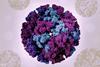
NewsCHIKVdb: A comprehensive genomic resource for chikungunya virus surveillance and outbreak response
Scientists have developed the Chikungunya Virus Database (CHIKVdb), a comprehensive genomic resource. CHIKVdb integrates 8,193 nucleotide sequences and 10,637 protein sequences from five major host categories across 99 countries, spanning 40 years.
-
 News
NewsTracking infectious disease spread via commuting pattern data
Researchers have introduced a Commuter Metapopulation Model (CMPM) to simulate the spread of COVID-19 with actual commuting data provided by the country’s second-largest telecommunication network, revealing it could better capture spatial variety in outbreak patterns.
-
 News
NewsWhen faucets rest: hidden microbial risks emerge in hours
Stagnant water in building plumbing systems is a well-known driver of microbial growth and contamination, including L. pneumophila. A new study highlights a short “microbial safety window” of 2–4 hours, after which risks increase significantly.
-
 News
NewsData-guided bioelectrodes pave way for greener remediation
There is an urgent need to develop data-driven strategies that can accelerate and scale up microbial dechlorination for contaminated environments. Researchers report a new machine learning framework that integrates experimental features with microbial biofilm data to optimize bioelectrodechlorination.
-
 News
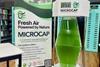
NewsScientist invents MICROCAP, an algae-based oxygen generator that removes CO₂ and purifies indoor air
A lecturer in Thailand has invented the MICROCAP air purifier, which uses photosynthetic algae to absorb carbon dioxide and produce 20 times more oxygen than trees.
-
 News
NewsRevolutionizing bioplastics: a microbial platform for fully bio-based long-chain polyesters
Researchers have developed a scalable, end-to-end microbial process transforming plant oils into sustainable polyesters comparable to petroleum-based plastics.
-
 News
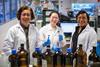
NewsScientists develop safer and more sustainable antimicrobials to prevent infection of cow udders
A new study has unveiled an alternative class of potent antimicrobial compounds that could be used in the agriculture industry to combat multi-drug-resistant bacteria that cause bovine mastitis.
-
 News
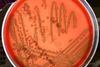
NewsExpanding the genetic toolkit: nitrogen-response promoters developed for Bacillus licheniformis
Promoters are crucial expression elements in synthetic biology, and Bacillus licheniformis serves as an excellent chassis cell for industrial production, but is restricted by a lack of nitrogen source-responsive promoters.
-
 News
NewsEarth’s oxygen boom: a fresh perspective for a billion-year-old problem
A new study examines nickel and urea in early microbial habitats, showing how ancient cyanobacteria adapted to their chemical surroundings. By recreating Archean conditions in the lab, researchers uncovered clues about the delicate balances that shaped early cyanobacterial life.
-
 News
NewsHow microbial strain variations influence neurobehavior
Microbial single nucleotide variations influence host cognitive behavior by regulating metabolism, a new study of merino sheep reveals.
-
 News
NewsFrom glucose to gourmet: engineered bacteria churn out key food additive
Researchers used E. coli as the chassis to produce inosinic acid (IMP), a popular umami enhancer. By reprogramming the metabolic flux network of E. coli and introducing amino acid mutations in the key enzymes in the synthesis pathway, the yield was significantly increased.