
More Healthy Land – Page 65
-
 News
News‘Lawnmower-like’ viruses change up after dry soils are watered
Viruses in soil may not be as destructive to bacteria as once thought and could instead act like lawnmowers, culling older cells and giving space for new growth.
-
 News
NewsRecombinant hydrophobic protein acts as toxin-free fire retardant on textiles
Researchers have discovered that recombinant hydrophobic protein can act as a fire retardant when applied to textiles, eliminating the need for toxic chemicals.
-
 Careers
Toxins, E. coli and soil nematodes - Megan reports on her AMI Summer Placement
Megan Cameron (27) undertook an Applied Microbiology International-sponsored Summer Placement examining the effects of feeding different strains of E. coli to the free living wild type nematode, Caenorhabditis elegans.
-
 News
NewsPGPR strain from farmland in India boosts crops in chilly conditions
A bacterial strain isolated from agricultural soil in India can help crops to thrive in chilly conditions by promoting seed germination and growth, a new study shows.
-
 News
NewsInfamous ‘eagle killer’ cyanobacterium produces not one, but two toxins
Two years ago, researchers established that a toxin from the cyanobacterium Aetokthonos hydrillicola is the cause of a mysterious disease among bald eagles in the USA - now they have described an elusive second toxin.
-
 News
NewsFungal aroma can be used for behavioural pest control
Scientists exploring how blueberries infected with fungus Colletotrichum fioriniae emit odours which repel spotted-wing drosophila are able to trick the flies into perceiving healthy fruit as infected.
-
 News
NewsMineral nanoparticles can help fungi break down organic pollutants in soils
Mineral nanoparticles could potentially act as nanozyme mimics, assisting fungi in breaking down organic pollutants in soils, a new study has found.
-
 News
NewsResearchers reveal how microbes return after a wildfire
A study suggests that dispersal - through air or rain, for example - plays a major role in microbial succession after a destructive fire.
-
 News
NewsNanoparticles made from plant viruses could be farmers’ new ally
Engineers have developed nanoparticles, fashioned from plant viruses, that can deliver pesticide molecules to soil depths that were previously unreachable.
-
 News
NewsClimate warming could impact forest resilience by disrupting fungal networks
Researchers find that warming trends will likely result in major disturbances of networks of fungi, potentially harming forest resilience.
-
 News
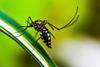
NewsDiscovery in mosquitoes could lead to new strategy against dengue fever
Researchers have discovered that a protein in the mosquito Aedes aegypti , Argonaute 2, has a key role - via several biological mechanisms - in keeping mosquitoes healthy and active despite the presence of viral infections like dengue and Zika.
-
 News
NewsLumen Bioscience wins historic $1.5 million Wilkes Center Climate Prize
The Seattle-based biotech company has developed a natural solution to eliminate the microorganisms in the cow gut that produces methane gas, a major cause of global warming.
-
 Careers
Edie uncovers how microbes can shine light on dirt bike vandalism
For her AMI-sponsored Summer Placement, forensic science student Edie Holmes joined a team investigating whether microbial profiling could be used to link dirt bikes to vandalised sites of special scientific interest (SSSIs). Here’s what happened.
-
 News
NewsScientists develop mRNA vaccine against Lyme disease-causing bacteria
An experimental mRNA vaccine provides protection in preclinical animal models against infection from Borrelia burgdorferi, the bacterium that causes Lyme disease, according to new research.
-
 News
NewsScientists developing field test to detect Covid virus in dozens of host species
Purdue University has received $2.7 million in federal funding to develop a field test that can measure and predict the spread of SARS-CoV-2, the virus that causes COVID-19, in a wide range of wildlife and farm animals.
-
 News
NewsResearch on bee virus origins uncovers buzz-worthy breakthrough
A study of deformed wing virus, a key driver in declines among European honey bee populations, show that one of the most common strains, DWV-A, originated in Asia and not Europe, as previously suggested.
-
 News
NewsDeadly frog disease more prevalent in central Florida than expected
As climate change alters temperature and rainfall patterns in North America, researchers say more areas could experience conditions favorable to the disease known as amphibian Perkinsea.
-
 Features
Under the microscope: the rhizosphere
Microorganisms have diverse roles in the rhizosphere, which can include plant nutrition, promoting growth, and inducing and/or preventing disease.
-
 Careers
Early career scientists team up with biotech firm NCIMB to tackle pesticide toxicity
Biotech company NCIMB, one of the industrial beneficiaries, recently hosted three early career scientists as part of the ARISTO programme which aims to develop tools to assess the toxicity of pesticides on soil microorganisms.
-
 News
NewsLife in boiling water similar in far-flung locations
Scientists studied hot springs on different continents and found similarities in how some microbes adapted despite their geographic diversity, yeilding clues to the evolution of life.