
More Healthy Land – Page 68
-
 News
NewsDual wavelengths of light effective against antibiotic-resistant bacterium
Scientists have combined two light wavelengths to deactivate a bacterium that is invulnerable to some of the world’s most widely used antibiotics, giving hope that the regime could be adapted as a potential disinfectant treatment.
-
 News
NewsScientists knit futuristic eco-building designs using fungal networks
Mycocrete, a paste made with fungi, can be combined with a knitted textile framework to create environmentally friendly constructions.
-
 News
NewsDiscovery of new gene unveils sex determination in green algae
Scientists determine how female and male reproductive cells develop in volvocine algae.
-
 News
NewsJust one single molecule can disrupt symbiosis
Researchers have found that the bacterial species Mycetohabitans rhizoxinica lives happily in the hyphae of the fungus Rhizopus microsporus only when the bacteria produce a certain protein.
-
 News
NewsElectrons and microbes are key to bio-based nylon process
Researchers have developed a process that can produce adipic acid, one of two building blocks of nylon, from phenol through electrochemical synthesis and the use of microorganisms.
-
 News
NewsScientists uncover secrets of bacteria threatening Vidalia onion production
Researchers have confirmed which genes in the bacterial pathogen Pantoea ananatis high virulence cluster are essential and which genes contribute partially to a disease that causes rotting symptoms in Vidalia onions.
-
 News
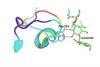
NewsNew enzyme designed using Antarctic bacteria and computer calculations
For the first time, researchers have succeeded in predicting how to change the optimum temperature of an enzyme using large computer calculations and based on a cold-adapted enzyme from an Antarctic bacterium.
-
 News
NewsImmune-boosting therapy helps honey bees resist deadly viruses
Scientists have successfully tested a novel way of boosting honey bees’ immune systems to help them fend off deadly viruses, which have contributed to the major losses of the critical pollinator globally.
-
 Opinion
Microbial hydrogen cycling - the good, the bad and the ugly
With global populations looking likely to top 10 billion by the year 2050, the practices that we use to grow food need to adapt in kind - and what better way is there but to harness the innate power of microbes!
-
 News
NewsVaccine will protect farmed crocodiles from West Nile virus
A University of Queensland developed vaccine will protect farmed saltwater crocodiles from West Nile virus (WNV), providing economic and biodiversity benefits to northern Australia.
-
 News
NewsSquash bugs devour each other’s poo to stock their microbiome
Researchers have found that, to acquire healthy gut bacteria, young squash bugs innately seek out and eat the faeces from older squash bugs.
-
 News
NewsStreptomycetes reveal their arsenal of signalling compounds
Streptomyces bacteria produce a group of signalling molecules that trigger a variety of processes, a new study shows.
-
 News
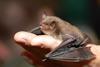
NewsMonitoring bats can help ID coronaviruses with pathogen potential
Researchers who found novel coronaviruses in UK bats say genetic surveys of the viruses should be regularly conducted, even if none of those viruses can infect humans yet.
-
 News
NewsGlobal warming accelerates CO2 emissions from soil microbes
Emissions of CO2 by soil microbes into the Earth’s atmosphere are not only expected to increase but also accelerate on a global scale by the end of this century, a new study suggests.
-
 News
NewsSolving by-product problem paves way for bacterium to produce chemicals
An engineering technique that domesticates Vibrio natriegens to overcome the production of an unwanted by-product could pave the way for the bacterium to become a producer of chemicals, researchers have found.
-
 News
NewsBioleaching bacteria exploit cracks to form biofilms on REE rocks
Bioleaching bacteria home in on and around grooves and crevices in rare earth element-bearing rocks and form biofilms, potentially offering a route to making the process more efficient, a new study shows.
-
 News
NewsFeral cats shed more toxoplasmosis parasites in areas densely populated by humans
A new analysis suggests that wild, stray, and feral cats living in areas with higher human population density tend to shed a greater amount of the parasite that causes the disease toxoplasmosis.
-
 News
NewsUnravelling Coenzyme Q10 pathway could pave way to industrial production
Scientists have unravelled part of the Coenzyme Q10 biosynthetic pathway in Agrobacterium tumefaciens, paving the way to enhancing the bacterium so that it can produce the probiotic on an industrial scale.
-
 News
NewsStudy reveals how higher salinity impacts microbial interactions in activated sludge
An international team of researchers conducted an in-depth analysis of microbial interactions at elevated salinity in activated sludge system.
-
 News
NewsFish farm poo can generate biogas
Digesting fish waste can allow circular fish and vegetable farms (aquaponics) to produce biogas that can be fed back into the energy system of these farms.