
More News – Page 19
-
 News
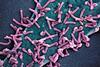
NewsHealth researchers call for support to develop pandemic prevention
The Vanderbilt Center for Antibody Therapeutics has received large-scale government grants and contracts to fund the discovery of human antiviral antibodies. The problem is the next step — finding corporate partners to develop the antibodies through human testing.
-
 News
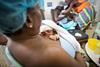
NewsSkin-to-skin care may save newborn lives
Kangaroo mother care, first introduced as an alternative to insufficient incubator care, combines skin-to-skin contact, exclusive breastfeeding, early discharge, and follow-up support. A new review case makes the case for treating iKMC not as an optional add-on, but as a core part of neonatal care for eligible preterm and low-birth-weight infants.
-
 News
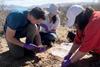
NewsSoil scientist awarded $1.6 million NSF grant to study ‘living skin’ of arid ecosystems
A soil scientist has received a $1.6 million, five-year grant from the U.S. National Science Foundation (NSF) to fund her team’s study of how increasing temperature fluctuations impact the biocrust microbiome — the complex, thin-layer microbe community that stabilizes soil, fixes nitrogen and drives nutrient cycling in drylands.
-
 News
NewsResearchers aim to improve access to high-quality research and biomanufacturing tools in resource-limited settings
Researchers have demonstrated the effectiveness of a suite of low-cost, portable biotechnology tools designed to improve access to laboratory research and diagnostics in resource-limited settings.
-
 News
NewsScientists turn microalgae waste into high-performance membranes for cleaner municipal wastewater
A new study reports a sustainable membrane technology that converts microalgae-derived biochar into an advanced material for municipal wastewater treatment, offering a promising route to cleaner water and waste valorization.
-
 News
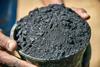
NewsNot all biochar is equal: New perspective calls for clearer claims in carbon removal and soil health
A new perspective warns that biochar’s long-term carbon storage potential and its soil improvement benefits should not be treated as the same thing. Clearer communication is urgently needed as biochar becomes a major player in voluntary carbon markets and climate mitigation strategies.
-
 News
NewsVote now! Record number of candidates vie in AMI Trustee election
It’s time to have your say! Applied Microbiology International (AMI) is calling on all members to vote in the Trustee election after receiving record nominations.
-
 News
NewsRecent study reveals how bacteria capture a rare type of sugar molecule
Researchers have identified a novel transport protein that binds cyclic β-1,2-glucans, revealing unexpected diversity in bacterial sugar uptake mechanisms.
-
 News
NewsNovel therapeutic drug for tuberculosis is proposed using high-precision molecular simulation
Researchers have proposed a novel therapeutic agent for tuberculosis, using high-precision molecular simulation techniques. The proposed drug is anticipated to bind strongly to the drug-metabolizing enzyme cytochrome P450 (CYP).
-
 News
NewsNew antibiotic design could help treat drug-resistant infections
A new study has shown that antibiotics can be chemically redesigned so they are less easily removed by efflux pumps. This allows the antibiotic to remain inside the bacterial cell at higher concentrations, restoring its ability to kill bacteria even when resistance mechanisms are present.
-
 News
NewsExperts convened by WHO advise on candidate treatments and vaccines for Ebola disease caused by Bundibugyo virus
In response to the current outbreak of Ebola disease caused by Bundibugyo virus, WHO convened several of its expert and advisory groups to assess potential vaccines and therapeutics for both prevention and treatment of Bundibugyo virus disease (BVD).
-
 News
NewsResearchers transfer nitrogen-harvesting genes into new bacteria
New research has identified a key cluster of genes that can be moved from rhizobia bacteria that harvest nitrogen into bacteria that don’t — raising the possibility that microbes that dwell in cereal crops could eventually be engineered to atmospherically harvest nitrogen as well.
-
 News
NewsArctic Ocean food chain disrupted as key tipping point passed
An irreversible shift in the chemical make-up of the Arctic Ocean driven by climate change is disrupting the region’s food chain, a study suggests. Widespread loss of Arctic sea ice has led to a sharp fall in levels of a key nutrient, affecting populations of plankton, fish, seabirds and marine mammals.
-
 News
NewsResearchers identify immune ‘energy signature’ linked to tuberculosis protection
Researchers found that circulating monocytes from people with latent TB remain metabolically flexible, allowing them to mount strong antibacterial responses, whereas cells from people with active TB disease show impaired metabolism and weaker responses to infection.
-
 News
NewsPioneering research sheds new light on what shaped extinction pattern of prehistoric marine life – and size clearly mattered
Scientists have shown conclusively for the first time that tiny marine organisms in polar oceans survived the mass extinction event that wiped out prehistoric dinosaurs because they needed less energy and were more tolerant to darkness.
-
 News
NewsBiochar and Bacillus team up to help greenhouse cherry tomatoes grow more fruit
A new study shows that pairing biochar with beneficial Bacillus bacteria can unlock soil phosphorus, improve root growth, and increase cherry tomato yield by 23.53% under greenhouse cultivation.
-
 News
NewsWhy antibiotics fail against a common dental implant disease
A study of peri-implantitis found that bacteria corrode implants, causing them to shed microscopic titanium particles into the surrounding tissue. Those particles hijack the immune cells sent to clear the infection and lock them into a state of inflammation that destroys the jawbone they are supposed to protect.
-
 News
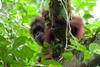
NewsOrangutans breastfeed their young for six and a half years, the longest among mammals
Researchers show that wild orangutan juveniles keep consuming their mother’s milk continuously until at least six and a half years of age. The study also suggests that the more milk a juvenile consumes, the stronger its biological defenses and the higher the presence of probiotic intestinal bacteria.
-
 News
NewsExperimental HIV vaccine achieves a long-sought goal
In a first for the field, all non-human primates given a new series of vaccines generated antibodies capable of fighting multiple strains of HIV. It brings researchers closer to a vaccine effective against the vast diversity of HIV strains circulating worldwide.
-
 News
NewsGenetic engineering of cyanobacteria for the production of sulfated polysaccharide
Researchers have developed a novel strategy to genetically engineer bacteria for the production of sulfated polysaccharides. They demonstrated the successful transfer and functional integration of an entire gene cluster responsible for producing a sulfated polysaccharide known as “synechan.”