
More News – Page 31
-
 News
NewsHow river DNA can track fish, frogs, fungi and human feces — all at once
A single scoop of water from an Irish river revealed evidence not only of Ireland’s only frog species, but also signs of the dreaded B. dendrobatidis fungus, marking the first time this devastating amphibian disease has been spotted in the country and exposing a previously unknown risk to Ireland’s frog population.
-
 News
NewsDNA analyses uncover what is hiding under the cap plaguing the white button mushroom industry
Researchers have uncovered that bacterial blotch is not caused by a single disease-causing bacteria or pathogen as originally learned, but by a complex of pathogenic bacterial species that thrive in the indoor controlled, humid environments where they are grown.
-
 News
NewsStudy uncovers new kind of cold sensor
Investigators studying a bacterial protein have identified a new mechanism of sensing cold temperatures. The finding points to the possibility that this same type of mechanism exists in other organisms, including humans, and may have relevance for disorders involving faulty temperature regulation.
-
 News
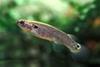
NewsKey magic mushroom ingredient makes fish less aggressive and lazier
Psilocybin, the chemical compound in magic mushrooms, may reduce energetically costly social behaviors like aggressive swimming bursts, shows a study demonstrating the first evidence of a calming effect in fish.
-
 News
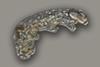
NewsDeath-defying protein found in tardigrades preserves synthetic cells
Researchers have shown how a tardigrade protein protects cell membranes, using the proteins to preserve synthetic cells that were dried out and rehydrated in the lab. The finding could lead to a way to store and transport “microfactories” for producing medicines and other biological products.
-
 News
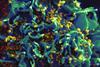
NewsScientists discover how HIV hijacks a cellular ‘gateway’ to infect resting immune cells
New research reveals that when HIV spreads directly between T-cells it triggers a molecular signalling chain that temporarily ‘unlocks’ the nuclear pore complex, allowing the HIV virus and capsid to enter and integrate into the host’s DNA.
-
 News
NewsResearchers flip the CRISPR script to develop world’s first DNA-guided gene editing tool for precise infectious disease diagnosis
A research team has successfully developed the world’s first DNA-guided CRISPR-Cas system capable of programmable RNA targeting and cleavage. This breakthrough overturns the conventional CRISPR paradigm, which uses RNA as a guide to target DNA.
-
 News
NewsEvolutionary processes shape bacterial populations in the human gut
Researchers used the ‘reverse ecology’ analytical approach to demonstrate that many known gut bacterial species consist of several evolutionarily distinct groups that have adapted to different conditions in the gut.
-
 News
NewsReview finds no direct link between aluminium adjuvanted vaccines and serious or long term health conditions
Current evidence does not support direct (causal) associations between aluminium adjuvanted vaccines and serious or long term health outcomes, including autism, diabetes and asthma, finds a review of the latest data.
-
 News
NewsGenetic ‘bonus material’ makes the gut bacterium Segatella copri oxygen-tolerant
Researchers have found that some strains of the gut bacterium Segatella copri possess bonus material that makes them more oxygen tolerant. The presence of the molecular regulator OxyR is crucial for this. The team discovered that strains carrying OxyR are particularly prevalent in industrialized regions of the world.
-
 News
NewsResearchers uncover hidden health risks from urban airborne microbes
Researchers have discovered that seemingly insignificant microbial components in the air, including bacteria, fungi, viruses and cellular debris, pose a long-overlooked health hazard. Bacterial endotoxins can trigger inflammatory responses in the human respiratory system in nearly 20% of cases.
-
 News
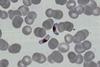
NewsResearchers identify potential new route for antimalarial drug design
Researchers have uncovered a promising new potential target for drug discovery. The team focused on an enzyme called aminopeptidase P (PfAPP) from Plasmodium falciparum, the parasite responsible for the most severe form of malaria in humans.
-
 News
NewsFungi utilize ancient antimicrobial proteins to attack hosts and their microbiomes
An international research team has discovered the surprising evolutionary origin of fungal effector proteins: molecules that pathogens use today to infect their hosts appear to have evolved from ancient antimicrobial proteins.
-
 News
NewsPolymer ‘bristles’ could help repel proteins — and germs — from surfaces in medical settings
A non-toxic coating made of polydimethylsiloxane prevents proteins from sticking to surfaces — potentially offering a new tool in the fight against hospital-acquired infections.
-
 News
NewsModular Clean Air strengthens position as part of Total Clean AIr
Modular Clean Air (MCA) is now wholly owned by Total Clean Air (TCA), marking the next phase in its development following its successful launch as a joint venture in 2025.
-
 News
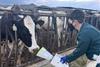
NewsDairy farms in California may transmit H5N1 virus through multiple sources
A new study suggests that avian influenza (H5N1) is transmitted through multiple, previously unknown sources on dairy farms and that some H5N1 positive cows do not show clinical signs of infection.
-
 News
NewsNew research finds that almost all plant-based meat alternatives contain mycotoxins
New research into plant-based food and drinks has found a prevalence of mycotoxins – naturally occurring poisonous compounds produced by fungi - in hundreds of vegetarian and vegan products.
-
 News
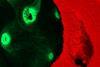
NewsNutrient imbalance may drive coral disease more than heat stress, new study suggests
New research shows that an imbalance of nutrients in seawater can cause coral disease – possibly to a greater extent than that from heat stress of warming oceans. Disruption of the delicate nutrient balance of the sea can destabilise microbial communities that live in harmony with corals.
-
 News
NewsEarly life on Earth relied on a surprisingly scarce metal
A new study shows that 3.4 billion years ago, life on Earth relied on a metal called molybdenum, despite its limited availability at the time. It is the first to trace molybdenum’s use this far back in time.
-
 News
NewsJ. Craig Venter, genomics pioneer and founder of JCVI and Diploid Genomics, Inc., dies at 79
The J. Craig Venter Institute (JCVI) has announced that J. Craig Venter, Ph.D., the Institute’s founder, board chair, and chief executive officer, died in San Diego following a brief hospitalization for unexpected side effects that arose from treatment of recently diagnosed cancer.