
A University of Florida study has made a key discovery in understanding a disease that for over a century has plagued the white button mushroom – a nutrient-dense vegetable that is valued for its versatility and health benefits.
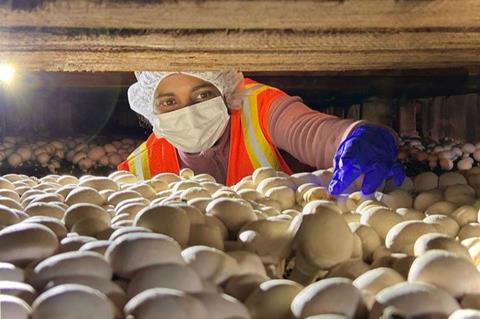
As an economically important specialty crop, it is often highlighted as a practical example of the “food is medicine” concept by showing how the kitchen staple commonly used in appetizers, salads and everyday foods can support healthy diets.
However, bacterial blotch, a persistent disease in the United States that reduces yield, shortens shelf life and lowers marketability of the white button mushroom, continues to challenge growers by causing brown or yellow blemishes that make mushrooms unsellable. In some cases, the symptoms do not appear until the mushrooms have reached grocery stores or consumers’ homes.
New research findings by UF scientists at the Institute of Food and Agricultural Sciences (UF/IFAS) uncovered that bacterial blotch is not caused by a single disease-causing bacteria or pathogen as originally learned, but by a complex of pathogenic bacterial species that thrive in the indoor controlled, humid environments where they are grown.
Inconsistent results
“For years, the industry has struggled with treatments that provide inconsistent results against bacterial blotch,” said Samuel Martins, co-author and assistant professor in the UF/IFAS Department of Plant Pathology. “As part of a separate $7 million U.S. Department of Agriculture grant involving Penn State, University of Delaware and UF/IFAS, we are developing advanced diagnostics and sustainable solutions to strengthen mushroom farms nationwide.”
For the study, the UF/IFAS team used DNA sequencing, chemical profiling and traditional lab assays to examine mushrooms affected by bacterial blotch disease. The sample mushrooms were collected from multiple production sites in the southern United States. Their analyses revealed that the fact that bacterial blotch is caused by multiple species makes the disease harder to detect, predict and control using traditional treatment methods.
“We found more than 17 different species of pathogenic bacteria associated with the disease,” said Sameerika Mudiyanselage, the study’s lead-author and a doctoral student of Martins and Romina Gazis at UF/IFAS Tropical Research and Education Center. “While two well-known bacterial pathogens dominated the known disease profile, we also detected a surprisingly high level of another group of bacteria that has not previously been linked to the mushroom disease.”
Costly and recurring issue
This points out the presence of additional unrecognized contributors to the disease and explains why the disease has remained a costly and recurring issue despite treatment efforts.
“We hope that expanding our research will lead to the development of better diagnostics and more effective treatments to address the full group of disease-causing bacteria in white button mushrooms,” she said.
Beyond identifying the bacteria involved, the team of scientists is conducting a follow-up study to explore a more sustainable disease management option. One promising area of research involves the use of plant‑based essential oils, beneficial microbes and other biological products as alternatives to conventional chemical treatments.
Science-based solutions
“Ultimately, our goal is to provide growers with practical, science-based solutions that help strengthen mushroom farming systems,” said Martins. “By understanding the complexity of bacterial blotch and the role of microbial communities, we can develop better eco-friendly management practices that reduce losses while improving sustainability.”
UF researchers discovered that bacterial blotch in white button mushrooms is caused by a complex of multiple bacteria, not a single pathogen as previously believed.
The disease significantly impacts mushroom growers by reducing yields, shortening shelf life and making crops unsellable due to visible blemishes.
The findings are expected to support better diagnostics and more effective, sustainable treatments, helping strengthen mushroom production nationwide.





No comments yet