
More News – Page 42
-
 News
NewsGene sheds light on how parasites exit host cells
Researchers have elucidated the parasite exit process - known as egress - after identifying an essential gene, MIC11. To clearly explain egress, the behaviors of Toxoplasma gondii were assessed.
-
 News
NewsA closer look at immune ‘memory’ - and how long it lasts
A new review shares recent advances from the field of immune memory and highlights key steps we might take to develop even more effective, longer-lasting immunity against deadly diseases.
-
 News
NewsA built-in ‘hairpin’ prevents rogue CRISPR RNAs
A new study reveals that many CRISPR-Cas13 systems utilize an RNA to prevent the formation of extraneous CRISPR RNA. With the first repeat, this protective RNA forms a stable structure resembling a hairpin. It points to a remarkable case of convergent evolution.
-
 News
NewsMolecular biologist Li-Jun Ma wins 2026 Mahoney Life Sciences Prize
Li-Jun Ma has been chosen as this year’s winner of the Mahoney Life Sciences Prize for her work toward mitigating the effects of a fungal pathogen that is causing the functional extinction of the bananas most commonly found in U.S. supermarkets.
-
 News
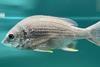
NewsFunctional traits, not phylogeny, drive gut microbial assembly in estuarine fish
By examining the gut microbiota of 61 sympatric fish species within the ecologically diverse Pearl River Estuary, researchers utilized this “natural laboratory” to disentangle complex biological drivers without the interference of geographical variation.
-
 News
NewsLuis Daniel Sansores España named recipient of the 2026 IADR Norton Ross Fellowship
The International Association for Dental, Oral, and Craniofacial Research (IADR) has announced Luis Daniel Sansores España, IADR Chilean Division, as the 2026 recipient of the IADR Norton Ross Fellowship.
-
 News
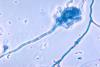
NewsGlobal strategy to combat drug‑resistant fungi is about to change
An increasing number of fungi are becoming resistant to medication, posing serious risks for patients with weakened immune systems. That is why fifty researchers from around the world are calling for action against drug‑resistant fungi.
-
 News
NewsNominate yourself: Call for new Elected Trustees of Applied Microbiology International
Applied Microbiology International (AMI) has issued a call for a new member to join our team as an Elected Trustee on the AMI Board from September 2026.
-
 News
NewsStudy reveals hidden damage in stony corals using 3D imaging and AI
Researchers investigating how disease affects coral structure turned to X-ray microcomputed tomography which generates detailed 3D reconstructions down to microscopic pores, which reveal internal skeletal features, including porosity, thickness and structural orientation, in a non-destructive way.
-
 News
NewsAI spots hidden behavior patterns in self-organizing bacteria
A custom-built artificial intelligence system has helped to uncover how bacterial communities organize themselves, showing that the earliest moments of a biological transition carry far more information than previously considered.
-
 News
NewsNameko mucilage: An eco-friendly solution for microplastic pollution
Researchers use natural mucilage from nameko mushrooms for the removal of micro- and nano-plastics from water. The mucilage is rich in polysaccharides, particularly pectin—a naturally occurring plant-based compound—which is known for its particle-binding properties.
-
 News
NewsA bacterium from bumblebees can produce vitamin B2 in soya drinks
Researchers have developed a new method that can reduce the time needed to find new bacteria for fermentation. They have now identified a bacterium that can be used both for acidification and to increase the vitamin B2 content of soya drinks.
-
 News
NewsCat viruses offer window into human oncogenesis
Cats are not just beloved companions; they are emerging as key “research partners” in unravelling viral cancer mechanisms. A new review explores how feline tumour viruses offer vital insights into human oncology and viral carcinogenesis from a comparative oncology perspective.
-
 News
NewsIntegration of two genes: A valuable strategy for developing virus-resistant tomatoes
Researchers have demonstrated that integration of Ty-1/Ty-3 and Ty-6 resistance genes in tomato plants can confer highly robust resistance to begomoviruses.
-
 News
NewsUltrasensitive test reveals evidence of previously undetected tuberculosis in Boston Hospital patients
Researchers have discovered an unexpectedly high prevalence of Mycobacterium tuberculosis DNA (TB DNA) in patients hospitalized in Boston, suggesting that tuberculosis disease may be significantly underdiagnosed in the United States.
-
 News
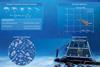
NewsLonger-term plankton species diversity is independent of ocean mixing
A new study identifies correlations between turbulence, plankton diversity and aggregate abundance in marine coastal regions over longer time periods, providing new insights into marine ecosystems.
-
 News
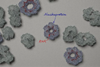
NewsUnraveling the complexities of the Borna disease virus 1
Researchers have published the first detailed structural description of the nucleoprotein-RNA complex in the family Bornaviridae. Their observations revealed the three-dimensional structure of this nucleoprotein-RNA complex, showing ring-like assemblies and viral RNA binds in the inner groove.
-
 News
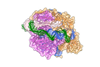
NewsNew bite-sized CRISPR molecule may open doors for therapeutic genome editing
The safest, most accurate gene-editing tools don’t fit inside viral delivery mechanisms that could target them to specific cell types or tissues inside the human body. Researchers have developed a smaller pair of “molecular scissors” for gene editing that could make site-specific delivery within the body possible.
-
 News
NewsResearchers uncover how obesity impairs vaccine response
New findings reveal that obesity significantly impaired the quality and longevity of antibody responses to a Pseudomonas aeruginosa vaccine in a mouse model. The impaired antibody production was due to defects in germinal centers.
-
 News
NewsLancet Countdown Europe: New report on health and climate change
Europe’s dependence on fossil fuels is not only making the continent economically and politically vulnerable, it also has dramatic consequences for the population’s health. Growing air pollution, heat damage and the climate-related spread of infectious diseases are looming, warns a new report.