
Tomato yellow leaf curl disease (TYLCD), caused by begomoviruses, is a global problem in tomato production, affecting yield. While introduction of resistance genes is one of the strategies to control TYLCD, introduction of a single Ty-gene is inadequate in providing full protection against begomoviruses.
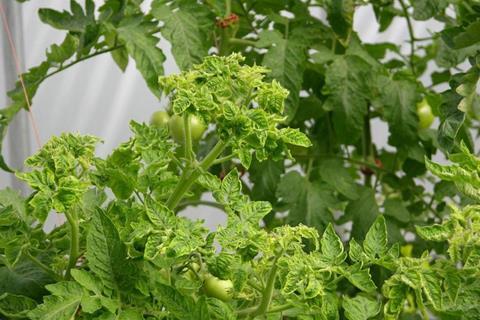
Now, researchers have determined that a combination of Ty-1/Ty-3 and Ty-6 can fully protect tomato plants from begomoviruses, providing a promising strategy to improve tomato varieties and ensure their stable production.
Tomatoes are one of the most important vegetables worldwide and are consumed every day. However, they often develop tomato yellow leaf curl disease (TYLCD), a devastating disease caused by many viruses of the genus Begomovirus, which severely affects tomato yield and production. One of the primary strategies for the management of TYLCD is the introduction of Ty virus resistance genes. Till now, six Ty genes have been identified, and one or more of these genes have been incorporated into commercial varieties of tomato.
Linkage drag
While including only one type of Ty gene provides resistance to some less aggressive begomoviruses, highly virulent viruses can still impair the growth of these slightly resistant plants. Incorporation of multiple Ty genes can help improve resistance. However, the introduction of all types of Ty genes can sometimes bring linked wild genomic regions that negatively affect cultivated tomato traits, a phenomenon known as linkage drag.
To address this, a research team led by Professor Sota Koeda, along with MS student Moeno Shimoide, both from the Graduate School of Agriculture, Kindai University, Japan, have investigated the combinations of Ty genes that can provide resistance against highly virulent begomoviruses common in tropical Southeast Asia. The study was published in Volume 222 of the journal Euphytica on March 30, 2026.
“To control aggressive begomoviruses distributed in Southeast Asia, which are one of the most virulent species globally, relying on a single resistance gene common in Europe and Japan is insufficient. Thus, determining which combinations of resistance genes are necessary and sufficient for effective control is important for breeding tomatoes with enhanced viral resistance,” says Prof. Koeda.
Testing against begomoviruses
The researchers first tested the resistance of tomato plants against three begomoviruses that differed in virulence. They used common Japanese varieties with tomato yellow leaf curl virus (TYLCV) resistance, including Momotaro Sakura (MS) and Momotaro Peace (MP), and without TYLCV resistance, including Momotaro (M). They also tested some AVTO lines from the World Vegetable Center, which were specifically bred to be highly resistant to TYLCD.
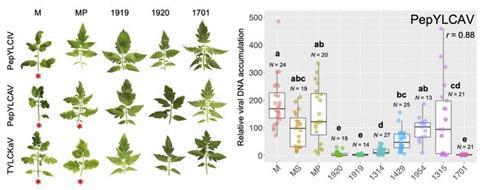
MS and MP exhibited symptoms caused by infection of highly virulent begomovirus species. Notably, some AVTO lines fared better against all three viruses, with strains 1919, 1920, and 1701 showing the greatest resistance and no symptoms of infection.
Genetic analysis showed that AVTO1919 carried two copies (homozygous) of the Ty-1 and Ty-6 genes, while AVTO1920 carried two copies of the Ty-3 and Ty-6 genes. AVTO1701 had four Ty genes, including Ty-2, Ty-3, Ty-5, and Ty-6 but did not have significantly better virus resistance than 1919 or 1920. MP had only one copy (heterozygous) of the Ty-1 gene, which resulted in limited resistance to viruses.
“Our study suggests that the introduction of fewer resistance genes than expected can substantially enhance resistance. It offers a promising approach for improving tomato varieties while balancing resistance, productivity, and fruit quality,” says Prof. Koeda.
Crossbreeding outcomes
Crossbreeding AVTO1919 or AVTO1920 with susceptible Moneymaker (MM) produced offspring with lower resistance to the viruses than the parent AVTO types, though they were far superior to MM. These findings indicate that resistance conferred by Ty-1 or Ty-3 and Ty-6 is incomplete dominance. Thus, the integration of Ty-1/Ty-3 and Ty-6 genes in homozygous states in tomatoes may confer highly robust resistance to begomoviruses.
“Overall, our findings may provide valuable guidance for enhancing begomovirus resistance in other crops and represent a discovery that could contribute to the long-term stable production of food,” says Prof. Koeda.






No comments yet