
More UK & Europe News – Page 3
-
 News
NewsThe immune system creates its own targets within viruses
A new study reveals that our immune system does more than defend against viruses. In certain cases, it induces mutations within viruses that make them easier to recognize later on.
-
 News
NewsPoint-of-care rapid tests can improve screening for latent tuberculosis
A new test shows promising results for detecting latent tuberculosis infection in resource-limited settings. Latent tuberculosis is often diagnosed using a laboratory test called QuantiFERON-TB Gold Plus - this was compared with another test, TB-Feron.
-
 News
NewsResearchers discover latent antimicrobial resistance across the world
A team of researchers has discovered that latent antimicrobial resistance is more widespread across the world than known resistance. They call for broader surveillance of resistance in wastewater.
-
 News
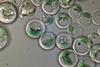
NewsMicroalgae could play key role in bio-based circular economy
With food systems under pressure from climate change, geopolitical instability, and supply chain vulnerabilities, the EU is driving innovation toward more sustainable, resilient, and local production models. Microalgae have emerged as a promising resource for producing ingredients across food, feed, and other consumer goods. Source: Hannah ...
-
 News
NewsDynamic duo of bacteria could change Mars dust into versatile building material for first human colonists
Scientists are investigating a bacterial co-culture mixed with Martian regolith as a potential feedstock for 3D printing on Mars. At the intersection of astrobiology, geochemistry, material science, construction engineering, and robotics, this synergistic system could revolutionize the potential for construction on the Red Planet.
-
 News
NewsCorticosteroid use does not appear to increase infectious complications in non-COVID-19 pneumonia
A systematic review and meta-analysis found that adjunct corticosteroids probably reduce short-term mortality in cases of severe pneumonia and acute respiratory distress syndrome and may reduce secondary shock in severe pneumonia.
-
 News
NewsNobel Prize-awarded material that punctures and kills bacteria
Bacteria that multiply on surfaces are a major headache in healthcare. Researchers have found a new weapon to fight these hotbeds of bacterial growth – metal-organic frameworks. These materials can physically impale, puncture and kill bacteria before they have time to attach to the surface.
-
 News
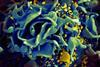
NewsHalf of all people living with HIV in Europe are diagnosed late
Europe is failing to test and treat HIV early, with over half of all diagnoses in 2024 being made too late for optimal treatment, according to new data from ECDC and WHO/Europe.
-
 News
NewsUnder The Lens: Callum Cooper explores how bacteriophages could revolutionise medicine - and how we get to that point
In a compelling new video interview from Applied Microbiology International’s ‘Under the Lens’ series, Dr. Callum Cooper shares fascinating insights into one of medicine’s most promising frontiers: phage therapy.
-
 News
NewsBird flu viruses are resistant to fever, making them a major threat to humans
Bird flu viruses are a particular threat to humans because they can replicate at temperatures higher than a typical fever, one of the body’s ways of stopping viruses in their tracks, according to new research.
-
 News
NewsMicroplastics disrupt gut microbiome and fermentation in farm animals
Microplastics, tiny plastic particles pervasive in agricultural environments, interact with and disrupt the microbial ecosystem in the rumen – the first stomach chamber of cattle, reveals an international study.
-
 News
NewsUS- & Argentina startup Michroma wins €250k investment with The Future is Fungi Award 2025
A new frontier in biotechnology just crowned its next pioneer. Out of 187 groundbreaking startups from 59 countries, Michroma wins the The Future is Fungi Award 2025, taking home €250,000 / USD 289 000 in investment.
-
 News
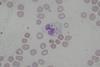
NewsParkinson’s drug offers basis for new hospital bacterium anti-infectives
Researchers have discovered a promising starting point for the development of new active substances against the hospital germ Pseudomonas aeruginosa.
-
 News
NewsResearchers warn: Climate change could expand habitats for malaria mosquitoes
A new study shows that future climate change could create more favourable conditions for malaria mosquitoes, exposing millions of people across large parts of Africa to more dangerous mosquito bites.
-
 News
NewsResearch into zoonotic disease risks requires a One Health approach
A new evidence brief, based on a study by the Juno Evidence Alliance conducted in collaboration with CABI’s One Health Hub, has highlighted that a One Health approach is needed in research into zoonotic disease risks around the world.
-
 News
NewsMicroplastics pose a human health risk in more ways than one
A new study shows that microplastics in the natural environment are colonised by pathogenic and antimicrobial resistant bacteria. The study team calls for urgent action for waste management and strongly recommends wearing gloves when taking part in beach cleans.
-
 News
NewsStaphylococci compete with other bacteria for biotin in the nasal cavity
A recently published study reveals that competition plays a major role in the nutrient-poor habitat of the human nose. There’s an active contest between S. aureus and nasal commensals for the vitamin biotin, which affects the fitness of S. aureus.
-
 News
NewsPesticides and other common chemical pollutants are toxic to our ‘good’ gut bacteria
A large-scale laboratory screening of human-made chemicals has identified 168 chemicals that are toxic to bacteria found in the healthy human gut. These chemicals stifle the growth of gut bacteria thought to be vital for health.
-
 News
NewsDr José Luis Balcazar named as winner of John Snow Public Health Innovation Prize
Dr José Luis Balcazar, Senior researcher at the Catalan Institute for Water Research (ICRA-CERCA), Spain, has been named as the newest winner of the John Snow Public Health Innovation Prize.
-
 News
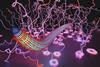
NewsMalaria parasites move on right-handed helices
After penetrating the skin, the malaria parasite moves with helical trajectories, almost always turning toward the right. Researchers demonstrated that the pathogen uses these right-handed helices to control its motion as it transitions from one tissue compartment to another.