
New treatments for ancient microbes are everywhere - in the soil, in the sea, in the human gut, and especially in human sewage, according to Dr Callum Cooper.
The rise of antimicrobial resistance as a threat has stimulated the re-evaluation of bacteriophages, viruses that specifically target bacteria as a possible alternative to conventional antimicrobials - but the path to adoption has been rife with barriers.
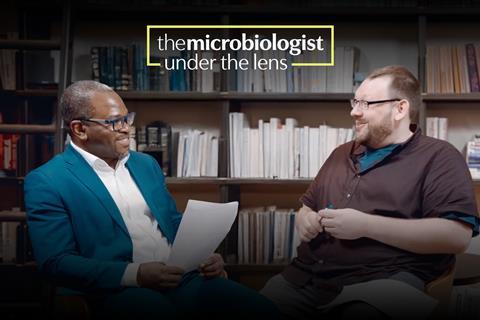
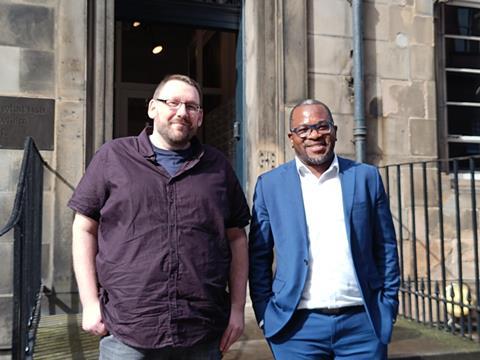
In a compelling new video interview from Applied Microbiology International’s ‘Under the Lens’ series, Dr. Cooper, a researcher in bacterial phage formulation and Deputy Editor of Letters in Applied Microbiology, an AMI publication, shared fascinating insights into one of medicine’s most promising frontiers: phage therapy.
The conversation, led by AMI Trustee Professor Emmanuel Adukwu from the University of the West of England, explored the clinical translational potential of bacteriophages as a revolutionary approach to treating infections that have become increasingly resistant to traditional antibiotics.
From prions to phages
Dr. Cooper’s journey into phage research began almost by chance. Originally interested in studying prions during his PhD applications, he was instead offered a position in phage therapy at Cardiff University.
This serendipitous turn led to a wide and varied career spanning multiple countries and research institutions.
But the pivotal moment came when Dr Cooper recognised the true therapeutic potential of phages during his PhD research, realising that phages could be delivered deep into the lungs, opening possibilities for treating difficult-to-reach infections.
“It was that that started getting me more and more interested in the therapeutic side of things,” he says.
Currently at Sunderland University, Dr Cooper continues his work into phage therapy and their underlying biology as well as being part of a collaboration that won the prestigious RSC Horizon Award in 2022 for developing new compounds for bacterial detection, working alongside Northumbria University, French diagnostics company bioMérieux, and the NHS.
Bacteria hunters
One of the most intriguing aspects of phage therapy is where these bacterial predators are found.
Dr Cooper explains that phages can be sourced from virtually anywhere in the environment: “Basically you can find phages anywhere is the easiest way of describing it.”
From soil and sand to seawater and even the human gut, these microscopic warriors exist wherever bacteria thrive, creating natural ecosystems of biological competition that researchers can harness for therapeutic purposes.
Next generation phages
When discussing current breakthroughs, Cooper emphasized that the focus is shifting toward creating ‘better phages’ as well as using their derived proteins
Modern approaches can enhance phage activity through selective breeding, genetically engineer phages as gene delivery systems for CRISPR technology, and even engineer phage proteins to enhance their antimicrobial activity.
From a safety perspective, phages offer significant advantages. “In theory, phages are very, very safe indeed,” Cooper explains. “They should not have any impact on human cells. They haven’t got the ability to bind human cells and things like that.”
But the path from laboratory to clinic presents unique challenges. Dr Cooper outlines two distinct approaches: off-the-shelf solutions versus patient-focused treatments. The off-the-shelf approach faces the greater challenge of ensuring universal effectiveness, while patient-focused solutions can be specifically designed for particular bacterial strains.
Perhaps surprisingly, public perception appears more favorable than professional acceptance. Recent studies show that while the general public is quite accepting of phage therapy, especially when provided with safety and efficacy information, healthcare professionals demonstrate greater reluctance to learn about these treatments.
Regulatory innovation
Traditional clinical trial structures present significant obstacles for phage therapy development: “Classical clinical trial structures don’t work so well for phages. We can’t get the population sizes to be able to have, say, phase three clinical trials where you need hundreds or thousands of people.”
The solution may lie in innovative approaches such as retrospective approval systems and scoring mechanisms for cocktail effectiveness, representing a fundamental shift in how we evaluate and approve these biological therapeutics.
One of the most fascinating challenges in phage therapy lies in manufacturing consistency. Unlike traditional pharmaceuticals, phage production involves a continuous ‘biological arms race’ between bacteria and phages.
“The bacteria is trying to evolve so it’s not getting killed by the phage. And the phage then is trying to counter evolve,” Cooper explains, pointing out that prolonged production could result in a final product different from what was initially developed.
Phage therapy hubs
Cooper’s vision for the ideal phage therapy infrastructure resembles a specialized pharmaceutical manufacturer with distinct divisions: basic science for isolation and characterization, clinical microbiology labs for patient samples, manufacturing and quality control departments, and clinicians who understand phage therapy.
Rather than a single national center, Cooper advocates for regional hubs built on existing national-level infrastructure, potentially providing more effective and accessible implementation.
READ MORE: Spotlight on phage for a fascinating policy discussion
READ MORE: Callum Cooper appointed Deputy Editor of Letters in Applied Microbiology
Government-backed funders are beginning to recognize phages as viable alternatives, with recent calls specifically focused on clinical aspects of phage therapeutics. However, industry funding remains challenging due to questions about return on investment for what are essentially short-term treatments.
The next frontier
Dr Cooper describes phage therapy as a field brimming with potential, where ancient biological warfare between viruses and bacteria could provide modern medicine with powerful new weapons against antimicrobial resistance and outlines exciting future possibilities, including collaborations with clinical specialists on phage cocktail design, machine learning algorithms to predict optimal phage combinations, and engagement with international regulatory bodies.
This Under the Lens conversation is available to subscribers of The Microbiologist and to AMI members.
Topics
- Antimicrobial Resistance
- Applied Microbiology International
- Bacteria
- Bacteriophages
- bacteriophages
- bioMérieux
- Callum Cooper
- Community
- Emmanuel Adukwu
- Events
- Letters in Applied MIcrobiology
- NHS
- Northumbria University
- One Health
- People News
- Phage Therapy
- Pharmaceutical Microbiology
- Sunderland University
- UK & Rest of Europe
- Viruses





No comments yet