
For the first time, research shows that a key social trait in honey bees is linked to measurable physiological advantages that can improve colony survival.
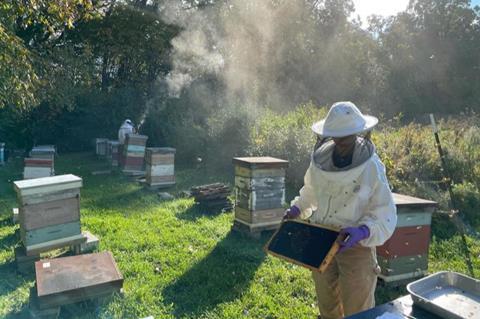
A new study published in PLOS ONE uncovers how hygienic honey bee colonies mount stronger individual immune defenses against Nosema ceranae, a widespread pathogen that threatens honey bee health worldwide.
The study, led by Sydney Miller of the University of Vermont’s Department of Agriculture, Landscape, and Environment, demonstrates that bees from hygienic colonies show enhanced innate immune responses and increased survival when infected with N. ceranae, despite experiencing similar infection levels as non-hygienic bees.
READ MORE: Ants alter their nest networks to prevent epidemics, study finds
READ MORE: Leafcutter ants recognize and fight pathogen with social immunity
“Nosema is one of the most common adult bee pathogens found in Vermont apiaries and nationally. The pathogen essentially starves the bee by infecting their digestive tract. Even though it causes major problems for beekeepers, there are very few effective treatment options,” said Miller.
“The hygienic behavior trait has only been known to defend against pathogens infecting the larvae and pupae in the nest, but our findings suggest that hygienic colonies may also be able to resist adult bee pathogens, like Nosema, through enhanced innate immune function. This offers a promising avenue for strengthening bee health through selective breeding.”
Hygienic colonies
Researchers conducted field and laboratory experiments comparing individual bees from hygienic colonies to bees from non-hygienic colonies. Hygienic colonies carry a heritable genetic trait that allows the worker bees to respond to chemical odorants emitted by diseased or dead brood (developing larvae and/or pupae) by uncapping and removing them from the nest.
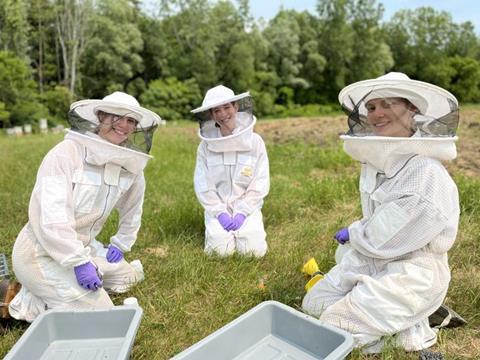
Not only do hygienic colonies discard infected brood, but this study identified several innate defense mechanisms exhibited by the adult bees in hygienic colonies as well:
- Lower consumption of contaminated food: Hygienic bees consumed less sugar syrup, especially when it contained Nosema spores, suggesting possible detection and avoidance of pathogen-contaminated resources.
- Enhanced immune gene expression: Hygienic bees maintained or upregulated Vitellogenin (Vg) and Hymenoptaecin (Hym), two immune-related genes, during infection.
- Greater infection tolerance: Even when infected, hygienic bees survived significantly longer than non-hygienic bees, indicating improved tolerance of the pathogen.
-
No infection in brood: The team found no N. ceranae spores in pupae, confirming that hygienic brood removal does not directly reduce Nosema in colonies, supporting the conclusion that individual-level defenses are playing a key role.
Implications for beekeepers and breeding programs
The findings provide powerful evidence that hygienic behavior, which has already become a cornerstone trait in disease-resistance breeding programs, may deliver broad-spectrum benefits by bolstering the innate defenses of individual bees.
“This study gives us a clearer picture of why hygienic colonies have lower pest and pathogen loads in the field,” said co-author Samantha Alger. “It isn’t just about removing sick brood. These bees appear to have a stronger physiological response that allows them to self-manage pathogens affecting adults too.”
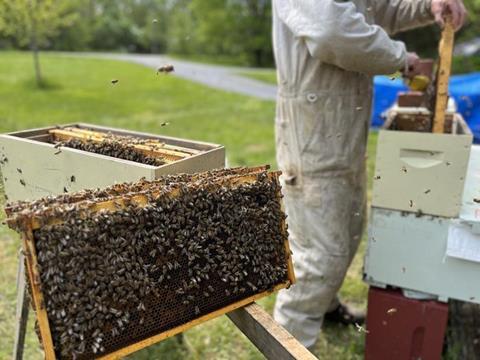
With N. ceranae contributing to weakened colonies, reduced honey production, and increased mortality, identifying heritable honey bee traits that provide protection is critical for a sustainable beekeeping industry.
Authors include scientists from the University of Vermont, USDA Beltsville Honey Bee Research Lab, and the University of North Carolina Greensboro. The work was supported by the North American Pollinator Protection Campaign - Honey Bee Health Grant, the One Hive Foundation, and Optera, LLC.
Topics
- Agriculture
- beekeeping
- Food Security
- Fungi
- Healthy Land
- honey bees
- hygienic colonies
- Hymenoptaecin
- Immunology
- Infection Prevention & Control
- Infectious Disease
- Nosema ceranae
- social traits
- Sydney Miller
- University of North Carolina Greensboro
- University of Vermont
- USDA Beltsville Honey Bee Research Lab
- Veterinary Medicine & Zoonoses
- Vitellogenin



No comments yet