
News in Microbes of the Earth
-
 News
NewsÖtzi and his microbiome: a 5,300-year-old relationship
Researchers have obtained a detailed picture of the microbial community associated with the Iceman mummy Ötzi. The study provides insights into a complex microbiome, ranging from the gut flora of a Copper Age human to cold-adapted yeasts.
-
 News
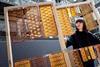
News‘Baked’, printed, ready – premiere of architecture made from yeast
Researchers have developed a new, entirely bio-based material from a somewhat unexpected ingredient: yeast. The material is 3D printed and customised for use in architectural and interior design elements that are currently made from non-renewable or fossil-based materials, such as plaster, plastic or synthetic textiles.
-
 News
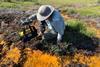
NewsNew study uncovers why the Arctic’s rivers are rusting
Scientists have identified the two biggest reasons that once-pristine rivers across the Arctic are growing cloudy with toxic orange iron particles that smother insects and suffocate fish. As the climate warms, a layer of Arctic soil that had been frozen for millennia has begun to thaw.
-
 News
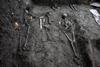
NewsResearchers link specific microbiomes to archaeological bone degradation
Well-preserved archaeological bone samples have different microbial communities than heavily degraded bone samples, providing a new understanding of how microbes contribute to bone degradation, according to a study.
-
 News
NewsCall for input: UK government to overhaul fertiliser regulation
Applied Microbiology International is calling on members to contribute after the UK government proposed a major overhaul of fertiliser regulation through a new framework: the UK Fertilising Product Regulations (UK FPR).
-
 News
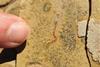
NewsMicrofossils interpreted as animal traces were actually algae and bactéria
A reexamination of microfossils found in Brazil shows that the marks previously interpreted as traces of worms or other small oceanic animals are actually communities of fossilized microscopic bacteria and algae.
-
 News
NewsSwansea spin-out Bionema Group receives second King’s Award for Enterprise
Bionema Group Ltd, a Swansea University spin-out specialising in biological crop protection and sustainable agriculture, has been awarded the King’s Award for Enterprise: Sustainable Development 2026. It highlights Bionema’s contribution to developing environmentally sustainable alternatives to synthetic pesticides.
-
 News
NewsMembrane complex aids rock-eating microbes in converting carbon dioxide to biomass
So-called rock-eating microorganisms obtain their energy to convert carbon dioxide (CO2) from inorganic sources. Using electron microscopy and infrared spectroscopy, researchers investigated the structure of DAB2 in the sulfur bacterium Halothiobacillus neapolitanus.
-
 News
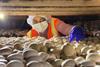
NewsDNA analyses uncover what is hiding under the cap plaguing the white button mushroom industry
Researchers have uncovered that bacterial blotch is not caused by a single disease-causing bacteria or pathogen as originally learned, but by a complex of pathogenic bacterial species that thrive in the indoor controlled, humid environments where they are grown.
-
 News
NewsStudy uncovers new kind of cold sensor
Investigators studying a bacterial protein have identified a new mechanism of sensing cold temperatures. The finding points to the possibility that this same type of mechanism exists in other organisms, including humans, and may have relevance for disorders involving faulty temperature regulation.
-
 News
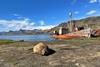
NewsViruses found in Antarctic air, including some new to science
It may seem stark and lifeless, but the air around the remote sub-Antarctic island of South Georgia contains viruses, including some that are new to science. Using metagenomics, researchers discovered that South Georgia harbours a diverse and dynamic airborne viral community.
-
 News
NewsFrom Asgard to Earth: tiny discoveries hold clues to life’s greatest leap
Stromatolites may hold insights into how complex life began. Researchers have identified a previously unknown microbe living in close partnership with another organism inside these ‘living fossils’.
-
 News
NewsNative bacteria may break down dioxins without genetic modification
Researchers have demonstrated that native soil bacteria, when treated with decoy molecules, can degrade non-native compounds, including persistent pollutants such as dioxins, without genetic modification.
-
 News
NewsScientists reveal the potential of a tiny soil bacterium to beat the Haber-Bosch process
A new review finds that biological ammonia production offers strong potential as a cleaner, greener alternative to the costly Haber-Bosch process. Microbes such as Azotobacter can produce ammonia under ambient conditions and atmospheric pressure.
-
 News
NewsBiochar offers climate-smart pathway to healthier soils and safer tea production
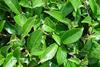
A new scientific review highlights how biochar, a carbon-rich material produced from biomass, could transform tea farming by restoring soil health, reducing pollution risks, and improving both yield and quality. Source: AxelBoldt Closeup of leaves of tea plant Camellia sinensis Tea, derived from Camellia sinensis, is one ...
-
 News
NewsSoil bacteria break down toxic chemicals in the environment
Soil bacteria can help to break toxic aromatic compounds down. For one of these, Rhodococcus opacus 1CP, researchers have analyzed the genome and identified many potential metabolic pathways that the bacterium can employ to act as a ‘clean-up specialist’.
-
 News
NewsBiochar and beneficial fungi team up to detoxify toxic red mud and restore soil health
A new study has revealed a promising nature-based strategy to clean up red mud, one of the world’s most hazardous industrial wastes, by combining biochar with beneficial soil fungi to target specific pollutants and revive damaged soils.
-
 News
NewsEngineered yeast gives the US a green edge in the critical minerals market
A new, U.S.-based, environmentally friendly method for mining rare-earth elements used in consumer electronics, clean energy, defense and biomedical imaging uses oxalic acid made by sugar-eating engineered yeast, extracting almost all the rare-earth elements from low-grade ore.
-
 News
NewsCorpses leave microbial fingerprints behind in the soil long after they’re gone
Researchers have found that trace elements of a cadaver linger at an original dump site even after an extensive amount of time. These elements can provide insights into postmortem processes, helping forensic investigators uncover clandestine burials and relocate the remains of murder victims.
-
 News
NewsInvasive death cap mushrooms are changing their chemistry
Scientists have just published new research about the chemistry of death cap mushrooms (Amanita phalloides) - the species is not only spreading rapidly as an invasive fungal species in the United States, but the move across continents has changed the chemistry of the species.