
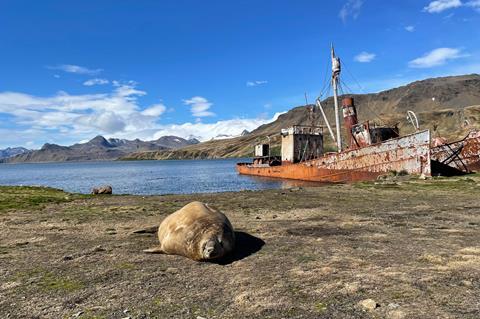
It may seem stark and lifeless, but the air around the remote sub-Antarctic island of South Georgia contains viruses, including some that are new to science.
These are the findings of a new study led by AMI member Ritam Das, a PhD student at the Freie Universität Berlin and Max Planck Institute for Molecular Genetics, Berlin and AMI Ocean Sustainability Advisory Group member Janina Rahlff at the Friedrich Schiller University Jena and Linnaeus University.
Using metagenomics, the team discovered that South Georgia harbours a diverse and dynamic airborne viral community, including DNA viruses of marine, extremophilic, and potentially atmospheric origin.
Impact on surroundings
Airborne viruses are largely understudied, especially in remote polar regions - yet they can influence microbial communities, nutrient cycling, and ecosystem stability.
“We aimed to understand which viruses are present in the atmosphere of South Georgia, how they disperse, and whether marine sources contribute to these communities,” Mr Das said.
“Studying viruses in aerosols collected outdoors has been rarely performed, primarily because the low biomass results in DNA yields too small for metagenomic sequencing. Consequently, we know very little about viral diversity and dispersal in the lower atmosphere, or about which viruses become airborne and how they interact with their hosts,” Dr Rahlff said.
Study methods
The researchers collected air and rain samples at two sites (coastal and inland) on South Georgia over a 7-day period using multiple samplers, including wet and dry Coriolis devices (an air sampler from Bertin Technologies) and a rain collector. DNA was extracted and analysed via viral metagenomics, followed by assembly, clustering, and protein annotation.
They discovered 39 viral genome fragments, with many viruses being previously unknown or unclassified.
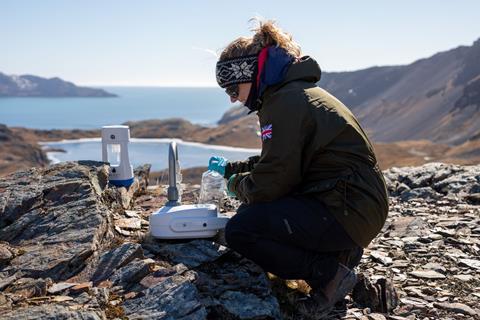
“We detected marine phages, cyanophages, and viruses likely infecting extremophiles, suggesting long-distance atmospheric transport. Rain and aerosols captured distinct subsets of viruses, demonstrating that complementary sampling is critical,” Dr Rahlff said.
“Some viral sequences resembling bacterial metabolic proteins showed homology to widely distributed oceanic viral proteins, suggesting marine dispersal and active bacterial-viral interactions and hinting that viruses may help hosts survive harsh environments,” Mr Das said.
Surprising observation
One surprising observation was that, despite sequencing DNA obtained from the dry Coriolis sampling device, the team could hardly detect any viral genomes.
“We were also surprised to find high-GC content viruses with similarity to extremophilic hosts, suggesting that some airborne viruses may originate from non-marine or terrestrial environments. Such high GC viruses were reported for rainwater previously, but in a different part of the world,” Dr Rahlff said.
“Additionally, the degree of daily variation and differences between rain and aerosol samples highlighted the dynamic nature of the atmospheric virome, so this needs more comprehensive analysis in the future.”
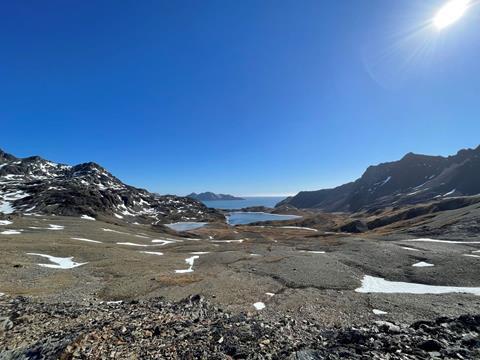
These findings show that airborne viruses are a vector for microbial connectivity, linking oceanic, terrestrial, and atmospheric ecosystems. Airborne viruses could move globally and potentially influence microbial communities in distant environments. This knowledge matters for understanding viral dispersal, microbial ecology, and potential impacts on global biogeochemical cycles, Mr Das said.
Future studies should:
-Assess temporal variability of airborne viral communities over extended periods.
-Quantify virus-host interactions in aerosols collected at different altitudes.
-Isolate phages from aerosols and experimentally investigate phage-host dynamics under atmospheric conditions.
-Evaluate the functional roles of viral genes, including auxiliary metabolic genes, in host manipulation and ecosystem processes.
-Develop improved sampling and concentration methods tailored for ultra-low biomass airborne viruses.
The study, published in Frontiers in Microbiology, was led by Ritam Das (Max Planck Institute for Molecular Genetics, Berlin/ Freie Universität Berlin/ Friedrich Schiller University Jena) and AMI Ocean Sustainability Advisory Group member Janina Rahlff (Friedrich Schiller University Jena / Linnaeus University) with contributions from Lucie Malard, David Pearce, and Peter Convey. Funding came from the DFG, Swedish Research Council, and Swiss National Science Foundation.
The field campaign was led by David Pearce and Peter Convey and funded by the British Antarctic Survey.
Topics
- aerosols
- airborne
- Applied Microbiology International
- Bacteriophages
- British Antarctic Survey
- Community
- cyanophages
- David Pearce
- Early Career Research
- Ecology
- Environmental Microbiology
- Extremophiles
- Freie Universität Berlin
- Friedrich Schiller University Jena
- Healthy Land
- Janina Rahlff
- Linnaeus University
- Lucie Malard
- Marine Science
- Max Planck Institute for Molecular Genetics
- Microbes of the Earth
- Microbial Genomics
- Peter Convey
- polar environments
- Research News
- Ritam Das
- South Georgia
- UK & Rest of Europe
- Viruses





No comments yet