
The California Department of Public Health has reported 39 related poisonings in the last three months, leading to the death of four people, at least three liver transplants, and many more people sick. The culprit? In each case it is believed that death cap mushrooms are the source.
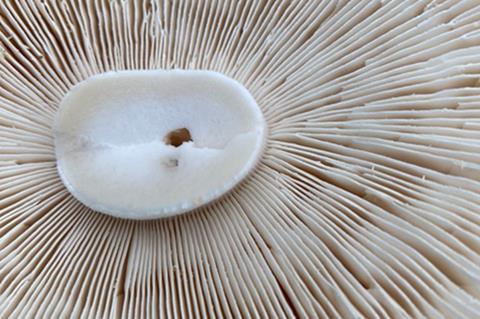
Even before the uptick in poisonings, these dangerous mushrooms were the subject of a collaborative study by two departments at the University of Wisconsin–Madison and the USDA-ARS Cereal Disease Lab in St. Paul, Minnesota.
The scientists have just published new research about the chemistry of death cap mushrooms (Amanita phalloides). Researchers learned that the species is not only spreading rapidly as an invasive fungal species in the United States, but the move across continents has changed the chemistry of the species.
The final paper, titled “Leaderless RiPPs Expand the Repertoire of Fungal Secondary Metabolites,” is published in the Proceedings of the National Academy of Sciences (PNAS). It’s co-authored by Anne Pringle, the L&S Mary Herman Rubinstein and Vilas Distinguished Achievement Professor of Botany; Nancy Keller, the Robert L. Metzenberg and Kenneth B. Raper Professor of Mycology in Medical Microbiology & Immunology and Plant Pathology; and Milton Drott, a research leader at the USDA-ARS Cereal Disease Lab. The paper is led by Sung Chul Park, a natural product chemist in the Keller lab.
“What we hope people take away from this paper is that scientists are actively studying this serious issue. We’re working hard to understand why it’s happening,” says Keller.
Death cap migration
When Pringle first came to UW–Madison, she was interested in the death cap mushroom’s migration from its original locations in Europe to California. Since arriving in the United States in the 1930s — likely in the roots of a tree — the mushroom has spread across the West Coast. According to Cecelia Stokes, a PhD student in the Pringle Lab studying the death cap, the organisms can now be found as far south as Mexico and north of the Canadian border. They’ve also been identified in the New England area but seem to be spreading less quickly on the eastern side of the country.
“I have no doubt these invasive mushrooms are impacting native ecosystems, but we are still working towards understanding the actual consequences and bigger picture,” Stokes says. “We do know death cap mushrooms are popping up in dense patches in forests from year to year. You can find more than 40 mushrooms under one tree, and this is abnormal, especially in comparison to the native mushroom species.”
Previously unknown metabolites
Keller and Pringle began working together to determine if the chemistry of the death cap was different between the two continents. They found that the mushrooms in California are producing previously unknown natural products, otherwise referred to as secondary metabolites, which have not been found in Europe.
Not only did they confirm that the mushroom chemistry has changed since arriving in North America, but they discovered some metabolites that have never been isolated before in any fungus.
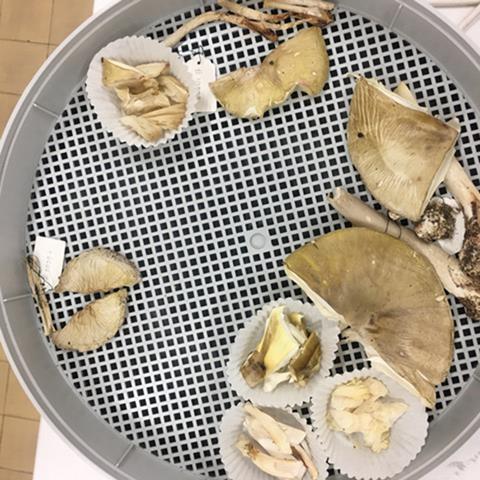
Prior to the publication of this study, the team released another paper which sequenced the death cap’s genes, called MSDIN genes. That research led to the discovery of uncharacterized MSDIN genes on the mushrooms in California. This newest publication uncovers the new natural products being created by several new MSDIN genes. This was done by isolating the peptides encoded in the accessory MSDIN genes and correlating peptide production with gene expression.
Reports of poisonings
The revelation is especially timely, as the state of California continues to receive reports of death cap poisonings and has issued a warning about eating foraged mushrooms.
READ MORE: Mushroom study IDs one of the potentially most bitter substances known to date
READ MORE: Magic mushrooms invent active compound twice
This isn’t the first time death caps have made the news. On Dec. 16, Netflix released a true crime documentary titled Death Cap: The Mushroom Murders, which details the story of an Australian woman who was arrested in 2023 for murdering three family members by serving them beef Wellington that had been cooked with this toxic mushroom.
The next step for researchers will be to continue examining their newly discovered products for bioactivity. Since so many drugs and medicines come from fungi and bacteria, discoveries like these will inform future research at universities and in biotechnology companies.
Topics
- Amanita phalloides
- Anne Pringle
- Cecelia Stokes
- death cap mushroom
- Early Career Research
- Fungi
- Healthy Land
- Metabolomics
- Microbes of the Earth
- Milton Drott
- MSDIN genes
- Nancy Keller
- Natural Products
- One Health
- Pharmaceutical Microbiology
- Research News
- Sung Chul Park
- University of Wisconsin–Madison
- USA & Canada
- USDA-ARS Cereal Disease Lab

No comments yet