
Across Europe, cases of congenital syphilis have nearly doubled within just one year from 78 in 2023 to 140 in 2024 among 14 countries reporting data. In contrast, Denmark has marked 10 years without a single case of vertical syphilis transmission from mother to child since 2016.

The main reason for this achievement: since 2010, Denmark has been offering universal screening for syphilis to pregnant women free of charge as part of a comprehensive prenatal care programme. This screening is implemented by general practitioners and usually takes place during the first antenatal visit.
According to data published in the journal Eurosurveillance, five children with congenital syphilis infection were recorded among almost 900,000 live births in Denmark between 2010 and 2024. During this 15-year study period, four out of those five cases occurred despite the existing screening approach as two women arrived in Denmark late in their pregnancy and two were infected late in their pregnancy. A reporting irregularity led to delayed follow-up in the fifth case.
Coverage of the screening programme almost at 100%
Lausten-Thomsen et al. looked at the number of syphilis infections detected during pregnancy, the number of screened pregnancies, confirmed congenital syphilis cases, and the total number of live births for each calendar year during the study period from 2010 to 2024.
During this time, almost one million (963,424) pregnant women were tested for syphilis in Denmark which corresponded to an overall testing rate of 99% and treatment uptake among those who tested positive was close to 100%. According to the presented data, 1,720 pregnant women were initially tested positive for syphilis, but active infection was confirmed in only 10% (172) of them after additional testing.
Unless it is treated timely, congenital syphilis can cause stillbirth, preterm birth, death of the neonate or can lead to serious long-term complications. This is why most European countries, including Denmark, have implemented testing programmes for pregnant people in their first trimester of pregnancy. Such antenatal screening combined with prompt antibiotic therapy when syphilis infection is detected is highly effective in preventing congenital syphilis.
Overall syphilis incidence
The authors also evaluated the overall national syphilis incidence for Denmark and their model showed an upward trend corresponding to a mean annual increase of around 6%. They also noted a stable trend in the prevalence of pregnancies with confirmed active syphilis infection. However, this has not translated into cases of congenital syphilis unlike in other European countries.
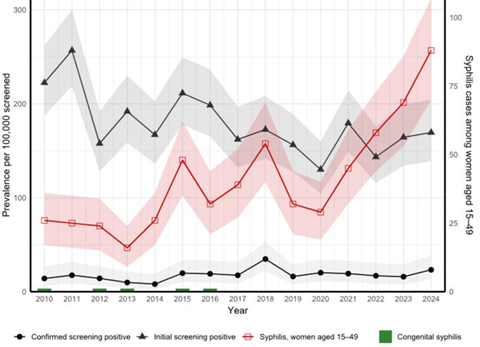
Lausten-Thomsen et al. thus argue that this “indicates a well-functioning healthcare system providing diagnosis and treatment before pregnancy. Despite increasing syphilis notifications in the general population, including among women aged 15–49 years, we observed no temporal increase in congenital syphilis.”
Based on their findings, Lausten-Thomsen et al. conclude the “results highlight the public health value of maintaining high screening coverage and robust surveillance, even in low-incidence countries. Continued attention to vulnerable groups and early antenatal engagement will be essential to sustain these achievements.”
MICROBIOLOGY NEWS: Register with The Microbiologist for more free articles
Given that Denmark met the set benchmarks for elimination of congenital syphilis for the European Region for 2025 (fewer than ten cases per 100,000 live births) and 2030 (≤ 1 case) ahead of time, the World Health Organization (WHO) officially recognised that the country has eliminated congenital syphilis. The data published in this paper fed into the WHO decision.
Factfile
Congenital syphilis means that a fetus is infected with syphilis following the mother’s infection during pregnancy. ‘Congenital’ indicates that the fetus becomes infected during pregnancy.
Syphilis is a sexually transmitted infection caused by the bacterium Treponema pallidum. In pregnant women with untreated early syphilis infection (acquired less than one year previously), 70-100% of infants will be infected, with stillbirth (death or loss of the fetus before or during delivery) occurring in up to one-third of cases.
Most transmissions to the fetus occur in late pregnancy (after 28 weeks) and treatment before this period will usually prevent complications in the fetus.




No comments yet