
BugBiome, an agri-biotech start-up that moved to Norwich Research Park last year, has secured a 24-month grant from Innovate UK to fund a collaborative project with the John Innes Centre, Harper Adams University and Applied Insect Science. The £500,000 award will be used to develop a new biological insecticide to control cabbage stem flea beetles (CSFB) in oilseed rape.
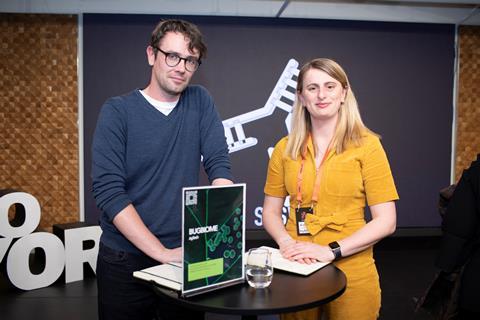
Changes in regulations means that farmers have fewer chemical-based insecticides options than ever before to protect their crops from pests. That means the agriculture industry is actively looking for credible alternatives where the economics can work in arable crops. BugBiome is aiming to develop a range of products that will meet these requirements, its first one being an aphicide which aims to provide protection to crops such as potatoes and sugar beet against aphid infestations which can devastate harvests.
This new project marks BugBiome’s expansion beyond ‘sucking pests’ and beginning work on ‘coleopteran pests’ i.e. beetles, with CSFB in oilseed rape being its first target in this area.
New pest target
Dr Alicia Showering, CEO of BugBiome, said, “We are excited to apply our biological insecticide platform to a new pest target as we are keenly aware of the problems facing UK farmers struggling to establish oilseed rape since the ban on neonicotinoid use nearly 10 years ago. At BugBiome, we have already made great progress with our aphicide product and this project, working with the best expertise in the industry, will mean we can make significant progress in developing treatments for coleopteran pests such as cabbage stem flea beetle, which we aim to commercialise post-project.
“Last year we moved to Norwich Research Park so that we could tap into the expertise at the John Innes Centre so I am especially glad that we are going to be working alongside Rachel and her team for this project. It’s a great example of how having so many expert researchers on one site can pay dividends in accelerating novel development solutions. The move to Norwich has placed us at the heart of the UK’s agri-biotech community giving us access to the talent and facilities to accelerate our products to commercialisation.”
Leading experts
The project involves leading experts in CSFB including Dr Rachel Wells, a senior scientist at the John Innes Centre (JIC), who’s group is supplying CSFB from JIC’s experimental colonies for product testing and supporting validation of promising products in miniaturised plant assays, and Prof Tom Pope at Harper Adams University who will lead on behavioural characterisation of the products.
Applied Insect Science is a dedicated contract research laboratory for biopesticides and other low-risk crop protection technologies and will supply microbial ecotoxicology expertise, crucial for getting new products to market.
MICROBIOLOGY ON TAP: Get full access to all The Microbiologist articles from just £2.17 a month
Commenting on the market need for new CSFB solutions, James Warner, managing director of the independent farmer cooperative United Oilseeds, said, “With the huge demand for rapeseed oil in the UK, there has never been a more important time to find sustainable solutions to CSFB which can cause complete crop failure if left unchecked. We are very keen to see the outcomes of this project.”
Collaboration is key
Roz Bird, CEO of Anglia Innovation Partnership, the campus management organisation for Norwich Research Park, said, “This is another great win for Norwich Research Park in the agri-biotech sector. Collaboration is key to solving some of the key issues we face in agriculture, so it is great to see our researchers and business leaders working together with organisations elsewhere in the country. We are looking forward to seeing the results of this project and in supporting BugBiome’s next phase of product development.”




No comments yet