
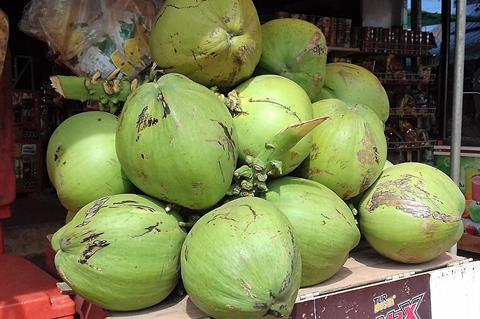
‘Nam Hom’ coconut (Cocos nucifera L.) is prized for its naturally sweet, aromatic water rich in sugars, minerals, and organic acids. However, coconut water has a short shelf life and deteriorates rapidly, limiting its commercial potential.
Fermentation into cider provides an effective way to extend shelf life while creating a low-alcohol beverage with appealing sensory qualities. As in wine and apple cider, yeast plays a central role in coconut cider fermentation, driving sugar metabolism, ethanol production, and aroma formation.
Different yeast strains are known to produce markedly different flavor outcomes: some enhance fruity and floral notes through ester production, while others ferment more cleanly, emphasizing the raw material itself. Despite growing interest in coconut-based fermented drinks, the detailed chemical transformations underlying coconut cider fermentation have remained poorly understood.
A study (DOI:10.48130/bpr-0024-0039) published in Beverage Plant Research on 17 March 2025 by Kriskamol Na Jom’s team, Kasetsart University, offers a scientific roadmap for producing coconut cider with tailored flavor profiles and enhanced bioactive value, opening new opportunities for value-added coconut beverages.
By tracking physicochemical changes alongside large-scale metabolomics and flavoromics data, the study shows how sugars are converted into alcohol and fruity aroma compounds, while beneficial fatty acids and amino acids accumulate.
Tracking fermentation
Using a combined physicochemical monitoring and untargeted metabolomics–flavoromics strategy, this study systematically tracked the fermentation of ‘Nam Hom’ coconut cider inoculated with two commercial yeasts, K1-V1116 and EC-1118, and integrated multivariate statistics to resolve process dynamics and aroma formation.
Principal component analysis (explaining 83.76% of total variance) together with agglomerative hierarchical clustering consistently divided fermentation into three stages—pre-fermentation, in-process, and final product—while comprehensive profiling detected 152 metabolite peaks (64 identified) and 16 volatile flavor compounds, followed by correlation analysis linking sugars, amino acids, lipid pools, ethanol, and ester classes.
Across both yeasts, basic fermentation kinetics were highly similar: Brix and reducing sugars declined steadily, pH decreased slightly indicating increased acidity, and alcohol content rose significantly (p ≤ 0.05) to approximately 7–8%, within the typical cider range, with no evidence of lactic acid bacterial contamination. Stage-resolved omics clarified temporal changes, with day-0 samples associated with high sugar levels (e.g., sucrose, glucose, fructose), mid-fermentation samples (2–14 days) linked to primary amino compounds reflecting yeast utilization and release, and final products characterized by fruity volatiles, particularly ethyl esters such as ethyl octanoate and ethyl 9-decanoate.
Progressive sugar depletion
Metabolomics revealed progressive sugar depletion into ethanol and downstream metabolites, increased glycerol as a normal yeast byproduct, stable citric and lactic acids, and a slight rise in malic acid, consistent with clean fermentation.
Amino acids including leucine and isoleucine increased similarly in both yeasts, aligning with pyruvate-derived metabolism and acetyl-CoA/TCA cycling. Lipid analysis showed decreasing fatty acid methyl esters but increasing free fatty acids, notably lauric and stearic acids, with higher accumulation in K1-V1116 fermentations.
READ MORE: Fermentation method transforms unripe fruits into specialty coffees
READ MORE: Herbs hit the sweet spot to extend shelf life of popular global drink
Flavoromics confirmed esters as dominant aroma drivers—acetate and ethyl esters such as isoamyl acetate and 2-phenyl acetate—while EC-1118 produced a more pronounced fruity profile due to higher ethyl-ester abundance. Correlation networks demonstrated strong positive links between sugars, ethanol, and esters, and between amino acids and free fatty acids and flavor compounds, highlighting coordinated metabolic pathways that can be tuned to shape coconut cider aroma and bioactive composition.
Guidance for producers
The study provides practical guidance for coconut cider producers. Both yeast strains proved suitable, but with different strengths: K1-V1116 favored aroma enhancement and ester production, while EC-1118 supported robust, clean fermentations with pronounced fruity notes.
By selecting specific yeasts and controlling fermentation time, producers can fine-tune flavor profiles—from dry and clean to fruity and aromatic—while retaining beneficial bioactive compounds.







No comments yet