
Three researchers at the Göttingen Campus have been awarded ERC Starting Grants by the European Research Council (ERC): Dr Sophie de Vries, evolutionary biologist at Göttingen University, for “Plant Immune Responses in Perpetual symbiosis (PIRPetum)”; Dr Tristan Stöber, computational neuroscientist at Göttingen University for “World Models in Brains and Machines: From Normative Hippocampus Models to Robust Planning in Artificial Intelligence and Back (WoM-BaM)”; Professor Elisa Oberbeckmann at the University Medical Center Göttingen (UMG), for “A chromosome-wide in vitro reconstitution system to dissect human nucleosome positioning mechanisms (vitroCHROM)”. Projects run for five years and are worth around 1.5 million euros each.
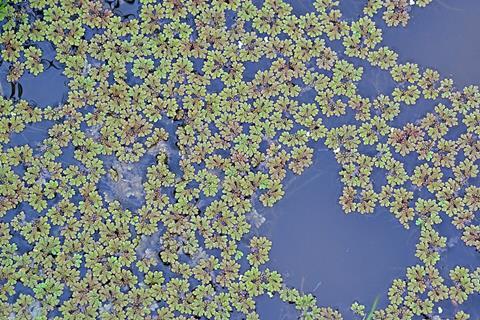
How do plants maintain their friends while repelling foes? Dr Sophie de Vries, group leader at Göttingen University’s Institute of Microbiology and Genetics, has been awarded funding for her PIRPetum project. She will combine evolutionary genomics with experiments that pair ferns and different microbes, to investigate how plants fight off “foes” (diseases) at the same time as supporting their beneficial “friendships” (bacterial partners).
MICROBIOLOGY NEWS: Register with The Microbiologist for more free articles
The evolution of complex life was made possible by partnerships between different organisms. As an example, cyanobacteria which convert light into energy first lived in symbiosis as “friends” with plants. This symbiosis became perpetual and then bacteria were incorporated into all the plants’ cells, enabling them to carry out photosynthesis, which was a significant advantage. Such mergers where two organisms become one are rare.
Today, among plants only one lineage is known to harbour a second perpetual symbiosis (in addition to the chloroplast): a small water fern, Azolla, lives in a lifelong partnership with a nitrogen-fixing cyanobacterium that has been passed from one generation to the next for more than 60 million years. This enduring relationship depends on precise communication between the plant and its bacterial partner, but scientists still know very little about how that communication works.
Signalling pathways
De Vries’ research suggests that the same signalling pathways plants normally use to defend themselves against diseases also help maintain the beneficial partnerships.
“This raises a fascinating question,” says de Vries: “How do plants fight off harmful pathogens, while continuing to support helpful bacterial partners?” To answer this, her team will use Azolla as a model to investigate how plants balance immunity with cooperation. They will examine the role of the plant defence hormone salicylic acid, compare signalling networks with those found in other plant symbioses, and use the first natural disease-fighting system established for Azolla to study how defence and symbiosis interact.
“Ultimately, our work will reveal how plants evolved to stably integrate beneficial partnerships for millions of years even when under attack from pathogens.”





No comments yet