
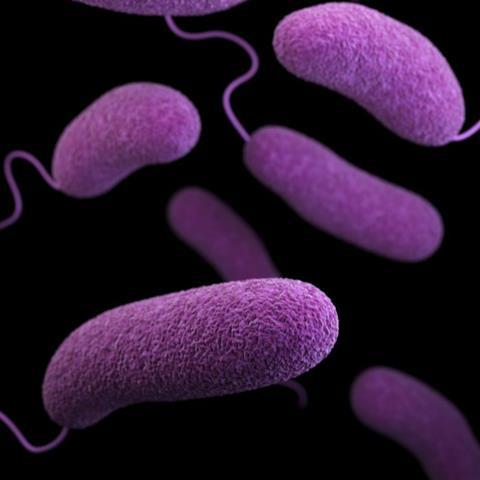
Vibrio parahaemolyticus lives widely in estuarine and marine environments and can contaminate seafood. Eating raw or undercooked contaminated seafood can cause acute gastroenteritis, while severe infection may progress to septicemia in vulnerable people. The bacterium must also survive sharp changes in its surroundings and inside hosts, including changes in available iron and exposure to reactive oxygen species.
Iron creates a biological balancing act. Bacteria need it for respiration, metabolism and enzymes that detoxify reactive molecules. Yet bioavailable iron is often scarce, and too much iron can fuel chemical reactions that damage cells. Many Gram-negative bacteria manage this balance through ferric uptake regulator (Fur), a metal-responsive protein that controls iron-related genes. Fur’s role in V. parahaemolyticus, however, had not been clearly defined.
Researchers at Yangzhou University constructed a strain lacking the fur gene and a complemented strain in which fur function was restored. They compared these bacteria with the wild type under iron-replete, iron-excess, iron-restricted and hydrogen peroxide stress conditions. The team measured intracellular metals by inductively coupled plasma mass spectrometry, profiled gene expression by RNA sequencing, and tested virulence using zebrafish survival and competition assays. The study was published online in Acta Microbiologica Sinica on April 13, 2026.
Not just a brake - a coordinator
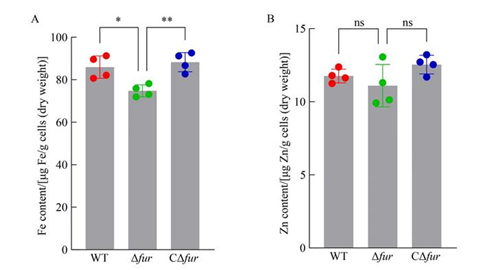
Deleting fur produced smaller colonies and impaired growth under standard iron-replete conditions. The mutant contained 74.81 micrograms of iron per gram of dry cells, compared with 85.96 micrograms in the wild type; restoring fur returned the value to 88.30 micrograms. Zinc content was unchanged, indicating a selective disturbance of iron homeostasis. Under combined iron limitation and hydrogen peroxide exposure, the mutant also showed poorer growth, linking Fur to the oxidative stress response.
The regulatory impact extended far beyond a single uptake pathway. RNA sequencing identified 820 differentially expressed genes, about 18% of the V. parahaemolyticus genome. Genes for iron acquisition and storage were expressed at higher levels in the fur mutant, while many genes encoding iron-containing proteins were expressed at lower levels. The mutant also switched expression between iron-dependent and iron-independent versions of some enzymes, a pattern consistent with an iron-sparing response. Genes associated with type III secretion system 1 were generally expressed at higher levels, whereas many type VI secretion system 2 genes were expressed at lower levels.
“Our findings show that Fur is not simply a brake on iron uptake. It helps coordinate how V. parahaemolyticus acquires, stores and uses iron while adapting to oxidative stress,” said Chengkun Zheng, corresponding author of the study. “When fur was removed, iron-uptake gene expression increased, but the cells contained less iron and grew less well. That contrast highlights the importance of coordinating iron acquisition with iron utilization.”
Next steps
Despite the extensive changes in gene expression, deleting fur did not significantly alter mortality or intestinal competitiveness in the zebrafish model. The researchers caution that this result does not rule out a role for Fur during other stages of infection. Intraperitoneal injection bypasses early events in natural foodborne infection, including passage through the stomach and initial attachment to the intestinal lining.
MICROBIOLOGY NEWS: Register with The Microbiologist for more free articles
Future work should determine which genes are directly controlled by Fur and test its function in oral infection models and under conditions that better reflect seafood and host environments. These studies could help reveal stress-response vulnerabilities and guide future strategies for monitoring or controlling V. parahaemolyticus in food safety and aquaculture.



No comments yet