
Head of Bioresources Unit of the AIT Austrian Institute of Technology Tanja Kostić, PhD, reveals how AMI membership has supported her professional development and career journey.
Tanja Kostić, PhD, is Head of Bioresources Unit of the AIT Austrian Institute of Technology. She completed an MSc in microbiology at the University of Graz in 2003 and a PhD in food chemistry and biotechnology at the University of Natural Resources and Life Sciences in 2006.
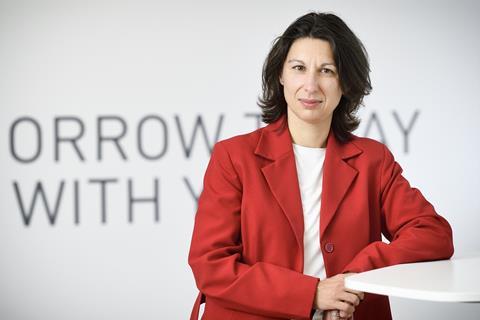
Her working experience at AIT Austrian Institute of Technology spans over 20 years and includes numerous positions, activities, and responsibilities.
In 2012 she was awarded the Erwin-Schrödinger Fellowship of the Austrian Science Fund for a research sabbatical at Michigan State University, USA. Since 2023, she has been the Thematic Coordinator for the topic “Food System Microbiomes”.
In 2024/2025, she also served as Managing Director of the MicrobiomeSupport Association. Her research interests revolve around the food system microbiomes, their interactions and interconnectedness, and opportunities to develop microbiome knowledge-driven applications.
What real-world problem would you eventually love to solve with microbiology?
What motivates me most is the idea of using microbiology to make food production more sustainable and resilient to future challenges such as climate change, while ensuring that food remains nutritious, healthy, and safe.
I believe microorganisms have tremendous potential to improve soil health, support plant growth, reduce the need for chemical inputs, and enhance food quality. I’d love to contribute to developing microbiome-based solutions that help create a more sustainable food system without compromising human health or environmental sustainability.
Tell me about your journey with AMI.
My journey with AMI started at the Food Systems Microbiomes Conference 2025, which we organised through the MicrobiomeSupport Association, when AMI took over the sponsorship of the Early Stage Researcher (ESR) session.
This sponsorship was instrumental in giving young researchers in microbiome science a platform to share their perspectives on “The Many Pathways to Sustainable Food Systems Powered by Microbiomes”. I really appreciated AMI’s commitment to supporting early-career scientists and fostering interdisciplinary dialogue.
I also discovered AMI’s strong commitment to publishing policy-oriented papers that help translate scientific knowledge into practical recommendations for decision-makers. I find this particularly valuable because such publications are essential for bridging the gap between research and policy and ultimately real-world application. They were also very helpful in disseminating several of the concepts developed within the EU project MICROBE.
How has access to AMI’s Research & Learning membership benefits helped you develop, discover, publish or share knowledge?
Examples of this are two publications developed in the EU project MICROBE and published in Sustainable Microbiology.
As well as this, another example is a paper that was developed in collaboration with the International Bioeconomy Forum.
This has been a great start, and I’m looking forward to exploring how the AMI membership and its community can further support my professional journey.
ORCID: https://orcid.org/0000-0003-4972-4141
LinkedIn: https://www.linkedin.com/in/tanja-kostic-07a5b51a/
Topics
- AIT Austrian Institute of Technology
- Be inspired
- Early Career Research
- Food and Fermentation
- Food Security
- food system microbiomes
- Michigan State University
- MicrobiomeSupport Association
- Policy
- Publishing
- Sustainable Microbiology
- Tanja Kostić
- UK & Rest of Europe
- University of Graz
- University of Natural Resources and Life Sciences






No comments yet