
An innovative citizen science project is combining large-scale microbe sampling with metagenomics workshops and utilising the power of students to map out the varied microbiomes of the University of Milano-Bicocca’s campus - including those within the students themselves.
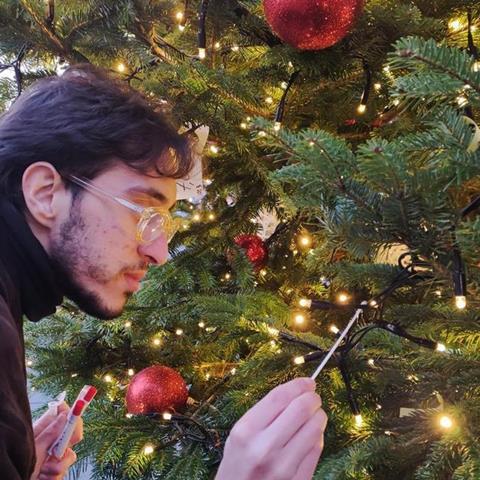
This project provides new insights into the hidden and complex world of microbial communities and provides valuable opportunities for scientific skill development and educational outreach.
The project, developed by Dr Antonia Bruno, Dr Giulia Ghisleni and other professors and researchers from the University of Milano-Bicocca, in Milan, Italy, was inspired by growing concerns about how urbanisation has reduced microbial biodiversity and disrupted the relationship between humans and microorganisms.
“As cities like Milan in Italy expand, this loss of microbial exposure has been linked to health issues, sometimes referred to as ‘diseases of civilization’,” says Dr Bruno.
Living lab
Microbiomes are an important factor in urban ecology and human health, but their spatial structure and exchange dynamics between people and their environment are not well understood. This project, presented at the Society for Experimental Biology conference in Florence, Italy, demonstrates the value of using a university campus “living lab” as a model system to explore how human and environmental microbiomes co-structure and interact.
LIVING LAB: Fantastic microbes and where to find them: join a citizen science journey through the urban microbiome
A “living lab” is a real-world research environment built through co-creation, where citizens, researchers, industry, and public institutions collaborate to develop scientific solutions to actual needs. In this project, university students were heavily involved in all elements of data collection and interpretation to maximise their investment in the research and its output.
“We developed a participatory science framework that positions students as active contributors to environmental microbiome research through co-designed sampling, data generation, and collaborative analysis”, says Dr Ghisleni. This framework was implemented during Bicocca Sampling Days, a year-long hands-on learning event embedded within an urban regeneration context in Milan, Italy.
Large-scale campaign
Microbial sampling was carried out by the team through a large-scale campaign across two seasons. The team collected over 1,100 samples, including environmental samples by swapping indoor and outdoor spaces and collecting soil samples, as well as collecting evidence from human microbiomes through student skin and stool samples.
MICROBIOLOGY NEWS: Register with The Microbiologist for more free articles
In addition, the team’s Bicocca Sampling Days involved the students collecting thousands of environmental samples across campus green spaces within a short timeframe, using standardised protocols and digital tools to record location and maintain high data quality.
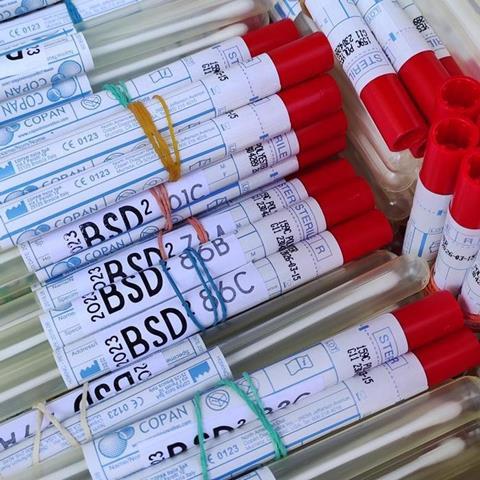
“We designed the Bicocca Sampling Days to have local impact, but also to create a reproducible, guided educational framework for participatory microbiome research, ready to use for microbiologists worldwide,” says Dr Bruno. The team also provide evaluation tools, so that microbiologists applying for participatory research can quantify their impacts on participants.
Fantastic microbes
In addition to the Bicocca Sampling Days, the team developed and delivered a hands-on metagenomics workshop that provided the students with opportunities to process their collected microbiome samples through the Fantastic Microbes and Where to Find Them crowdfunding initiative. Participants learned how DNA sequencing data is processed and interpreted to identify microbial communities using the KBase platform.
“The workshop was explicitly structured to provide an accessible yet authentic research experience, integrating computational tools with uncertainty, collaborative problem solving and inquiry-based learning,” says Dr Ghisleni.
MICROBIOLOGY ON TAP: Get full access to all The Microbiologist articles from just £2.17 a month
The team found that indoor locations were enriched in human-associated microbial species, whereas outdoor sites displayed higher diversity and distinct ecological signatures. “Overall, the results reveal a complex network of microbial exchange across urban ecosystems,” says Dr Bruno. “The students both shape and are shaped by the microbiomes around them.”
Environment and season
They also found that there were differences between sampling periods, which highlights the strong influence of environment and season on microbial composition.
The major benefits of involving students in this project include the ability to do large-scale sampling, hands-on learning and scientific skill development for the participants, increased awareness of microbiomes and their role in human health, and stronger engagement with the community to build trust and public interest in science.
This is far from the end of the project, and the team are continuously looking at new ways to advance the bioinformatics and metagenomics analysis, integrate their findings into urban planning strategies and to extend the living lab model - including the potential launch of a similar project taking place at the University of California, Berkeley.



No comments yet