
In a new study published in the journal mBio, researchers at the University of Maryland School of Medicine (UMSOM) report that the long-standing view of the vaginal microbiome as either “optimal” or “non-optimal” based on a small number of bacterial species is overly simplistic.
By analyzing vaginal microbiome data at unprecedented resolution, the team identified 25 distinct vaginal microbiome types and demonstrated that bacteria of the same species can differ substantially in their functional potential, thereby affecting how these microbes interact with the body.
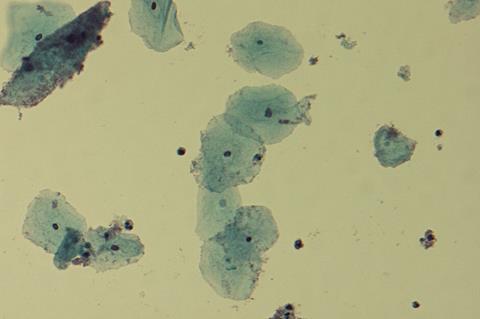
Historically, vaginal health has often been described in terms of dominance by Lactobacillus species versus Gardnerella, the latter commonly associated with bacterial vaginosis and other adverse reproductive and urogenital outcomes. The new findings show that this classification does not fully capture the biological diversity of vaginal microbial communities.
“Our results show that it is not enough to ask which bacterial species are present, we need to understand what they are capable of doing, and what they are doing,” said Amanda Williams, PhD, a postdoctoral fellow at UMSOM’s Institute for Genome Sciences (IGS) Center for Advanced Microbiome Research and Innovation made (CAMRI), and lead author on the study. “We found that multiple vaginal microbiome types can be dominated by Gardnerella yet differ in their functional profiles and associations with inflammation and risk of adverse outcomes.”
Biological heterogeneity
Among the 25 microbiome types identified, six were dominated by Gardnerella. One of these showed functional and inflammatory profiles that more closely resembled microbiomes dominated by Lactobacillus, highlighting the biological heterogeneity within what is often treated as a single category.
To enable this level of analysis, the CAMRI team developed and applied two open-source computational tools. VIRGO2 is an expanded gene catalog comprising approximately 1.7 million genes from bacteria, fungi, and viruses found in the vaginal microbiome, built using samples collected from women across five continents.
A recent paper in Nature Communications, led by Michael France, PhD, Research Associate at IGS and CAMRI, explains VIRGO2 in more detail. VISTA (Vaginal Interference of Subspecies and Typing Algorithm) complements this resource by defining metagenomic community state types (mgCST), allowing researchers to examine vaginal microbiomes at the strain-community level rather than relying solely on species identification.
Host biology
“These tools allow us to study how vaginal microbiomes differ in their functional potential and how those differences may relate to host biology,” said senior author Johanna Holm, PhD, a scientist at IGS and CAMRI, and Assistant Professor of Microbiology and Immunology at UMSOM. “While this work does not immediately change clinical practice, it provides a framework for future studies aimed at improving risk stratification, diagnostics, and treatment strategies in women’s health.”
READ MORE: Researchers develop new DNA test for personalized treatment of bacterial vaginosis
READ MORE: The shifting landscape of the cervicovaginal microbiome in chlamydia infection
The researchers emphasize that further research will be needed to determine how these microbiome types relate to clinical outcomes and how such information might eventually inform more tailored approaches to diagnostics and treatment.






No comments yet