
Brick kilns have supported construction and urban development, but traditional brick production can enrich surrounding soils with toxic metal and metalloid pollutants, including arsenic. Arsenic is highly mobile, toxic even at low concentrations, and can threaten soil ecological safety and human health.
Soil microorganisms are sensitive indicators of soil health and may also contribute to ecological restoration through their stress-response and detoxification functions. However, the bacterial metabolic capacity and arsenic-detoxification mechanisms in shut-down brick kiln soils have not been fully clarified, making it necessary to investigate how indigenous soil bacteria respond to arsenic contamination.
A study (DOI:10.48130/aee-0026-0009) published in Agricultural Ecology and Environment on 21 April 2026 by Mao Ye’s team, Nanjing University, reports that arsenic contamination reshapes soil bacterial communities, weakens ecosystem stability, alters metabolic functions, and promotes arsenic-detoxification pathways.
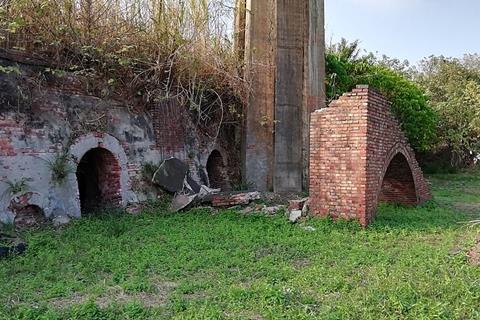
Shut-down brick kiln
To examine microbial responses across an arsenic gradient, the researchers collected soils from a shut-down brick kiln area in Anhui Province, China. After screening 1,975 original samples, they selected representative soils classified as Clean, Light, and Heavy according to arsenic concentrations. The average arsenic levels were 8.42 mg/kg in Clean soils, 20.87 mg/kg in Light soils, and 54.46 mg/kg in Heavy soils.
The team measured soil physicochemical properties, extracted soil DNA, amplified the V3–V4 region of bacterial 16S ribosomal RNA (rRNA), and performed high-throughput sequencing. They then used operational taxonomic unit (OTU) clustering, taxonomic annotation, co-occurrence network analysis, and PICRUSt2-based functional prediction to evaluate bacterial community composition, ecological interactions, metabolic pathways, and resistance genes.
Impact on bacteria
The results showed that arsenic contamination reduced bacterial richness and diversity. The Ace and Chao indices declined significantly, while the Shannon and Simpson indices followed the trend Clean > Light > Heavy.
At the phylum level, Acidobacteria, Proteobacteria, and Bacteroidetes dominated the soils, but their proportions changed with contamination. Acidobacteria decreased as arsenic increased, while Proteobacteria rose from 27.37% in Clean soils to 38.54% in Heavy soils, suggesting enrichment of arsenic-tolerant bacterial groups.
Network analysis further showed that bacterial interactions became denser under heavy arsenic stress, with network density rising from 0.118 to 0.126, while modularity dropped from 0.748 to 0.669, indicating reduced community stability. Functionally, 376 metabolic pathways were detected. Metabolism and genetic information processing declined with higher arsenic levels, while environmental information processing and cellular processes increased. Signal transduction increased from 3.78% to 4.38%, and cell motility rose from 1.31% to 1.97%, indicating that bacteria activated stress-sensing and movement-related responses.
At the same time, carbohydrate, amino acid, and energy metabolism decreased, while methane metabolism and carbon fixation were weakened. Arsenic-resistance genes also shifted: arsC2, arsB, and arsR were upregulated in contaminated soils, suggesting that bacteria may reduce arsenate [As(V)] to arsenite [As(III)] and then export As(III) from cells.
Bacterial community shifts
Overall, the study shows that arsenic pollution does not merely change which bacteria live in brick kiln soils; it also alters how they interact, process nutrients, and defend themselves.
By linking bacterial community shifts with metabolic prediction and arsenic-resistance genes, the work provides a useful framework for understanding microbial adaptation in legacy industrial soils.
The authors note that future work should include chemical quantification, gene cloning, and functional assays to verify the roles of genes such as arsC2 and arsB in arsenic detoxification.






No comments yet