
The Green View Index can be used to identify and develop areas where vegetation is likely to support urban microbial diversity.
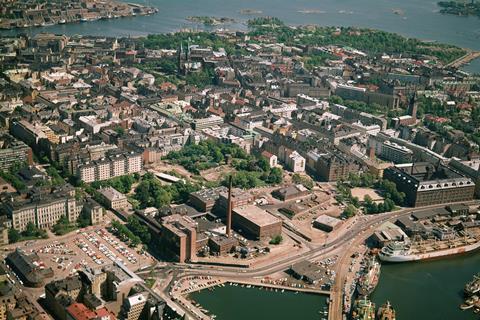
Researchers from the University of Helsinki, Natural Resources Institute Finland, Tamkang University, and National Taiwan University investigated how the Green View Index (GVI) relates to the richness and diversity of bacteria in the Taipei metropolitan area in Taiwan. The more vegetation in the area, the richer its microbial community. The Green View Index measures visible greenery from the pedestrian perspective.
“Urban biodiversity hotspots, such as parks, green walls, trees and potted plants, had clearly higher microbial richness and Shannon diversity than pavements or entrances to residential buildings. The Shannon Diversity Index measures both the number of species and the evenness of their distribution. In addition, the GVI correlates with the microbiota particularly in these biodiversity hotspot sites, unlike elsewhere in the studied urban environment,” says Long Xie, a postdoctoral researcher at the University of Helsinki.
Surprisingly, the GVI was found to correlate more strongly with microbial richness than with Shannon diversity. This suggests that vegetation primarily supports the accumulation of microbial species, while the evenness of distribution in the microbial community is also shaped by filtering processes in the urban environment, including light, temperature, humidity and other microclimate conditions, impermeable surfaces, human intervention and broader urban morphology.
Streetscape meets environmental DNA
The study combined two methods that have rarely been used together: the Green View Index derived from street view images with the help of semantic segmentation based on deep learning, and environmental DNA (eDNA) sequencing. Instead of actually counting microbes, they were profiled by analysing the eDNA left in the environment.
“Urban greenery serves not only aesthetic purposes or climate regulation, but also maintains unseen microbial diversity that potentially benefits the human immune system. The Green View Index provides urban planners with a concrete and scalable tool that can be used to identify and develop areas where vegetation is likely to support microbial diversity,” says Associate Professor of Wood Material Science Tuula Jyske from the University of Helsinki.
The study, published in Landscape and Urban Planning, was conducted in one urban area during one winter season. Different climates, seasons and vegetation types may produce different results. Moreover, the study did not directly measure outcomes related to human health. The researchers are calling for longitudinal and cross-seasonal studies in multiple cities to determine the kind of urban greenery that best supports both microbial diversity and human wellbeing.
The green view index
The green view index (GVI) describes the percentage of green vegetation in a street view image or images of a certain location. The index only counts the vegetation that is visible in a pedestrian’s field of view.
Topics
- Bacteria
- Early Career Research
- Ecology
- Environmental Microbiology
- Green View Index
- Long Xie
- Microbes of the Earth
- National Taiwan University
- Natural Resources Institute Finland
- One Health
- Research News
- Shannon Diversity Index
- Soil & Plant Science
- Tamkang University
- Tuula Jyske
- UK & Rest of Europe
- University of Helsinki
- urban environment



No comments yet