
Each year, antimicrobial resistance (AMR) is responsible for an estimated 1.1 to 1.4 million deaths worldwide. Now, scientists have found evidence that the spread of AMR isn’t always driven by bacteria evolving to resist the antibiotics themselves: rather, certain weedkillers can have the same effect.
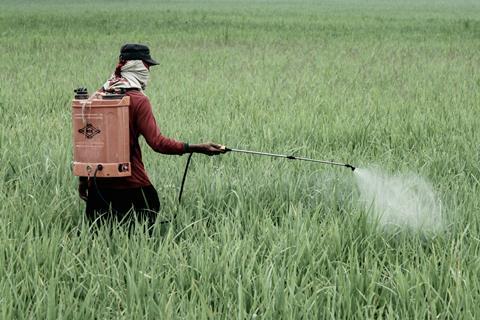
“Here we show that the most common species of multidrug-resistant bacteria from hospitals are not only resistant to multiple antibiotic classes, but also to high concentrations of the weedkiller glyphosate,” said Dr Daniela Centrón, a researcher at the Institute of Medical Microbiology and Parasitology in Buenos Aires and the senior author of the study in Frontiers in Microbiology.
“These results suggest that weedkillers – which, unlike antibiotics, are widely applied in agricultural environments – may have the unintended side-effect of selecting for AMR among bacterial communities within the soil.”
In 2018 and 2020, Centrón and colleagues had collected 68 bacterial strains from sediments in a nature reserve in the Paraná delta, a wetland of international importance located north of Buenos Aires. Glyphosate is frequently applied to nearby agricultural areas.
Degree of resistance
The scientists here tested each strain’s degree of resistance to 16 common antibiotics, such as ampicillin combined with sulbactam, meropenem, tetracycline, and vancomycin. They also measured the strains’ resistance to pure glyphosate and glyphosate-based herbicides – chosen because they are among the most frequently used herbicides around the world.
The scientists compared the results with those from 19 strains, including multidrug-resistant species, sampled from local hospitals. Another 15 strains had been isolated from feedlots and herbicide-impacted agricultural soils in the region.
As expected, the hospital strains were each resistant to between 1 and 16 of the antibiotics tested, confirming widespread AMR. Worryingly, 74% were resistant to carbapenems, broad-spectrum antibiotics commonly used as a treatment of last resort. Importantly, all hospital strains also proved highly resistant to glyphosate and glyphosate-based weedkillers.
“This means that if these bacteria enter the environment through untreated wastewater from hospitals, they could go on to thrive in agricultural areas where glyphosate is used,” said first author Dr Camila Knecht from Dr Centrón’s group.
15 genera
Strains from the Paraná delta spanned 15 genera, including Acinetobacter, Pseudomonas, Exiguobacterium, and Chryseobacterium. Each had at least partial resistance to glyphosate and glyphosate-based weedkillers, even though these have never been used in the reserve itself.
Enterobacter strains tolerated the highest concentrations of glyphosate, up to 80 milligram per milliliter. At the other extreme, Bacillus strains, usually found in soils, were particularly susceptible: their growth was already inhibited at a concentration of 2.5 milligram of glyphosate per milliliter. And high resistance to glyphosate was also found in strains isolated from hospital infections with extreme drug resistance.
All in the family
When the scientists made a ‘family tree’ of all 102 bacterial strains, those most resistant against glyphosate tended to be close relatives, irrespective of their location of origin. For example, the same genera were found to be resistant against glyphosate across hospitals, agricultural areas, and the Paraná delta.
“In the environment, the use of glyphosate leads to the evolution of resistant bacteria in impacted soils, whereas the use of antibiotics favors their evolution in hospitals. Bacteria carrying antibiotic resistance genes can spread and breed between those two niches in both directions and in multiple ways, with the water cycle playing a key role in transmission,” concluded coauthor Dr Jochen A Müller, a group leader at Karlsruhe Institute of Technology.
Controversial weedkiller
The use of glyphosate is not without controversy: it is known to harm arthropods (in particular bees), while the International Agency for Research on Cancer has classified it as a probable human carcinogen. For this reason, France, Belgium, and the Netherlands have banned glyphosate for household use, while Germany currently prohibits its use in public spaces.
“Policies for the use of any pesticide, as well as its metabolites, should stipulate the requirement for co-selection testing with antibiotics before marketing. Labels should include a warming that genes for antibiotic resistance can spread from glyphosate-contaminated soils to hospitals through untreated water,” counseled Centrón.
Topics
- Acinetobacter
- Agriculture
- AMR in the Environment
- Antimicrobial Resistance
- Bacillus
- Bacteria
- Camila Knecht
- carbapenems
- Chryseobacterium
- Daniela Centrón
- Exiguobacterium
- Germany
- glyphosate
- Healthy Land
- herbicides
- Institute of Medical Microbiology and Parasitology
- Jochen A Müller
- Karlsruhe Institute of Technology
- Paraná delta
- Pseudomonas
- Research News
- Soil & Plant Science
- The Americas
- UK & Rest of Europe
- weedkillers



No comments yet