
All Osaka Metropolitan University articles
-
 News
NewsPartners launch development of a portable rapid diagnostic system for Ebola virus disease
Professor Yasutoshi Kido of the Graduate School of Medicine, Osaka Metropolitan University (OMU), in collaboration with K.K. DNAFORM and the National Institute for Biomedical Research (INRB) of the Democratic Republic of the Congo, is developing a portable rapid diagnostic system for Ebola virus disease (EVD) caused by Bundibugyo virus (BDBV). ...
-
 News
NewsStudy deploys DNA to track infectious bacteria from raccoons via rivers to humans
The emerging infectious bacterium Escherichia albertii has caused outbreaks of severe food poisoning and hospitalized people through contaminated water and foods, such as salad ingredients. A new study suggests a pathway by which invasive raccoons transmit infections to humans.
-
 News
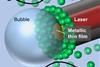
NewsOptical method concentrates microscopic targets for faster, more sensitive detection
Researchers have developed a light-driven technique that quickly amasses thousands of bacteria into a single spot, boosting detection speed and sensitivity. Their approach paves the way for earlier diagnosis of disease.
-
 News
NewsParaprobiotic counteracts damage to male fertility from BPA in plastic
BPA has been shown to impair sperm function, in part through increased generation of reactive oxygen species. Researchers investigated whether a paraprobiotic material derived from the lactic acid bacterium Enterococcus faecalis (known as FK‑23) protects against the sperm toxicity caused by BPA.
-
 News
NewsUnraveling the complexities of the Borna disease virus 1
Researchers have published the first detailed structural description of the nucleoprotein-RNA complex in the family Bornaviridae. Their observations revealed the three-dimensional structure of this nucleoprotein-RNA complex, showing ring-like assemblies and viral RNA binds in the inner groove.
-
 News
NewsStolen chloroplasts maintained by host-made proteins offer clues to plant cell origins
The single-celled predator Rapaza viridis temporarily retains chloroplasts from prey algae and imports its own proteins into them, new research has shown.
-
 News
NewsFreshwater alga captures far-red light for photosynthesis by rearranging ordinary chlorophyll
To survive in areas where it is difficult to photosynthesize, some organisms adopt unique strategies. Researchers have found that a freshwater alga captures far-red light as an additional energy source by arranging ordinary chlorophyll in an extraordinary way.
-
 News
NewsMethane’s missing emissions: The underestimated impact of small sources
Although efforts are being made to reduce the contribution of big polluters to methane in Japan, new research suggests that smaller sources are vastly underestimated in the Osaka metropolitan area. The team found unaccounted emissions from numerous small sources, including restaurants, commercial facilities, and private residences.
-
 News
NewsResearchers probe how natto produces supersulfide molecules in fermentation
Natto, a Japanese food made from soybeans fermented with the Bacillus subtilis var. natto microorganism, is rich in supersulfide molecules, which are attracting attention in the medical and nutritional fields. Researchers extensively analyzed supersulfide content in natto fermentation using various methods.
-
 News
NewsFrom sea to soil: Molecular changes suggest how algae evolved into plants
A research team used cryo-electron microscopy to look at the three-dimensional structure and function of Lhcp, a unique prasinophyte LHC, from the microscopic alga Ostreococcus tauri. The team compared their results to LHCII, which is found in terrestrial plants.
-
 News
NewsDouble trouble: Tobacco use and Long COVID
Researchers investigating the relationship between Long Covid symptoms and smoking by tobacco type found that certain symptoms correlated with different forms of smoking.
-
 News
NewsMutated baker’s yeast at the forefront of petroleum substitute tech
Researchers engineering Saccharomyces cerevisiae to produce 2,3-butanediol (2,3-BDO) introduced mutations into the genomic DNA. The researchers engineered four altered strains and subjected them to ethanol, heat, and low pH stressors.
-
 News
NewsMarine algae use unique pigment to shield photosynthesis from excess light
Researchers have discovered that marine algae have evolved unique pigments not only to capture the green-blue light available underwater but also to enhance their resilience against excessive sunlight.
-
 News
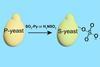
NewsSulfated yeast could help recover rare earth metals from waste liquids
Electronics, optical fibers, and superconducting materials heavily rely on rare earth metals, but innovative recycling solutions are lacking. Now researchers in Japan have successfully achieved selective recovery of metals with S-yeast, a sulfated yeast.
-
 News
NewsChanges in gut microbiota influence which patients get AIG-related neuroendocrine tumors
Researchers have discovered how the balance of bacteria in the stomach affects the growth of neuroendocrine tumors (NETs). By identifying the specific bacteria involved and the biochemical reactions that cause tumor growth, they hope to detect which patients are most likely to develop cancer.
-
 News
NewsHelping me, inhibiting you: Analysis of interactions between intestinal microbiota
Researchers have analyzed the interactions between two bacteria that make up intestinal microbiota. While Faecalibacterium prausnitzii inhibits the growth of Fusobacterium varium, F. varium promotes the growth of F. prausnitzii.
-
 News
NewsIlluminated changes: Enhancing D-lactic acid output with UV irradiation
Researchers have developed a Komagataella phaffii (K. phaffii) yeast strain that can efficiently produce D-lactic acid, a raw material for pharmaceuticals and bioplastics, from methanol.
-
 News
NewsAntibiotic-resistant Escherichia albertii on the rise in Bangladeshi chicken shops
Researchers have detected alarming rates of Escherichia albertii in retail chicken meat in Bangladesh. Their findings show extensive contamination and significant antimicrobial resistance, underscoring the potential risks to public health.
-
 News
NewsGreen recipe: Engineered yeast boosts D-lactic acid production
An optimal combination of genetic “recipe” in a yeast strain achieves high yields of D-lactic acid production from methanol, advancing eco-friendly and sustainable biomanufacturing.
-
 News
NewsHelicobacter pylori treatment practices in the Asia-Pacific region
Researchers conducted an online survey of clinicians in the Asia-Pacific region to investigate treatment policies for H. pylori and confirmed that there is a growing consensus of the importance of primary and secondary prevention against H. pylori.