
All People News articles – Page 4
-
 News
NewsMicrobiome pioneer Jacques Ravel named 2026 Microbiome Medal Laureate
Jacques Ravel, professor at the University of Maryland School of Medicine and leader in human microbiome research, has been named by the One Health Microbiome Center as the second laureate of the Microbiome Medal.
-
 News
NewsResearcher secures nearly $4 million NIH grant to advance therapeutic vaccine to help end genital herpes
University of California, Irvine immunologist Lbachir BenMohamed has been awarded a $3.93 million National Institutes of Health grant to develop and test a novel therapeutic vaccine designed to prevent recurrent genital herpes.
-
 News
NewsFermentation science may offer new route to better lower-alcohol wine
In addition to finding ways to ferment grape juice without producing as much alcohol, one scientist is exploring novel yeasts and methods to overproduce aromas to compensate for their eventual loss when reducing alcohol through grape juice dilution.
-
 News
NewsResearchers investigate the underlying causes of post-treatment Lyme disease syndrome
With an estimated one million Americans afflicted with post-treatment Lyme disease syndrome, newly funded research seeks to determine whether the condition is triggered by a persistent autoimmune response, and if a test can be devised to pinpoint who is more likely to develop it.
-
 News
NewsElsevier launches Ebola Information Center with free clinical and research resources
Elsevier has launched an Ebola Information Center to provide healthcare professionals, researchers, policy makers and the public with free access to critical clinical and research information to support the global response to this outbreak.
-
 News
NewsThousands of young people to be offered two-dose MenB vaccine ahead of autumn
Thousands of young people across England will get protection against meningococcal B disease (MenB) through a one-off vaccination programme launching ahead of the 2026 academic year.
-
 News
NewsExploring potential of virovory in combating harmful algal blooms
Toxic cyanobacterial blooms can close lakes, contaminate drinking water and pose risks to human health. A new project is exploring an unlikely tool for mitigating these blooms: virovory, the phenomenon of organisms eating viruses as a food source.
-
 News
NewsAsk the expert: World Cup travel and Ebola risk
Luis Ostrosky, MD, division chief of infectious diseases at McGovern Medical School at UTHealth Houston and chief epidemiology officer for Memorial Hermann Health System addresses the Ebola outbreak in Congo and Uganda and how the United States could be affected through travel.
-
 News
NewsAMI Member Survey reveals strong global engagement and growing demand for career support
Applied Microbiology International (AMI) has published the results of its 2026 Member Survey, revealing a highly engaged and increasingly international membership community, while highlighting new opportunities to strengthen accessibility, visibility and participation across the organisation.
-
 News
NewsMicrobial research captured among winning science images
Microbial research features among some of the winning images in Nature’s 2026 Scientist at Work photography competition. Microbiome sampling of whale sharks, algal blooms, and a coral probiotics village feature among five spectacular images showcasing the diversity and challenges of scientific research.
-
 News
NewsBiologist dives beneath Antarctica sea ice to study the impact of climate change
One biologist is studying the genetic diversity of red algae to see how this vital part of Antarctica’s underwater ecosystem is affected by climate change. Answering that question is becoming increasingly important as Earth’s warming climate causes Antarctica’s sea ice to recede farther with every passing year.
-
 News
NewsExpert tips: Why it’s best to eat more than one kind of fiber - and build up gradually
Fiber is an essential part of a healthy diet. By eating a variety of plant-based foods, increasing fiber intake gradually and staying well hydrated, you can support gut health and overall well-being while making fiber goals more achievable and sustainable. Purna Kashyap, M.B.B.S., a gastroenterologist at Mayo Clinic in Rochester, ...
-
 News
NewsResearchers test two treatments to protect against deadly cattle disease
As cases of a deadly cattle disease rise in Arkansas, researchers are testing two treatments they hope will help ranchers protect their herds. The disease is bovine theileriosis and is caused by the parasite Theileria orientalis Ikeda, carried primarily by the invasive Asian longhorned tick.
-
 News
NewsQ&A: Meet Letters in Applied Microbiology Junior Reviewer Md. Ekramul Karim
We caught up with Md Ekramul Karim, a Ph.D. candidate at the University of Houston, who is one of the newest Junior Reviewers with Letters in Applied Microbiology.
-
 News
NewsAll-new lab in Kenya fills critical gap in wildlife health
Conservation stakeholders gathered to celebrate the official opening of the Laboratory in Northern Kenya (LiNK), an all-new veterinary diagnostic lab designed to fill a critical need for accessible diagnostic infrastructure in the remote region.
-
 News
NewsAccelerating chikungunya vaccine development in Africa: Launch of the ACT-CHIK Project
Funded by the Global Health EDCTP3 Joint Undertaking, a new €15.3 million project coordinated by Institut Pasteur brings together seven partners across four continents to advance clinical trials and prepare for the manufacturing of a chikungunya vaccine in Africa.
-
 News
NewsEurope’s crops under threat: €6 million project launches to tackle rising plant pest crisis
The University of Warwick leads a European consortium to build the first platform capable of coordinating Europe’s response to devastating agricultural and forest pest invasions. The project will give plant health authorities the ability to model and optimise pest control strategies across the entire agri-value chain.
-
 News
NewsResearch team awarded NIH grant to study early immune determinants of human tuberculosis infection
A research team was awarded a 5-year, $3.8 million grant to study early immune responses in the lung and how they influence tuberculosis infection outcomes. The program focuses on how lung immune cells called macrophages influence the earliest stages of tuberculosis infection.
-
 News
NewsDentistry researchers testing oral bacteria transplants to cure bad breath
To rebalance the oral microbiome and cure chronic halitosis, researchers are embarking on a first-of-its-kind experiment. These clinical trials transplant bacteria and other microbes from healthy donors into patients with halitosis. If successful, the healthy microbiota will crowd out the bad and patients’ bad breath will improve.
-
 News
NewsProfessor Kaneko’s sake and wine earn honors at French Japanese Sake Competition for second consecutive year
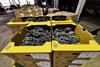
At “Kura Master,” a Japanese sake competition held in France for French consumers since 2017, “Aldebaran,” a wine produced from grapes grown in the city of Ibara, in Okayama Prefecture, and supervised by Professor Akihiro Kaneko, won a Gold Award in the Muscat Bailey A category.