
The inaugural Microbiome Symposium of Puerto Rico and the Caribbean marked a major milestone for microbiome science in the region and reinforced Puerto Rico’s growing leadership in interdisciplinary biomedical research, says chair Filipa Godoy-Vitorino of the University of Puerto Rico.
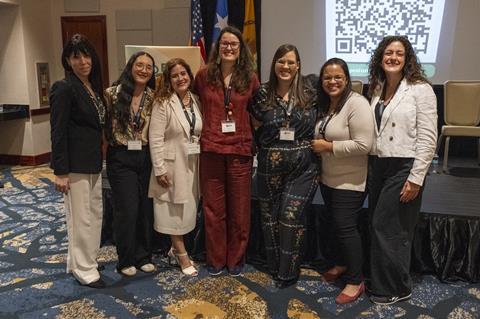
Organized by Puerto Rico AMI Global Ambassador Dr. Filipa Godoy-Vitorino and supported by the newly funded COBRE Puerto Rico Center for Microbiome Sciences (PR-CMS), the event, titled ’Community Dynamics in a Changing World’, brought together more than 200 participants, including local and national scientists, clinicians, students, environmental researchers, physician-scientists and computational biologists.
The symposium highlighted how microbiome research is reshaping our understanding of health, disease, biodiversity, and environmental resilience. Sessions explored host–microbiome interactions, cancer biology, infectious diseases, diet and immunity, tropical ecosystems, translational medicine and emerging computational approaches. A strong emphasis was placed on integrating multi-omics technologies, artificial intelligence and bioinformatics to better understand microbial ecosystems and their influence on human and environmental health.
Four key themes
Four major scientific themes defined the meeting. Early-life microbiome development was explored through the keynote lecture of Dr. María Gloria Dominguez-Bello, Distinguished Professor at Rutgers University, whose work bridges microbiology, medicine, anthropology, and public health.
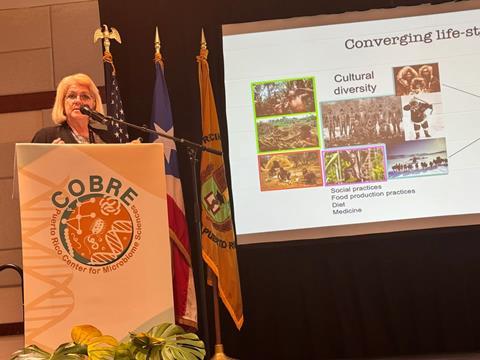
Her presentation introduced the Ecological Network Balance Index (ENBI), an innovative framework evaluating how microbial communities cooperate and compete, shifting the field beyond studying individual microbes toward understanding community-wide ecological balance.
Computational microbiome science was highlighted by Professor Keith Crandall, founding Director of the Computational Biology Institute at George Washington University, who emphasized the growing importance of big data, bioinformatics, and systems biology in decoding complex microbial interactions.
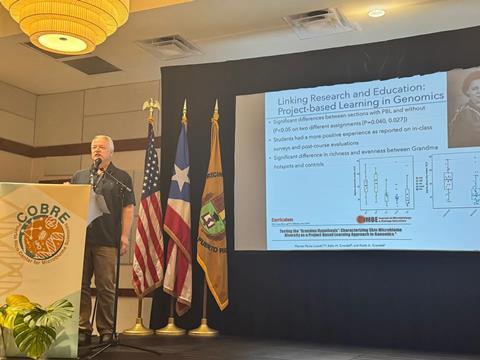
Diet–microbiome interactions were explored by Dr. Ana Maldonado-Contreras from UMass Chan Medical School, whose work examines how nutrition shapes microbial communities and inflammatory responses linked to disease. Microbial ecology and cancer were further discussed by Dr. Natalie Meléndez-Vázquez, Postdoctoral Researcher of the University of Puerto Rico School of Medicine, who presented research connecting microbiota, cancer therapies, and women’s health.
Short talks and elevator pitches
The symposium also featured short talks and elevator pitches from graduate students and medical residents, examining microbiomes across diverse organisms, including humans, mice, insects, turtles, and marine ecosystems. These presentations reflected the broad interdisciplinary nature of microbiome science and demonstrated how microbial interactions influence both planetary and human health.
One of the symposium’s greatest achievements was strengthening scientific collaboration across Puerto Rico instituitonsand biomedical centers. The event united researchers from more than 40 laboratories and 27 institutions, including universities, biomedical centers, the NIH, CDC, and USDA, while fostering new partnerships with collaborators from the United States,many of the posters included collaborations a with Europe and beyond. Through keynote lectures, student presentations, flash talks, and poster sessions, the meeting created a dynamic platform for mentorship, networking, and interdisciplinary innovation.
Role of students
Student participation was central to the symposium’s mission. Trainees presented research spanning clinical microbiology, environmental sciences, computational biology, and translational medicine, showcasing the depth and quality of emerging microbiome research in Puerto Rico.
In partnership with Applied Microbiology International (AMI), students presenting the best oral and poster presentations received complimentary AMI memberships, providing access to international scientific networks, professional development opportunities, and publishing resources.
The symposium also honored the legacy of Dr. Américo Pomales-Lebrón, a pioneering microbiologist and founding Puerto Rico Society for Microbiologists (the ASM chapter in Puerto Rico) whose contributions to infectious disease research helped shape microbiology in Puerto Rico. In his honor, PR-CMS presented a monetary award for the best student oral presentation, reinforcing the Center’s commitment to training the next generation of microbiome scientists and supported peer-review in poster and oral sessions.
The future of microbiome research
A special roundtable discussion on the future of microbiome science, moderated by Dr. Filipa Godoy-Vitorino, brought together internationally recognized experts including María Gloria Dominguez-Bello, Keith Crandall, Ana Maldonado-Contreras, Janet Jansson, and Martin J. Blaser. The panel emphasized a major shift in the field from cataloging microbial diversity toward understanding microbial interactions, ecological networks, and mechanistic pathways influencing disease and health.
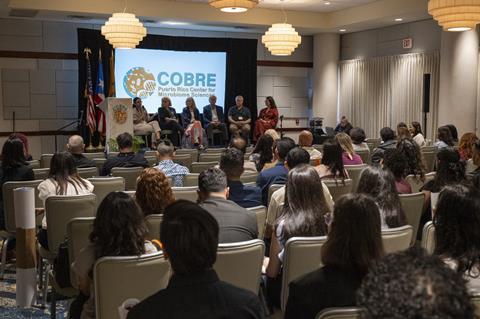
Discussions highlighted the importance of early-life microbial diversity, longitudinal studies, standardized dietary analyses, and precision nutrition approaches for advancing microbiome-based therapies. The panel concluded that Puerto Rico has strong potential to become a regional hub for microbiome innovation and collaborative research in the Caribbean.
New initiative
The symposium also celebrated the launch and development of the Puerto Rico Center for Microbiome Sciences, a new initiative funded through the NIGMS COBRE program. PR-CMS aims to expand microbiome research infrastructure on the island, support physician-scientists and early-career investigators, and create collaborative opportunities across biomedical institutions in Puerto Rico.
By integrating clinical, environmental, and computational microbiome sciences, the Center seeks to position Puerto Rico as a leading center for microbiome discovery, education, and translational science in the Caribbean. In the same weekend, other centers funded by NIH National Institute of General and Medical Sciences were brought together to talk about new collaborative efforts, a truly original and resourceful way to reinforce and expand science across Puerto Rico in the current scientific environment.
Major announcement
A major announcement during the symposium revealed that the 2nd Microbiome Symposium of Puerto Rico and the Caribbean will take place on December 1st in San Juan, Puerto Rico, under the title ’Hidden Bonds: The Intricate World of Microbiome Symbioses’. The upcoming meeting will continue promoting interdisciplinary collaborations while expanding conversations around One Health, environmental sustainability, microbial ecology, and translational microbiome medicine.
The second symposium will feature Applied Microbiology International President Dr. Jack Gilbert as keynote speaker, alongside leading scientists from Puerto Rico and the United States. The program will explore emerging microbiome technologies, precision medicine, environmental microbiology, microbial ecology, and innovative One Health frameworks connecting human, animal, and ecosystem health.
These symposia are free events with no registration fees, as part of our efforts to promote microbiome literacy, scientific outreach, and interdisciplinary collaboration across the island and the Caribbean region. Together, these initiatives continue positioning Puerto Rico as an emerging epicenter for microbiome sciences in the Caribbean and beyond.
Follow COBRE PR-CMS online at https://cobremicrobiomepr.com/microbiome-symposia#
Topics
- Américo Pomales-Lebrón
- Ana Maldonado-Contreras
- Applied Microbiology International
- Be inspired
- Bioinformatics
- Cancer Microbiology
- COBRE Puerto Rico Center for Microbiome Sciences
- Community
- Computational Biology
- Early Career Research
- Ecological Network Balance Index
- George Washington University
- Global Ambassadors
- Human Microbiome
- Infection Prevention & Control
- Infectious Disease
- Jack Gilbert
- Janet Jansson
- Keith Crandall
- María Gloria Dominguez-Bello
- Martin J. Blaser
- Microbiome Symposium of Puerto Rico and the Caribbean
- Natalie Meléndez-Vázquez
- One Health
- People News
- Rutgers University
- Systems Biology
- UMass Chan Medical School
- University of Puerto Rico
- USA & Canada

No comments yet