
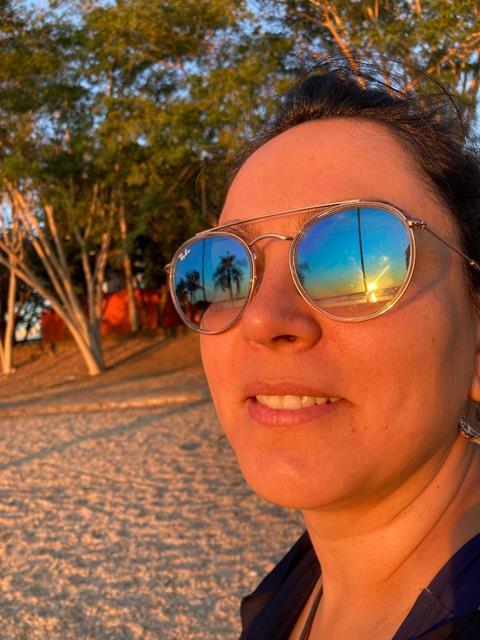
We caught up with Verônica Ortiz Alvarenga, a food engineer and Professor at Universidade Federal de Minas Gerais in Brazil, who is one of the newest Junior Editors with Letters in Applied Microbiology.

I am a Food Engineer with a Master’s and Ph.D. in Food Science, with a strong emphasis on food microbiology. I am currently a Professor at Universidade Federal de Minas Gerais in Brazil. My academic and research career is dedicated to applying mathematical modeling to better understand and assess microbial behavior in food systems, with a focus on generating data-driven insights to support food safety and quality.”
What drew you to become a Junior Editor for LAM and what excites you about the role?
What motivated me to apply for the Junior Editor position at LAM was the opportunity to be in direct contact with the state of the art in microbiology, closely following the most recent advances in the field, especially in food microbiology. In addition, I see this role as a way to actively contribute to the strengthening and evolution of food microbiology, especially regarding the scientific quality and relevance of published work.
What excites me most about the position is the opportunity to engage with innovative research and researchers from around the world, broaden perspectives, foster collaborations, and participate in a dynamic, global scientific environment. I also consider it especially important that LAM’s editorial space promotes and values diversity in science, encouraging the participation of researchers and professionals from diverse backgrounds, genders, and races, thereby contributing to a more inclusive, representative, and socially relevant scientific production.
What first sparked your interest in microbiology and how did your career develop?
My interest in microbiology arose from the possibility of using mathematical models to understand and predict microbial behavior. This interest was sparked when I attended a lecture on the application of predictive models. At that point, I realized that I could integrate concepts from engineering, my background, with microbiology. The lecture was given by the professor who would later become my master’s thesis advisor, making this experience even more significant for my career.
From then on, I began my journey in the field as an undergraduate research student in microbiology, followed by a master’s and doctoral degree, in which I deepened my training in predictive microbiology. I am currently a professor at a public university in Brazil, and conduct research focused on microbial behavior, with an emphasis on applying quantitative and modeling approaches in food microbiology.
What’s the microbe that most fascinates you and why?
Spore-forming microorganisms fascinate me the most. They stand out for their remarkable ability to survive and persist in extreme environmental conditions, thanks to the formation of highly resistant spores. Additionally, biological adaptation to challenges from an applied perspective is of great scientific interest.
In addition, I find it particularly interesting that these microorganisms are still, in many cases, little explored and studied, precisely because of the methodological difficulties they present in the laboratory, whether in their recovery, cultivation, or the precise evaluation of their behavior. This combination of practical relevance to the food industry and the scientific challenges involved makes the study of spore-forming organisms especially stimulating.
What real-world problem would you eventually love to solve with microbiology?
I want to contribute to a deeper understanding of the metabolic mechanisms of microorganisms involved in food spoilage, to develop more effective control strategies. I believe that integrating quantitative approaches and predictive microbiology can enable innovative solutions that improve food stability and safety.
This advancement would directly reduce food waste caused by microbial spoilage, contributing to more sustainable and efficient food systems.
How important do you think the role of applied microbiology could be in solving some of the world’s problems?
Applied microbiology plays a fundamental role in addressing global challenges, particularly in food security and sustainability. By integrating mathematical models as decision-support tools, it is possible to generate more robust evidence to guide practices in the food industry and public policies.
In addition, improving models’ predictive capacity enables the anticipation of microbial behavior across different scenarios, thereby reducing food spoilage and, consequently, waste. At the same time, these approaches are essential for mitigating risks associated with disease transmission, making food systems safer, more efficient, and more resilient.
What opportunities will this role bring for you?
This role has already provided me with good opportunities for professional and academic development. Among them, I highlight the possibility of participating more actively in scientific events, expanding my interaction with international researchers, and strengthening collaboration networks.
In addition, the role of Junior Editor allows me to deepen my knowledge of microbiology by providing direct access to cutting-edge research and to gain a more comprehensive understanding of the scientific editorial process, from the critical evaluation of manuscripts to the criteria that guide the publication of high-quality studies.
Is there anything else you would like to add?
I want to highlight that the Applied Microbiology International youth recruitment program is an extremely relevant initiative, as it offers diverse opportunities for training young researchers and significantly contributes to expanding knowledge and developing skills in microbiology. It is a very important opportunity to foster connections, encourage professional growth, and strengthen scientific activity in an international context.
Letters in Applied Microbiology is an inclusive and accessible journal that supports and develops the next generation of applied microbiologists. Find out about submitting your research HERE.





No comments yet