
All Research articles – Page 2
-
 News
NewsStudy links deprivation with risk of dying from sepsis
The most socioeconomically deprived groups in society are nearly twice as likely to die from sepsis within 30 days, researchers have found.
-
 News
NewsApplied Microbiology International welcomes UK return to Horizon Europe
Applied Microbiology International has welcomed the UK’s return to Horizon Europe under a new agreement with the EU.
-
 News
NewsResearchers reveal best ways to inactivate common cold viruses
A test of five surface disinfectants containing alcohol, aldehyde and hydrogen peroxide showed that all cleaning agents inactivated the virus effectively on surfaces.
-
-
 News
NewsStudy finds widespread side effects from commonly overprescribed antibiotics for patients
A major new study finds that overprescribing and inappropriate prescribing of antibiotics is not only leading to antibiotic resistance – but also causing significant patient harm.
-
 News
NewsCoastal ecosystem shows shifting bacterial extracellular hydrolytic systems
Scientists have found that a coastal ecosystem that experiences periodic phytoplankton blooms appears to have two distinct bacterial extracellular hydrolytic systems linked to shifts in bacterial community structure.
-
 News
NewsAMI young scientist turns spotlight on government science policy
Applied Microbiology International member Shamik Roy was among a group of young scientists and engineers who quizzed government representatives at the Voice of the Future event this week.
-
 Careers
Is there such a thing as a failed experiment?
Elisa shares some advice for those who may be disheartened by their experiments not quite going to plan.
-
 News
NewsHumps and bumps provide home for microbes jumpstarting soil formation in glacial moraine
Scientists have discovered how topographical irregularities in barren substrates exposed by a melting Himalayan glacier are driving the formation of a variety of pioneering microbial communities that will pave the way for soil formation.
-
 Features
The scent of infection: how smells can help us spot disease
The smell of freshly mown grass. The sweet aroma of roses. The tang of a rubbish bin on a hot summer’s day. Scents are part of the backdrop of everyday life – but research is hoping they could be used to detect diseases.
-
 News
NewsBreakthrough in protecting bananas from Panama disease
A study by scientists in Exeter has provided hope that Panama disease in bananas may be controlled by a specialised class of anti-fungal chemistries.
-
 News
NewsMushroom that grows on insects could help develop new anti-viral medications and cancer drugs
Scientists have discovered a way to grow Cordyceps fungus in the lab without losing the potency of its bioactive compound, cordycepin, which could potentially be developed into powerful new antiviral medications and cancer drugs.
-
 News
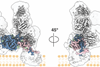
NewsScripps Research scientists map key protein structure of Hepatitis C virus
Scientists have mapped critical proteins that stud the surface of the Hepatitis C virus (HCV) and enable it to enter host cells.
-
 News
NewsCytoskeleton septins act as cell defence to block bacteria incursion
Researchers have identified a previously unknown, natural, defense mechanism that protects cells from Pseudomonas aeruginosa infection, as revealed in a study published in Cell Reports.
-
 News
NewsMellow yellow pigment keeps social amoebae clustering
The multicellular stage of the amoeba Dicyostelium discoideum is partially regulated by an intensely yellow natural substance, scientists have discovered.
-
 News
NewsSugar teams up with protein to help tardigrades survive drying out
University of Wyoming researchers have discovered how a sugar called trehalose works with proteins to allow tardigrades to survive a severe lack of water.
-
 News
News119-million-year-old selfish genes discovered in yeast
Scientists who discovered 119-million-year-old selfish genes in yeast say the find potentially alters our understanding of how parasitic DNA impacts genome evolution.
-
 News
NewsClimate change could make High Arctic fertile ground for emerging pandemics
Melting glaciers increase the risk of viral spillover, suggesting the impact of climate change could lead viruses to infect new hosts in the Arctic, according to researchers at the University of Ottawa who performed a novel genetic analysis.
-
 News
NewsMethane-eating ‘borgs’ have been assimilating earth’s microbes
Scientists have described the curious collection of genes in so-called borgs, DNA packages that could help humans fight climate change.
-
 News
NewsAttack on two fronts leads ocean bacteria to require carbon boost
The types of ocean bacteria known to absorb carbon dioxide from the air require more energy – in the form of carbon – and other resources when they’re simultaneously infected by viruses and face attack from nearby predators, new research has found.
- Previous Page
- Page1
- Page2
- Page3
- Next Page