
All Soil & Plant Science articles – Page 21
-
 News
NewsEnvironmental antibiotic resistance unevenly addressed despite growing global risk, study finds
Antibiotic resistance in the environment is a growing and largely overlooked crisis receiving inconsistent attention, according to a new study. Worryingly few studies have explored how antibiotic resistance spreads in the air, oceans or green spaces.
-
 News
NewsAP2-domain transcription factor WRI5a-regulated MtABCB1 promotes arbuscule development in mycorrhizal symbiosis
A new study of arbuscular mycorrhizal (AM) symbiosis suggests that the MtABCB1 gene likely influences arbuscule development by modulating the distribution and homeostasis of auxin within symbiotic cells.
-
 News
NewsStudy unearths rich rhizodeposits data for better bioenergy crops
Scientists conducted a meticulous analysis of the compounds released by plant roots into their surrounding environment. The analysis yielded an abundance of data that can guide research aiming to improve the way we grow energy and food crops.
-
 News
NewsAssisted by sniffer dogs and DNA sequencing, researchers discover three new truffle species
Biologists studying fungal evolution and ecology have discovered three new truffle species, including one capable of commanding hundreds of dollars per pound within culinary circles.
-
 News
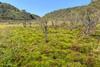
NewsNew research reveals ancient alliance between woody plants and microbes has potential to protect precious peatlands
New research shows that during historic periods of drying the growth of woody plants in a subtropical Chinese peatland improved the quality of organic matter and suppressed decomposing microbial activity.
-
 News
NewsJames Hutton Limited to open lab capable of analysing anaerobic digestate
New plans to open a lab capable of analysing anaerobic digestate have been announced by James Hutton Limited, the commercial wing of The James Hutton Institute.
-
 Careers
Meet the Global Ambassadors: our Q&A with Durgesh Kumar Jaiswal
The Microbiologist gets to know our Global Ambassador for India, Dr. Durgesh Kumar Jaiswal, who is Assistant Professor at the Department of Biosciences, Graphic Era University, Dehradun, specializing in microbial biotechnology and sustainable agriculture.
-
 News
NewsMicrobial map reveals countless hidden connections between our food, health, and planet
A new map of ‘agri-food system microbiomes’ reveals how players at every stage of the food system can restore and protect dwindling microbiomes to help boost human and planetary health.
-
 News
NewsTurning biodiversity upside down: Conservation maps miss fungal hotspots by focusing on plants
For decades, scientists and conservationists have been using aboveground plant biodiversity as a metric for conserving ecosystems. Now a new study finds that there is a major mismatch between aboveground plant diversity and Earth’s underground fungal biodiversity.
-
 News
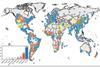
NewsStudy reveals how climate shapes fungal spore traits with applications for soil health
A new study reports on how global climate conditions affect arbuscular mycorrhizal fungal spore traits and the species biogeographic patterns. The study is the first to examine multiple traits of this kind on a global scale.
-
 News
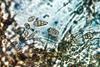
NewsHow fungus powers plant life in extreme environments
A new experiment suggests dark septate endophytes (DSEs) may be capable of linking the roots of neighboring plants to facilitate water sharing and boost their host’s biomass, and may even be keeping plant networks alive in drought-prone areas.
-
 News
NewsReviving 80-year-old fungi offers new clues for sustainable agriculture
Researchers who revived 80-year-old fungal pathogens from a museum collection found that these pre-Green Revolution strains differ significantly from modern ones, revealing how decades of pesticide use and intensive farming have reshaped plant pathogens.
-
 News
NewsFungal-bacterial crosstalk between Shiraia fungus and its fruiting body-associated bacterium via their metabolites
Scientists have uncovered a molecular interplay between the bambusicolous fungus Shiraia and its bacterial partners. When co-cultured without physical contact, bacterial volatile organic compounds (VOCs) of Rhodococcus sp. No. 3 boosted fungal production of HA by 3.86-fold.
-
 News
NewsStudy identifies gene clusters in rhizobia linked to robust legume growth
A new study identified clusters of rhizobial genes that appear to move rapidly through bacterial populations and drive greater plant biomass in host plants. Understanding the interplay of host and bacterial genomes will help to optimize plant growth by improving the rhizosphere.
-
 News
NewsNew study unlocks molecular defense against devastating potato pathogen
A team of plant scientists has made a significant breakthrough in understanding how potato plants defend themselves against a soilborne pathogen that causes powdery scab, an emerging and economically damaging disease affecting potato crops worldwide.
-
 News
NewsFungicides intended to suppress turfgrass diseases may damage fairways
Golf course managers have much more insight into which fungicides to use to suppress turfgrass diseases, such as the common and costly dollar spot disease, without damaging the grass on their fairways, thanks to a new study.
-
 News
NewsNew chlorophyll fluorescence imaging technique enables early detection of rice fungal diseases
A research team leverages chlorophyll fluorescence (ChlF) imaging, a cutting-edge technique, to identify reliable pre-symptomatic diagnostic indicators for rice blast and brown spot.
-
 News
NewsHow plants are learning to spot sneaky bacterial invaders
Scientists used artificial intelligence to help plants recognize a wider range of bacterial threats — which may lead to new ways to protect crops like tomatoes and potatoes from devastating diseases.
-
 News
NewsSmart bacteria could transform global agricultural food production
An interdisciplinary team are to receive almost half a million pounds to fund the development of a ‘smart bacterium’ that can dynamically reprogramme how crops respond to environmental stresses in real-time.
-
 News
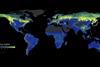
NewsUnderground Atlas: First global map of fungal biodiversity reveals 90% conservation gap
The Underground Atlas is the first digital map predicting Earth’s underground mycorrhizal fungal biodiversity. The work analyzed 2.8 billion DNA sequences from 130 countries revealing that over 90% of mycorrhizal biodiversity hotspots lie outside protected areas.