
All Taxonomy, Phylogeny, Function articles
-
 News
NewsNew class of fungi named after the King of Sweden
Researchers have discovered a completely new fungal species, which they chose to name after the King of Sweden. It is the first known representative of a new class of fungi that will be called Semicentenialomycetes.
-
 News
NewsPlant DNA harbours virus ‘fossils’ that reflect 300 million years of evolution
New research shows that Caulimoviridae viruses have infected an extremely wide range of vascular plant hosts, from lycophytes to flowering plants, revealing the existence of 35 previously undescribed taxonomic clusters in Caulimoviridae.
-
 News
NewsThe broader a fungus’s diet, the better it kills insects and helps plants
Entomologists have discovered that a single underlying trait—metabolic breadth, or the range of nutrients a fungus can use—links its ability to kill insects, partner with plants and thrive in different ecological roles.
-
 News
NewsPhylogenetic analysis reveals ten new species of Inocybe mushrooms
New taxonomic and phylogenetic investigation of Inocybe mushrooms reveals ten new species, one newly discovered in the Gaoligong Mountains, China.
-
 News
NewsOrdinary enzyme evolves into a ‘control switch’ revealing a new weak spot in tuberculosis
A protein that acts as a ‘control switch,’ preventing Mycobacterium tuberculosis from accessing the energy sources it needs to survive, has been identified by researchers. The discovery points to a specific vulnerability in the bacterium that could be targeted by new TB treatments.
-
 News
NewsCaught in the act: A gene jumps into the void
Self-splicing introns are a special group of jumping genes. It is more difficult for a gene to jump into another cell or another species. Until now, it had been assumed that, for this to happen, the jumping genes travelled as ‘hitchhiker’ in the genomes of plasmids or viruses, but researchers have made a surprising observation.
-
 News
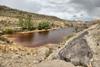
NewsNew biobank decodes survival secrets of extreme acid mine drainage microbes
Over 97 percent of microorganisms in acid mine drainage have never been cultured, leaving their metabolism and adaptation strategies locked as “microbial dark matter.” Now, a new culturomics‑driven resource called the Microbial Biobank of AMD (mbAMD) changes that.
-
 News
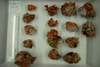
NewsScientists just found 4 new species of underwater ‘living pink rocks’ that help to store carbon
Rhodoliths may look like small rocks on the seafloor, but they’re actually living algae that create habitats for marine life and contribute to long-term carbon storage. The deeper ‘low-light’ waters off Japan’s Tanegashima Island harbor a surprisingly distinct and diverse community, including four species completely new to science.
-
 News
NewsWhat dental calculus can tell us about the oral microbiomes of ancient Japan
Microbe DNA from ancient dental calculus offers insights into the past oral microbiomes of the Japanese people, including the phylogeny of the periodontal disease-associated archaeon, Methanobrevibacter oralis.
-
 News
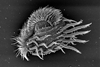
NewsResearcher discovers single-celled organism that transforms into cannibalistic supergiant
Researchers have discovered a microscopic organism that can transform into a cannibalistic ’supergiant’ that drastically changes size, shape, and behavior, and abandons filter-feeding to hunt and consume their genetically identical relatives.
-
 News
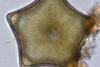
NewsRevealing the invisible: a new baseline for Salish sea diatoms answers a global call
Diatoms are powerful in driving roughly 20% of global photosynthesis and forming the very base of marine food webs. Scientists have published a new checklist of 924 diatom taxa alongside a curated dataset of 11,469 records, providing a long-needed foundation for environmental monitoring across the Salish Sea bioregion.
-
 News
NewsMicroscopic coils and coffee trees lead to an amazing new fungal discovery
A new study has revealed two novel species of Neohelicomyces fungi: Neohelicomyces coffeae and Neohelicomyces puerensis. While studying the fungi that live on Coffea arabica, researchers spotted these unique organisms growing on dead coffee branches.
-
 News
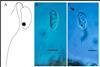
NewsSingle-cell sequencing reveals unexpected protist diversity
Scientists developing a single-cell sequencing pipeline have revealed previously unknown diversity from a group of free-living protists closely related to the parasites that cause sleeping sickness.
-
 News
NewsRecent pandemic viruses jumped to humans without prior adaptation, study finds
A large-scale evolutionary analysis shows most zoonotic viruses emerge without prior adaptation, while passing through a laboratory leaves detectable genetic signatures, offering a new tool to interpret outbreak origins.
-
 News
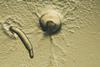
NewsA common CRISPR platform enables comparative studies of multicellularity in social amoebae
Researchers have established a CRISPR genome editing technique that enables comparative analysis of the evolution of multicellularity across different species of social amoebas (cellular slime molds). Until now, genetic studies had been largely restricted to a single model species.
-
 News
NewsMpox: recombinant virus with genomic elements of clades Ib and IIb
Recombination of monkeypox virus (MPXV) strains has been documented in recent months, with two cases of a recombinant strain comprising clade Ib and IIb MPXV reported, the World Health Organization says.
-
 News
NewsNew algorithm enhances microbiome biomarker discovery by integrating biological relationships
Researchers have developed a novel algorithm, Microbiome Elastic Feature Extraction (MEFE), that significantly improves the identification of microbiome biomarkers by incorporating phylogenetic, taxonomic, and functional relationships among microbes.
-
 News
NewsCultivated peanut AhPR10 gene family mediates resistance to Aspergillus flavus
Researchers identified and analyzed PR10 genes in cultivated peanut (Arachis hypogaea L.), and found three genes that demonstrated potential importance in peanut resistance to Aspergillus flavus.
-
 News
NewsAncient DNA pushes back record of treponemal disease-causing bacteria by 3,000 years
Scientists have recovered a genome of Treponema pallidum from 5,500-year-old human remains in Sabana de Bogotá, Colombia. The research expands knowledge about the history of this infectious disease and its occurrence in human populations.
-
 News
NewsJeremy Horowitz selected for The Oceanography Society Early Career Award
The Oceanography Society (TOS) has selected Dr. Jeremy Horowitz as a recipient of the TOS Early Career Award, recognizing his outstanding early-career research contributions, impact, and promise for continued achievement in oceanography, along with his strong record of mentorship, outreach, and collaborative science.