
All Taxonomy, Phylogeny, Function articles – Page 2
-
 News
NewsSmarter tools for peering into the microscopic world
In a pair of new studies, researchers introduce powerful tools that make it easier, more accurate and more scalable to figure out how microbes are related. One tool improves how scientists build microbial family trees. The other provides a software foundation used worldwide to analyze biological data.
-
 News
NewsResearchers confirm new rickettsia species found in dogs
Researchers have confirmed that a species of Rickettsia first seen in dogs in 2018 is a new species of bacteria. The new species is associated with symptoms similar to those of Rocky Mountain spotted fever (RMSF) in dogs, but has not yet been found in humans.
-
 News
NewsGroundbreaking technique unlocks secrets of bacterial shape-shifting
Scientists have long known that bacteria come in many shapes and sizes, but understanding what those differences mean has remained a major challenge, especially for species that can’t be grown in the lab. A groundbreaking method could change how researchers study bacterial diversity.
-
 News
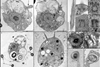
NewsClues to origins of complex life revealed with discovery of new unicellular organism and phylum
A new paper describes the discovery of Solarion arienae, a previously unknown unicellular organism that provides new insight into the earliest stages of complex life on Earth. This microscopic protist displays two distinct cell types and a unique predatory structure unlike any seen before.
-
 News
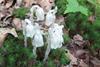
NewsScientists uncover global patterns and drivers of orchid mycorrhizal interactions
A global meta-analysis of orchid-fungal associations leads to a general conclusion: an orchid’s fungal community is driven more strongly by its ecophysiology and biogeography than by its phylogeny.
-
 News
NewsNovel fungal phyla and classes revealed by eDNA long reads
Via a thorough analysis of the EUKARYOME long-read database, an international team has discovered that a large proportion of unknown eukaryotes uncovered with long-read sequencing belong to deep, hitherto undescribed fungal lineages.
-
 News
NewsExperimental mapping of bacterial growth reveals evolutionary and ecological patterns
A research team has proposed a new approach to reveal ecological niches (positions within ecosystems) and evolutionary relationships in nature through large-scale growth analysis of bacteria in strictly regulated laboratory settings.
-
 News
NewsScientists reveal functional RNA splitting mechanism behind origin of Type V CRISPR systems
Researchers have uncovered the molecular innovation that led to the origin of Type V CRISPR-Cas immune systems. Their findings show that the functional splitting of transposon-derived RNAs was the critical innovation driving the emergence of Type V CRISPR-Cas immunity.
-
 News
NewsEarly challenges to the immune system disrupt oral health
Researchers identified changes over time in the oral microbiome of children living with HIV, offering insights into how early immune challenges shape not only oral health but also systemic health.
-
 News
NewsAssisted by sniffer dogs and DNA sequencing, researchers discover three new truffle species
Biologists studying fungal evolution and ecology have discovered three new truffle species, including one capable of commanding hundreds of dollars per pound within culinary circles.
-
 News
NewsTiny artificial cells can keep time, study finds
A team of researchers has shown that tiny artificial cells can accurately keep time, mimicking the daily rhythms found in living organisms like cyanobacteria. Their findings shed light on how biological clocks stay on schedule despite the inherent molecular noise inside cells.
-
 News
NewsGut morphology, not just diet or phylogeny, shapes mammalian gut microbiomes
Diet and evolutionary history have long been viewed as the main drivers of the mammalian gut microbiome. However, a new study offers the first systematic evidence that gut morphology significantly influences both the structure and function of gut microbial communities.
-
 News
NewsVersion 4 update to Human Oral Microbiome Database includes expanded whole-genome sequence info
A recent update to the Human Oral Microbiome Database (HOMD) database includes a greatly expanded set of whole-genome sequences, reflecting a significant advancement in taxonomy of bacterial species and the study of microbial states in disease and health.
-
 News
NewsScientists strive to place tens of thousands of previously unknown fungi in the evolution tree
Scientists have received a grant to systematise and describe members of the 95% majority of previously unclassified microscopic fungi, and other eukaryotic organisms not yet included in the current tree of life system.
-
 Features
Genome sleuths: using DNA to trace the evolution of animal-to-human pathogens
Zoonotic spillovers have become a significant focus of global health, with outbreaks like SARS and COVID-19 underscoring how quickly these events can escalate into worldwide crises. Genomics is crucial in tracing the origins and predicting the emergence of zoonotic threats.
-
 News
NewsResearchers pinpoint fungal hotspots of ‘dark taxa’ across Earth’s underground ecosystems
A new study finds that 83% of ectomycorrhizal fungi are known only by their DNA sequences that can’t be linked to named or described species, posing problems for conservation.
-
 News
NewsScientists report well-preserved fossil blue-stain fungus from the Jurassic
A research team has found well-preserved fossil fungal hyphae preserved within a Jurassic petrified wood from northeastern China, dating back 160 million years.
-
 News
NewsStudy resolves diatom tree of life - and could offer clues to Earth’s puzzle
A new study finds that diatoms evolved slowly for the first 100 million years of their existence. Then, 170 million years ago, they reached an inflection point characterized by a burst of rapid speciation orders of magnitude faster than anything that had preceded it.
-
 News
NewsTen new microfungal taxa and nine new species found in Tibet
Researchers conducting a microfungal survey in the Xizang Autonomous Region reported the discovery of ten new taxa and clarified the phylogenetic relationships of these fungi. They proposed one new genus, Neotriplosphaeria, and nine new species.
-
 News
NewsAncient remains reveal how a pathogen began to use lice – not ticks – to infect humans
Researchers have analysed ancient DNA from Borrelia recurrentis, a type of bacteria that causes relapsing fever, pinpointing when it evolved to spread through lice rather than ticks, and how it gained and lost genes in the process.