
All Waste Management articles
-
 News
NewsRecycling food waste would bring huge benefits, but microplastics a challenge
A first nationwide look shows diversion of U.S. food waste from landfills could reduce related climate impacts by 89% and nutrient pollution by 50%, researchers say.
-
 News
NewsLow carbon dioxide levels improve microbial production of biodegradable plastic
In an innovative gas fermentation process, reducing concentration of carbon dioxide was found to significantly improve microbial production of the biodegradable plastic, poly[(R)-3-hydroxybutyrate]. The study provides a promising strategy for sustainable carbon recycling and efficient CO2 utilization.
-
 News
NewsFood waste treatment can boost renewable energy, but a hidden brown byproduct may be holding it back
Researchers have identified a key chemical obstacle in turning food waste into renewable methane, offering a new semi-quantitative way to track melanoidins and showing that higher doses can severely damage the microbial system.
-
 News
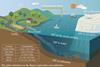
NewsArctic microplastics: A ticking time bomb for climate feedback loops
A new study systematically maps the major transport pathways—atmospheric, oceanic, and local—and details how microplastics infiltrate Arctic food webs and interact with physical and biogeochemical processes that govern regional climate.
-
 News
NewsWasted pumpkin peel can keep your food fresh
Researchers have turned agricultural by-products into a biodegradable food packaging material, offering a potential approach to both food loss and plastic pollution.
-
 News
NewsSoil bacteria reveal hidden arsenic stress in brick kilns
Researchers collected soils from a shut-down brick kiln area. As arsenic levels increased, bacterial richness and diversity declined, while arsenic-tolerant groups became more abundant. The study also found that bacteria strengthened stress-response pathways and upregulated arsenic-resistance genes.
-
 News
NewsTracking melanoidins to improve food-waste biogas recovery
Higher pretreatment temperatures in food-waste biogas recovery can promote Maillard reactions, generating melanoidins. A study shows that melanoidins increase with hydrothermal temperature and inhibit methane production by disrupting methanogenic microbial communities.
-
 News
NewsMicrobes frozen in ancient rubbish heaps help reconstruct ancient Greenlanders’ farms, seal hunts, and toilets
The microbiome of ancient middens in Greenland sheds new light on the daily life of Paleo-Inuit and old Norse communities. Researchers say the middens in the cold Arctic acted like long-term natural experiments, with human- and animal-associated bacterial signals remaining detectable many centuries later.
-
 News
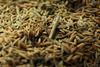
NewsRice husk biochar catalyst breaks down antibiotic pollutant in minutes
A new biochar supported cobalt oxide catalyst rapidly removes levofloxacin from water while revealing a key reaction mechanism for cleaner wastewater treatment.
-
 News
NewsBiochar’s hidden electron power could unlock cleaner pollution control and energy recovery
A new review highlights how biochar’s natural redox properties may help overcome key barriers to large-scale environmental applications.
-
 News
NewsIndigenous mushroom transforms agricultural waste into food
An edible, seasonal mushroom in Eastern Nigeria has nutritional and therapeutic potential but is poorly researched. New research suggests that domestication of Lentinus squarrosulus using waste materials, specifically sawdust, could boost food production and provide employment opportunities for farmers and small businesses.
-
 News
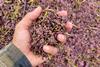
NewsWine’s leftovers could help wean chicken farms off antibiotics
Every year, millions of gallons of wine are pressed, leaving behind a mountain of pulpy residue that wineries struggle to dispose of. Now, researchers say this overlooked byproduct could serve as a replacement for the antibiotics routinely added to chicken feed.
-
 News
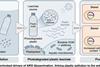
NewsSunlight and PVC pipes create a hidden driver of antibiotic resistance
New research shows that chemicals leaching from everyday PVC—especially after exposure to sunlight—can dramatically speed up the spread of resistance genes between bacteria. The effect was strongest at low to moderate concentrations, where the leachate triggered bacterial stress responses without killing the microbes.
-
 News
NewsSelf-renewing bacteria offer new hope for heavy metal cleanup
Scientists have revealed a powerful bacterial defense strategy against Cd toxicity. The team found that Stenotrophomonas sp. H225 sheds Cd-laden cell wall fragments and rebuilds new protective layers through a process involving the mtgA gene.
-
 News
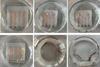
News‘Living plastic’ activates and self-destructs on command
Living plastics that self-destruct on command incorporate activatable, plastic-degrading microbes alongside the polymers. The latest study used two bacterial strains that worked together and completely broke down the material within just six days, without making microplastics.
-
 News
NewsHemp waste biocomposites offer a lower-carbon alternative for packaging and agricultural films
A new study explores how hemp hurd can be converted into microfiber-based biocomposites for packaging films and agricultural mulch films, and shows anaerobic digestion delivers the best environmental outcome for hemp hurd-based bioplastic systems.
-
 News
NewsCrab shell by-products could help regulate the marine lifetime of biodegradable plastics
Researchers show that crab shell by-products can reduce the breakdown rate of biodegradable plastics in seawater by altering the microbial communities that colonize their surfaces, known as the plastisphere.
-
 News
NewsCosmetics from waste? New microbial discovery could enable more sustainable production of high-value chemical products
Researchers have made a key discovery about how certain bacterial strains produce a set of economically valuable chemicals — opening the door to new, more sustainable production methods. A family of molecules could be made via bacterial fermentation instead of from palm oil, as they are today.
-
 News
NewsHot spring microbiomes could transform industrial CO2 waste into valuable products
Researchers found that microbiomes inhabiting terrestrial hot springs are naturally adapted to conditions that closely resemble industrial waste streams: high temperatures, elevated concentrations of CO2, and chemically challenging environments.
-
 News
NewsIs asphalt bad for our health? And can algae help?
Scientists studying how asphalt emissions impact respiratory health are also working on less toxic, lower-emitting asphalt formulations. One project involves growing a strain of algae that could reduce VOC emissions using wastewater from a treatment plant.