
Plastic production has expanded rapidly over recent decades, with global output reaching nearly 400 million metric tons in 2022. While plastics remain essential in packaging, agriculture, and daily consumer products, their dependence on petroleum feedstocks and the growing burden of plastic waste continue to create major environmental concerns.
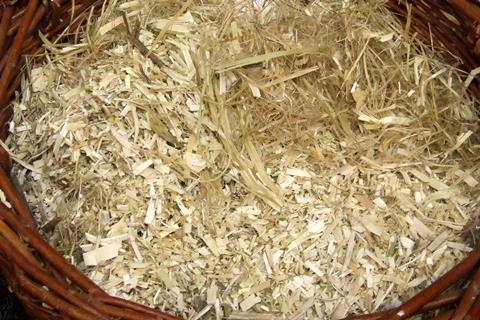
As industries search for more sustainable alternatives, plant-based biocomposites are receiving increasing attention. Among them, hemp has emerged as a promising candidate because of its low cost, biodegradability, and strong mechanical properties. However, much of the focus has traditionally been placed on hemp fibers, while hemp hurd—the inner woody core that makes up nearly half of the plant’s weight—is often treated as low-value waste or simply discarded.
A new study published in Journal of Bioresources and Bioproducts explores how hemp hurd can be converted into microfiber-based biocomposites for packaging films and agricultural mulch films, while also evaluating their full environmental performance through life cycle assessment (LCA).
The researchers produced hemp hurd microfibers through dry and wet milling followed by micro-fibrillation, and incorporated them into two prototype products: packaging films blended with polylactic acid (PLA) and mulch films blended with starch-based thermoplastic (TPS) and poly(butylene adipate-co-terephthalate) (PBAT). Mechanical testing showed that the addition of hemp microfiber improved performance, with tensile strength increasing by approximately 20% for packaging films and 33% for mulch films compared with reference materials.
End-of-life scenarios
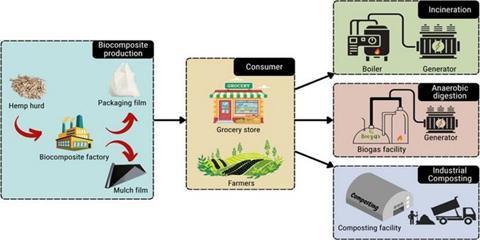
The environmental study was conducted using a cradle-to-grave approach covering hemp cultivation, microfiber production, film manufacturing, transportation, consumer use, and final disposal. Four end-of-life scenarios were compared for South Korea: incineration with power recovery, incineration without power recovery, industrial composting, and anaerobic digestion, using landfill as the reference scenario targeted for reduction under national waste policies.
The results showed that anaerobic digestion delivered the best environmental performance. This route generated the lowest global warming potential because the biogas produced during digestion could be converted into electricity, while the remaining digestate could be used as a soil conditioner. Compared with current waste management practices, anaerobic digestion mitigated approximately 6.1 kg of CO2 emissions for every 1 kg of mulch film treated.
Industrial composting
Industrial composting also performed better than incineration, but thermal treatments released significantly higher direct carbon emissions despite electricity recovery. Landfilling showed the worst environmental performance due to methane emissions and incomplete gas capture, reinforcing South Korea’s policy direction toward minimizing landfill use.
The study further found that increasing the proportion of hemp microfiber and incorporating more biopolyesters during manufacturing could enhance carbon savings even more, reducing up to 4.25 kg CO2 per 1 kg of mulch film in optimized formulations.
Another important finding involved the drying step during microfiber production. Oven drying showed a lower environmental impact than spray drying, mainly because spray drying required coal combustion and higher electricity demand. This indicates that processing choices during manufacturing can significantly affect the final carbon footprint of biocomposites.
Circular economy challenge
Beyond reducing emissions, the work also addresses a broader circular economy challenge: how to valorize agricultural residues without disrupting existing supply chains. By using hemp hurd rather than commercially valuable hemp fibers, the system improves resource efficiency while creating additional value from biomass waste.
The researchers conclude that hemp hurd-based biocomposites are not only technically viable alternatives to fossil-based plastics, but also environmentally competitive when combined with appropriate disposal strategies. As energy systems continue to decarbonize and biological waste treatment infrastructure expands, these materials may offer even greater benefits for sustainable packaging and agricultural applications.







No comments yet