
Fresh lettuce is a dietary staple valued for its nutritional benefits, but recent research highlights an often-overlooked food safety concern: contamination with extended-spectrum β-lactamase (ESBL)-producing Escherichia coli—antibiotic-resistant bacteria that pose significant public health risks.
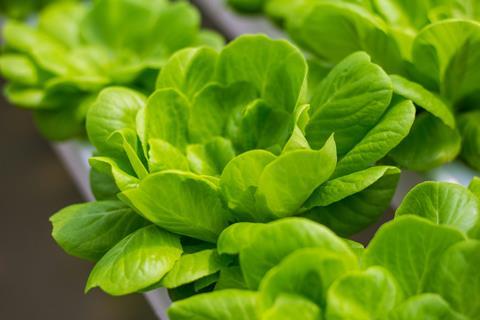
A comprehensive new study published in Science in One Health develops an integrated quantitative microbial risk assessment (QMRA) model to trace the pathway of ESBL-producing E. coli from broiler farms to lettuce consumption, quantifying human health risks and identifying effective intervention strategies.
From Farm to Fork: Mapping the Contamination Pathway
The research employs an innovative modular QMRA framework that integrates multiple exposure pathways: broiler litter management on farms, soil contamination, river water quality, and ultimately human consumption of irrigated lettuce. Rather than treating these stages in isolation, the model captures the interconnected nature of microbial transfer across agricultural and aquatic environments.
The study reveals that broiler litter can harbor substantial levels of ESBL-producing E. coli, and when this contaminated material is applied to farmland, the bacteria can persist and transfer to irrigation water. Through contaminated irrigation, lettuce becomes contaminated at levels ranging from 1.7 to 7.6 × 10⁻³ CFU/100 g—quantities that may seem minute but carry measurable health implications.
Quantifying Risk: From Exposure to Disease
Beyond simply measuring bacterial presence, the research quantifies the actual health burden to consumers. Analysis indicates that human exposure to ESBL-producing E. coli through contaminated lettuce could result in urinary tract infection (UTI) risk ranging from 4.6 × 10⁻¹² to 9.0 × 10⁻⁹ per serving. While these probabilities appear small, when aggregated across populations and expressed in disability-adjusted life years (DALYs)—a standard metric for disease burden—the potential impact ranges from 10⁻¹⁰ to 10⁻⁸ per serving.
The sensitivity analysis identifies critical factors influencing exposure variability, with soil-water partitioning coefficients and environmental decay rates emerging as dominant drivers. More importantly, the research quantifies the effectiveness of practical interventions:
Household Washing: Standard household washing of fresh produce reduces ESBL-producing E. coli exposure by approximately 90%—a simple yet highly effective measure.
Extended Manure Management Intervals: Lengthening the time between broiler litter application and lettuce planting significantly reduces human exposure and associated health risks.
Implications for Food Safety and Public Health
This integrated modeling approach provides a blueprint for evaluating antibiotic-resistant pathogen transmission through the agri-food system. The findings underscore that mitigation requires multiple interventions: careful manure treatment protocols, rigorous monitoring of irrigation water quality, and consumer practices like produce washing.
The research demonstrates that while environmental transfer of ESBL-producing E. coli presents a real challenge, the health burden can be substantially reduced through evidence-based interventions. As antibiotic resistance continues to emerge as a critical public health threat globally, understanding and managing these transmission pathways becomes increasingly vital for protecting food safety and human health.





No comments yet