
All Argentina articles
-
 News
NewsAndes volcanoes – the missing link between algae blooms, whales and climate millions of years ago
Record volcanic eruptions in the Andes could explain the mysterious death of dozens of whales about 5 to 8 million years ago, according to a study. A significant increase in volcanic activity in the Andes peaking between eight and four million years ago likely delivered a significant pulse of nutrients to the Southern Ocean.
-
 News
NewsH5N1 causes die-off of Antarctic skuas
More than 50 skuas in Antarctica died from the high pathogenicity avian influenza virus H5N1 in the summers of 2023 and 2024, marking the first documented die-off of wildlife from the virus on the continent.
-
 News
NewsAncient DNA pushes back record of treponemal disease-causing bacteria by 3,000 years
Scientists have recovered a genome of Treponema pallidum from 5,500-year-old human remains in Sabana de Bogotá, Colombia. The research expands knowledge about the history of this infectious disease and its occurrence in human populations.
-
 Careers
The Future is Fungi 2025: award-winner Michroma’s mission to harness fungi for clean food dyes and flavors
Winner of The Future is Fungi Award 2025, US and Argentina-based foodtech startup Michroma is replacing petrochemical coloring with fungibased natural ingredients, launching one of the world’s leading sustainable platforms for food flavors and colors. Here’s its story.
-
 News
NewsPathogens are the biggest threats at festivals and mass gatherings
A comprehensive review led by public health experts reveals that infectious disease outbreaks and foodborne illnesses are the most common public health threats at youth-focused mass gatherings, ranging from music festivals and cultural celebrations to sporting and religious gatherings.
-
 News
NewsUS- & Argentina startup Michroma wins €250k investment with The Future is Fungi Award 2025
A new frontier in biotechnology just crowned its next pioneer. Out of 187 groundbreaking startups from 59 countries, Michroma wins the The Future is Fungi Award 2025, taking home €250,000 / USD 289 000 in investment.
-
 News
NewsAvian flu halves South Georgia’s breeding elephant seal population
South Georgia’s breeding population of female southern elephant seals (Mirounga leonina) may have been halved by highly pathogenic avian influenza virus (HPAIV), finds new research. These losses may threaten the security of the island’s breeding population.
-
 News
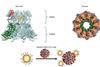
NewsProtein nanorings designed to detect and neutralize SARS-CoV2 virus
Scientists have generated a new ring-shaped protein nanomaterial capable of strongly binding to and neutralising the SARS-CoV2 virus. The new nanomaterial is formed by a scaffold based on recombinant ring-like proteins (RLPs), to which mini proteins were incorporated.
-
 News
NewsAMI joins forces with microbiology leaders to launch Global Climate Change Strategy
In a bold step toward climate action, leading microbiology societies and organizations have unveiled their first joint global strategy to harness the power of microbial science in addressing the climate crisis.
-
 News
NewsGlobal study: COVID-19 and adenoviral vaccines tied to GBS risk, not mRNA vaccines
A large-scale study in a population covering more than 230 million people sheds light on the relationship between Guillain-Barré syndrome after COVID-19 vaccines or SARS-CoV-2 infection.
-
 News
NewsUncovered: A long-lasting history of leprosy in the Americas
A new study challenges the view that leprosy is a disease that was introduced into the Americas during European colonization. A strain of leprosy-causing mycobacterium, Mycobacterium lepromatosis, infected humans in the Americas before European contact.
-
 News
NewsScientists win award for bringing breakthrough HIV treatment lenacapavir into play
Three people have been awarded the AAAS Mani L. Bhaumik Breakthrough of the Year Award for their work on the first HIV drug to offer long-lasting protection from infection — eliminating the need for people to take a daily pill.
-
 News
NewsResearchers test new, more reliable method to detect chagas disease
Researchers have successfully tested a faster, more sensitive and reliable way to diagnose Chagas disease, a debilitating parasitic illness that affects approximately 6 million people worldwide.
-
 News
NewsTecovirimat is safe but ineffective as treatment for clade II mpox
The antiviral drug tecovrimat used without other antivirals did not reduce the time to clinical resolution of clade II mpox lesions or improve pain control among adults in an international clinical trial.
-
 News
NewsNew method ‘fishes’ for bacterial STI DNA, revealing how Chlamydia spreads and adapts
Scientists have developed a cutting-edge “target enrichment” technology for bacterial STIs. Using specially designed molecular probes, they “fished” for bacterial STI DNA from clinical samples, enabling high-resolution genome analysis.
-
 News
NewsExeter launches second round of global funding to tackle antifungal drug resistance
A University of Exeter funding scheme designed to combat the global challenge of fungal antimicrobial resistance (fAMR) has announced a new call for applications.
-
 News
NewsCapybaras found dead from rabies on island in Brazil
The viral rabies strain found in the dead animals on Anchieta Island in Ubatuba was the variant transmitted by vampire bats, which probably fed on the capybaras’ blood at a time of habitat disturbance.
-
 News
NewsSyphilis had its roots in the Americas, archaeological bone reveals
New research supports a root in the Americas for syphilis and its known relatives, and their introduction to Europe starting in the late 15th century is most consistent with the data, scientists say.
-
 News
NewsRoyal Veterinary College awarded international grants to advance research into cattle vaccines
The Royal Veterinary College (RVC) has been awarded two pump-prime grants from the International Veterinary Vaccinology Network (IVVN) to advance crucial research into Bovine Babesiosis and Bovine Tuberculosis vaccines to support cattle welfare.
-
 News
NewsNew clinical study confirms the anti-obesity effects of kimchi
A clinical trial on the body fat-reducing effects of kimchi indicates that a steady consumption of kimchi is effective in alleviating obesity symptoms through the modulation of the gut microbiota.