
Winner of The Future is Fungi Award 2025, US and Argentina-based foodtech startup Michroma is replacing petrochemical coloring with fungibased natural ingredients, launching one of the world’s leading sustainable platforms for food flavors and colors. Here’s its story.
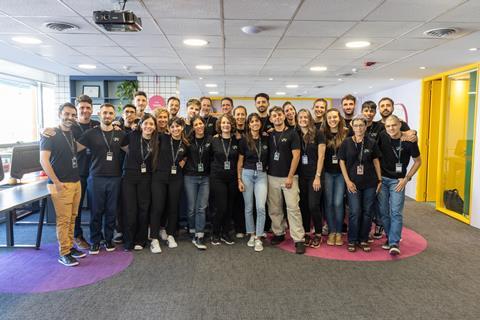
The company beat off competition from 186 groundbreaking startups from 59 countries to win the prestigious award, taking home €250,000 / USD 289 000 in investment.
The Future is Fungi Award, which is partnered with Applied Microbiology International, honors groundbreaking innovations using fungi to regenerate the planet, from circular materials and climate repair to next-gen biotech. It spotlights visionary solutions such as waste-based fungal composites, mycelium biomaterials and fungal technologies for carbon capture, energy storage and green chemistry.
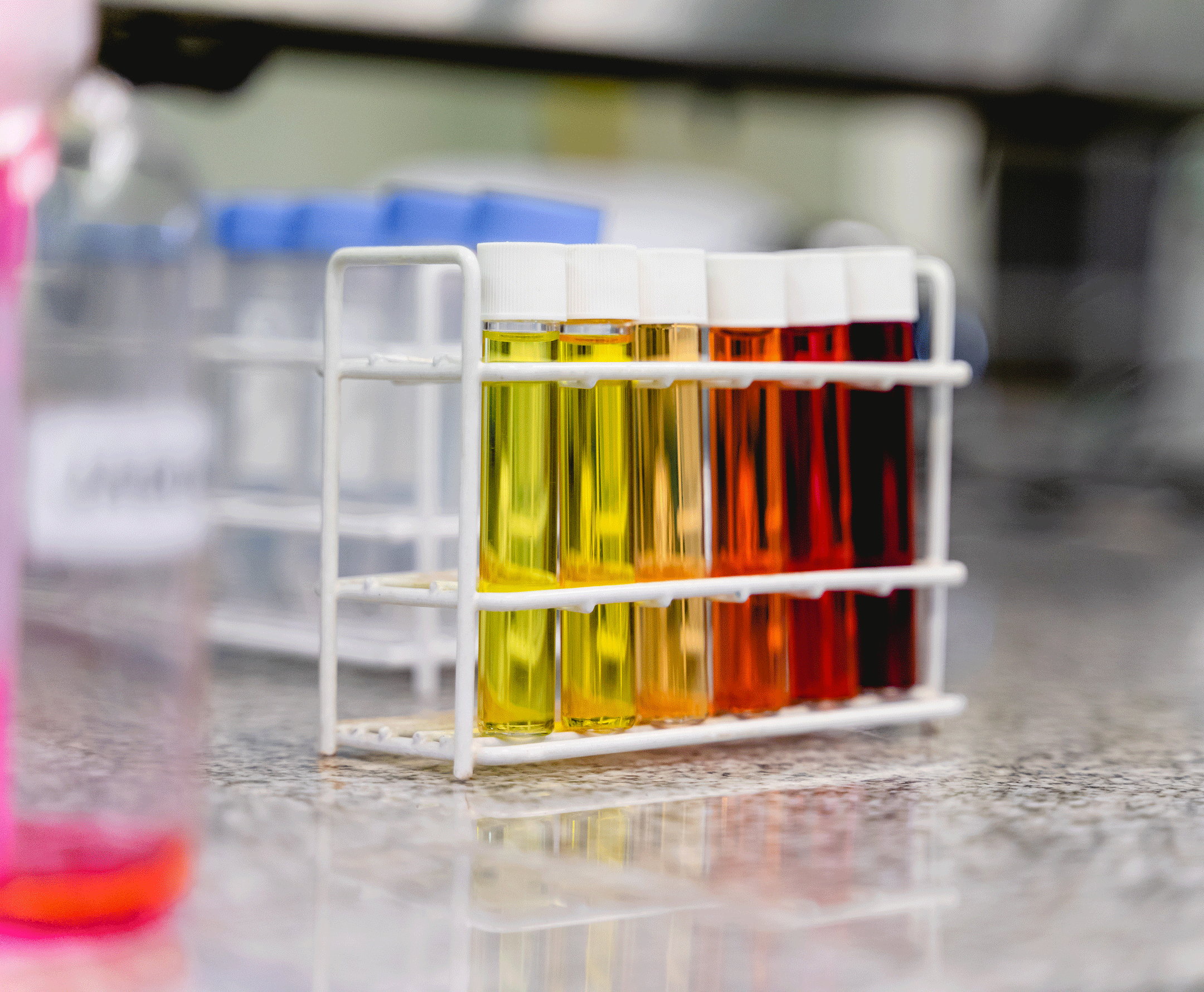
Michroma is a food-tech company specialized in synthetic biology and precision fermentation to produce natural and sustainable colorants from filamentous fungi. Its long-term vision is to replace conventional synthetic dyes with high-performance and environmentally friendly alternatives that meet the growing demand for clean-label ingredients in the food industry.
Away from synthetic dyes
“Synthetic dyes are ubiquitous in the food industry, yet many have been associated with potential health risks and significant environmental impact. At Michroma, we are driving the transition toward safer and more sustainable solutions by moving away from petroleum-derived dyes, resource-intensive plant extraction, and animal-based production systems,” says Carlos Lobertti from the Fermentation Team.
”To achieve this, we harness the remarkable biosynthetic capabilities of filamentous fungi, enabling the creation of high-performance natural colorants through a clean, scalable, and environmentally conscious process.”
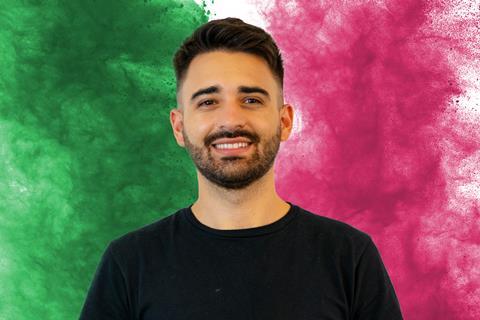
As part of the synthetic biology team, one of the most remarkable aspects has been witnessing firsthand the versatility and elegance of our fungal system, its ability to adapt to its environment and growth conditions with exceptional resilience,” says Julieta Carrillo of the Synthetic Biology Team.
True teacher
”It has been a true teacher, a reflection of nature’s wisdom and power. Building on the knowledge we have generated, we have not only deepened our understanding of its genetics but also engineered it with precision to achieve higher yields, helping us optimize the process toward a more sustainable production model.”
Wild-type microorganisms suitable for industrial biotechnology are limited, and relying on them without optimization often results in low yields and inefficient processes. But advances in science and engineering have made it possible to genetically and safely tailor microorganisms, allowing us to fully leverage their biosynthetic potential.
”With global demand for natural colorants expected to grow significantly in the coming years, developing high-performance, optimized biological systems is essential. At Michroma, we are integrating synthetic biology with precision fermentation to unlock the full capabilities of our filamentous fungus, enabling the sustainable and scalable production of next-generation natural dyes,” says Lobertti.
Exploring versatility
One surprising aspect has been the remarkable versatility of fungi, says Betina Carnevale of the Regulatory & Analytical Team: ”Exploring that richness is one of the most inspiring parts of this work. As we continue developing the technology, we keep uncovering new layers and possibilities, and it often feels as if the potential ahead of us is limitless. That sense of ongoing discovery is something I truly value every day.”
Lobertii adds: “Filamentous fungi amaze me every day. They are extraordinary biological machines with remarkable metabolic versatility and production potential. The more we learn to understand and work with them, the more opportunities we uncover to harness their capabilities and use them to build a better and more sustainable world.”
He says that in the shift from synthetic to natural dyes, one of the biggest challenges is achieving the production volumes required to meet customer demand: ”Scaling biological systems to industrial levels, while maintaining consistency, quality, and cost-effectiveness, is a complex process. Overcoming these hurdles is essential to ensure that natural colorants can compete head-to-head with synthetic alternatives in the global marketplace.”
Scaling it up
The crucial challenge is translating biology into robust, economically viable engineering, says Jimena Bulacio of the Product Development Team.
”While at lab scale we control every variable, the real test is maintaining that delicate biological balance at industrial volumes. Future work will focus on optimizing our fermentation and downstream processes to ensure that the high quality we achieve in the flask remains intact in the factory. It is about bridging the gap between a fascinating scientific discovery and a predictable, scalable industrial technology, while keeping costs marginal.”
Moving forward, we must acknowledge that synthetic dyes are no longer a viable long-term option and accelerate the transition toward safer and more sustainable alternatives, says Lobertii.
The way forward
”This shift should be supported by global policies that restrict or phase out the use of synthetic colorants. At the same time, continued scientific and technological progress is essential. Advancing precision fermentation and synthetic biology tools will deepen our understanding of filamentous fungi and enable us to fully unlock their biosynthetic potential. Only by combining regulatory change with scientific innovation can we scale sustainable color production and drive meaningful impact worldwide,” he says.
And his advice for other budding startups?
“Be bold in your mission to change the world for the better. Build solutions that create a positive impact and stay deeply convinced of the value of what you are doing. Set a clear goal and move forward with confidence that your approach can make a meaningful difference,” Lobertii says.
Surge in applications
The Future is Fungi Award honors both fungi startups and science entrepreneurs. This year’s startup award saw an acceleration in applications, 40% more than the first award. Applications from Europe are leading the way (37%), followed by North America which has seen strong growth since the first award, but all regions in the world were represented in the award.
The jury consisted of leading biotech investors such as MITs investment arm The Engine and European Circular Bioeconomy Fund, and scientists from both Wyss Institute for Biologically Inspired Engineering and Harvard.
”We’re witnessing a global awakening around fungi’s potential to power a new industrial revolution, one designed by nature itself. Startups like Michroma are creating the future of industrial biofactories replacing petrochemicals in food, by redefining the healthy quality of everyday ingredients,” says Susanne Gløersen, founding CEO of The Future is Fungi Award.
”This award exists to support the boldest visionaries turning fungal science into systemic change. Fungi are nature’s original engineers. We’re simply giving them the platform they deserve.”
Find out more
The Science Entrepreneur Award opens on February 2. The award for aspiring science entrepreneurs ready to bring their innovation from idea and to commercialisation can apply to the next award, opening February 2. The top 5 scientists will get access to a 3-month venture builder programme learning to build a startup, the winner gets an Award Investment, and they all get access to a deep expert network of corporates of corporates and startup experts, and off course get into the Fungal Hall of Fame. You can read more about the award here: www.futureisfungi.org.
You can also follow the award on LinkedIn as they reveal more about the winning innovations and other award updates: https://www.linkedin.com/company/the-future-is-fungi-award/ .
And follow The Future is Fungi Podcast, where award founder Susanne Gløersen interviews pioneering fungal innovators and scientists, including the award winners: https://podcast.futureisfungi.org/





No comments yet