
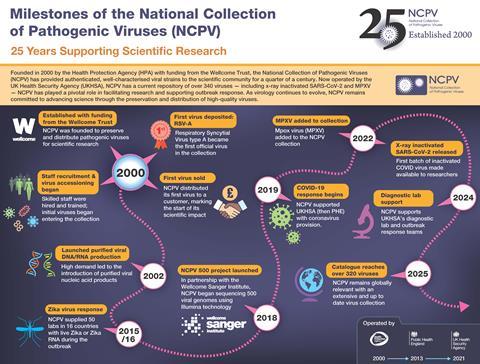
It’s now 25 years since the National Collection of Pathogenic Viruses (NCPV) was founded as a dedicated, secure, and relevant national virus repository for the UK. Jane Burton, Teresa Ramalho and Tilly Maybery explore how the collection has evolved - and is tackling future global health concerns.
The National Collection of Pathogenic Viruses (NCPV), established in 2000, has become an essential part of the UK’s scientific and public health infrastructure. Created with support from the Wellcome Trust, it addresses a clear and pressing need for a dedicated, secure, and relevant national virus repository. When granting initial funding to the NCPV, The Wellcome Trust acknowledged that NCPV would “represent a unique resource for the academic research community.”
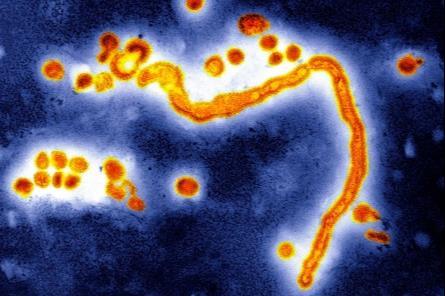
The NCPV is one of four UK Health Security Agency (UKHSA) Culture Collections. Alongside the European Collection of Authenticated Cell Cultures (ECACC), the National Collection of Type Cultures (NCTC), and the National Collection of Pathogenic Fungi (NCPF), NCPV exemplifies the power of public collections to support cutting-edge science, inform policy, and protect public health.
A strategic beginning
Initially operated within the Health Protection Agency and now managed by the UK Health Security Agency (UKHSA), the NCPV is based at Porton Down, home to some of the UK’s most advanced facilities for infectious disease research.
The NCPV holds a diverse range of high quality human pathogenic viruses and animal viruses of veterinary importance, classified as ACDP hazard group 2 and 3 and SAPO 2 and 3.

Each virus bank is authenticated, sterility and viability tested and distributed with a Certificate of Analysis. Access to viruses is strictly regulated to ensure safe handling under appropriate containment levels.
A growing and evolving catalogue
Today, the collection includes over 340 unique virus strains from 19 virus families. These range from globally important pathogens such as SARS-CoV-2, influenza and measles to historical and seasonal strains, including early isolates of Zika virus and common human seasonal coronaviruses like OC43 and 229E.
Viruses are supplied in a live frozen format; a select few are also available in an X-ray irradiated format. X-ray inactivated viruses retain their structural integrity and antigenic features whilst eliminating infectivity by disrupting the viral nucleic acid, preventing replication.
This allows researchers to handle irradiated hazard group 3 viruses at a lower containment level, improving accessibility and simplifying transport. X-ray inactivated SARS-CoV-2 and Mpox virus are currently available within NCPV’s collection. Plans to provide further irradiated products are in development.
Responding to global crises
Throughout its history, NCPV has proved its value during public health emergencies. During the 2015–2016 Zika virus outbreak, NCPV already held Zika strains within its collections and was able to quickly supply both historical and recent Zika isolates, complete with genomic data, to over 50 laboratories in 16 countries. This rapid sharing of resources played a critical role in diagnostic development and epidemiological studies.

Similarly, during the COVID-19 pandemic, NCPV distributed SARS-CoV-2 strains to research institutions and contributed to the understanding of cross-reactivity by supplying related coronaviruses. This proved invaluable in developing specific diagnostic tools and understanding virus evolution and diversity.
NCPV’s role in tackling ongoing global health concerns has been illustrated with its contributions to the Chikungunya virus (CHIKV) outbreak prevention. As early as 2007, researchers were using NCPV virus to develop diagnostics, including real-time RT-qPCR assays. More recently, in response to rising concerns from the WHO about CHIKV outbreaks, researchers have used NCPV authenticated virus strains and reagents to support vaccine and antibody development.
Beyond supply: supporting scientific progress
NCPV’s catalogue supports diverse research initiatives, from diagnostics and therapeutics to vaccine development, basic virology and evolutionary studies. The inclusion of historical strains means scientists can explore long-term viral changes, study re-emerging threats, and compare lineages over time.
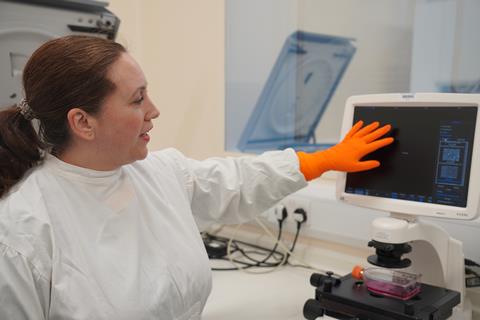
The collection also facilitates international collaboration and research continuity by offering a depositing service. Researchers can safely store their strains with optional embargo periods, ensuring availability for future work while protecting intellectual property.
Depositing with NCPV is free and, once accessioned, strains are independently authenticated. Inclusion in the NCPV catalogue increases visibility and accessibility to the wider scientific community.
The road ahead
Now in its third decade, NCPV continues to evolve. Future goals include incorporating more underrepresented virus families and strengthening its global role in outbreak preparedness.
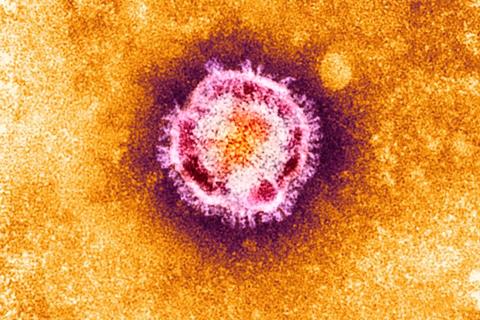
Past pandemics have shown how viral threats can emerge unpredictably. The continued development and accessibility of NCPV, a UK trusted biological repository, will remain a cornerstone of global scientific preparedness.
The authors are NCPV Lead Jane Burton, NCPV Virologist Teresa Ramalho and NCPV Scientist Tilly Maybery. To find out more, visit NCPV | Culture Collections.
Topics
- 229E
- Be inspired
- Chikungunya virus
- COVID-19
- culture collections
- Disease X
- Infection Prevention & Control
- Infectious Disease
- influenza
- measles
- mpox virus
- National Collection of Pathogenic Viruses
- OC43
- One Health
- SARS-CoV-2
- UK & Rest of Europe
- UK Health Security Agency
- Viruses
- Wellcome Trust
- X-ray irradiated format
- Zika Virus




No comments yet