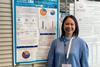
Shan Goh from the University of Hertfordshire reports back on the International Symposium on the Epidemiology and Control of Biological, Chemical and Physical Hazards in Pigs and Pork held in Rennes, France, in October. Shan was supported with a Scientific Event Travel Grant awarded by AMI.
Day one: 6th October 2025
The first day started with a workshop on Microbiome and Metabolome. There were six talks ranging from the relationship between pig genetics and microbiome, to bacterial communities of pig abattoirs.

Two talks were particularly interesting and relevant for me: “Microbiome and Salmonella dynamics in pork trim meat and contact surfaces in a commercial pork processing facility” by Dr Noelle Noyes, University of Minnesota, USA, found there was low correlation between the microbiome of meat and the abattoir surfaces that were sampled. This supports the argument for focusing efforts of eliminating Salmonella contamination at the abattoir, rather than on-farm.
I attended a food safety event recently organised by AHDB, which was attended by pork producers and there was debate over where to focus efforts in controlling Salmonella. Initially I felt it made sense to control Salmonella at the source (i.e. on farm) but I am now convinced controlling it in abattoirs would be more effective.
The other talk, “Impact of pooling individual pig faeces or DNA extracts on the quality of microbiota analyses” by Dr Guillaume Reboul, ANSES, France, showed there was no significant difference in pooling faeces or pooling faecal DNA from abattoirs for metagenomics. This is very helpful for designing metagenomics studies because it offers cost savings and higher throughput for studies with a large number of samples.
The workshop ended with a quiz and discussion on metagenomics, in which I participated and asked panel members their opinions on faecal sample storage methods for different purposes, and how controls in metagenomics should be used. I learned that bioinformatics pipelines for sequence analyses should not be standardised (because they must be tailored to the purposes of the project) and that the choice of reference database for taxonomic assignment is very important.
The main conference started in the afternoon with session 1 on “Foodborne pathogens contamination of pigs and meat”. There were six talks on meat hygiene, hepatitis E virus, Salmonella and Listeria monocytogenes.
The most interesting talk was about low-cost interventions to improve meat hygiene in abattoirs in Vietnam, by Dr Sinh Dang-Xuan, ILRI, Vietnam - focused on educating abattoir workers about meat hygiene and introducing incentives to change existing behaviour and practices. Some of it worked, but the sustainability of the incentives came into question.
Session 2 on “Hygiene practices, control and prevention” had seven talks. Dr Miranda Poulson from AHDB presented a study on farmer attitudes towards biosecurity and food safety, which I was involved in. The talk was excellent and easily the best of the session. There were 65 posters on display, mine included (Figure 1).
I chatted to two people about my poster on the prevalence of Clostridioides difficile on UK pig farms - they were surprised by the high prevalence and the antimicrobial resistance phenotype of some isolates. There were two posters on phages used to control MRSA infections on farms, I was pleased to see.

The conference finished with a drinks reception, canapes, and traditional Brittany dancing. I met an ex-colleague from Royal Veterinary College, who is now working at WOAH on economics of AMR in animal health. I also got to know Dr Sinh Dang-Xuan from ILRI (Figure 2), and we discussed the use of phage therapy to control AMR in pigs – this is an area I work on and hope to find new collaborators to apply for funding.
Day two: 7th October 2025
The second day offered session 3 “Food safety and meat inspection”, session 4 “Use of antimicrobials, biocides, metal, resistance and residues”, session 5 ‘Risk mitigation in the pork value chain’, session 6 ‘Foodborne pathogens and one health perspectives’.
The highlight of session 3 was a talk on remote meat inspection by Dr Ingrid Medin, Department of Food Control, Sweden. An initiative on mobile phone video-based remote meat inspection was found to have good correlation with in-person meat inspection results. If adopted elsewhere, this could increase the efficiency and traceability of meat inspections in Europe.
The highlight of session 4 was a talk on heavy metal and antibiotic resistance in Salmonella by Nelly Peracchia, INRAE, France, reporting the detection of antimicrobial resistance genes against aminoglycosides, penicillin, tetracyclines, and sulfonamides in Salmonella, with only a handful of isolates carrying mcr conferring resistance to colistin, mostly found in the accessory genome.
Heavy-metal resistance genes, however, were mostly found on the core genome, although some were also present on the accessory genome. This suggests horizontal gene transfer is important in the dissemination of antimicrobial resistance genes in response to antimicrobial use, and that reducing the selective pressure is more likely to result in a loss of such accessory genes compared to heavy metal resistance genes.
The highlight of session 5 was a talk on biosecurity throughout the entire value chain by Dr Tim Nelson, Farm Health Guardian, Canada. This company offers digital biosecurity products that enable real-time monitoring of vehicle movements, which are major risk factors in biosecurity control, to manage biosecurity on farm. It is impressive but I think it must be costly to adopt this system, and it would work well only if all farms and their partners were part of the system.

The highlight of session 6 was manure treatment and food safety risk by Jean Lagarde, ANSES, France. They found Listeria monocytogenes were present at different stages of manure treatment and factors responsible for survival of particular bacterial clonal complexes could be due to prophages, but this was still being investigated.
This finding is of great interest to me because my current project on C. difficile prevalence on farm leads me to think the bacterial spores survive in the manure and present a food safety and public health risk. This would be worthy of investigation.
In the evening, we attended the gala dinner in Rennes city centre. It was a great opportunity to network with researchers from USA, Ireland, Germany, and Denmark whom I had met at today’s coffee breaks and poster viewing. It was also invaluable for strengthening existing relationships with my UK collaborators from APHA and AHDB.
Day three: 8th October
Today’s keynote speaker was my favourite of all the keynote speakers. Prof Caroline Duchaine from University of Laval presented very interesting findings on microbial diversity in bioaerosols from pig farms, including the detection of C. difficile, MRSA, and phages, all which I work on.
Some of her current projects are based on similar ideas I have (e.g. antimicrobial resistance genes in bioaerosols), and I would like to find a way to work with her.
Session 7 on “Artificial Intelligence, machine learning and food safety” offered talks on developing optical software, mostly for meat inspection. Such technology should reduce variation in reports and increase throughput of meat inspectors.
Session 8 on “Use of antimicrobials, biocides, metal, resistance and residues” had really interesting talks - the highlight was a talk on antimicrobial resistance genes (ARGs) in swine manure treatment by Dr Franciele Maboni Siqueira, LaBacVet, Brazil.
Manure and soil from a large number of pig farms were analysed for ARGs and surprisingly, ARGs found in manure were distinct from soil even if manure had been spread onto the soil. Also two different manure treatment methods yielded similar ARG composition, but one method removed more ARGs (in quantity) than the other. However, fertilised soil did share some ARGs with manure used as fertiliser. I have been planning to investigate manure from pig farms in the UK, hence this study is invaluable for developing a project that addresses gaps in knowledge.
The conference ended with organisers of the next conferences in 2027 and 2029 presenting their plans. This is the first time I have attended a Safepork conference, and I am very glad of the experience. It surpassed my expectations in terms of the breadth of topics and the depth of knowledge around pig health and pork safety.
Denmark is remarkable in leading initiatives that are well designed and executed, and they deserve to be an example to other countries, including the UK. The research community is very supportive and close-knit. I plan to attend again in 2027, hopefully with more data to present from my research project on UK pigs.
Find out more about AMI’s grants.
Topics
- Agriculture
- AMR in the Environment
- Antimicrobial Resistance
- Applied Microbiology International
- Bacteria
- Be inspired
- Clostridioides difficile
- Community
- Early Career Research
- Food Security
- Healthy Land
- hepatitis E virus
- Infection Prevention & Control
- Infectious Disease
- Listeria monocytogenes
- One Health
- People News
- pork production
- Salmonella
- Scientific Event Travel Grant
- Shan Goh
- Soil & Plant Science
- UK & Rest of Europe
- University of Hertfordshire
- Veterinary Medicine & Zoonoses
No comments yet