
All Bacteria articles – Page 33
-
 News
NewsDiisobutyl phthalate at environmental concentration promotes conjugative transfer of antibiotic resistance genes
Researchers investigating the ecological safety risks posed by dibutyl phthalate (DBP), in aquatic environments found it significantly increased conjugative transfer frequency in both intragenus (E. coli DH5α to E. coli HB101) and intergenus (E. coli DH5α to B. subtilis WB100N) systems.
-
 News
NewsBig and small dogs both impact indoor air quality - just differently
An initial study reports that dogs — both big and small — impact indoor air quality. The researchers found that small active dogs produced more airborne particles, but larger animals released more microbes into the air than people did.
-
 News
NewsLife forms can planet hop on asteroid debris – and survive
The extremophile bacterium Deinococcus radiodurans can survive the pressures developed during ejection from Mars as a result of massive asteroid impact, a study shows. It means microorganisms can survive more extreme conditions than previously thought, including launch across space after major impacts.
-
 News
NewsTestosterone increases severity of bacterial skin infections
Men are more susceptible than women to skin infections caused by Staphylococcus aureus bacteria, but the biological basis for this disparity has remained unclear. A new study is the first to reveal testosterone, present at higher levels in males, as a key driver of infection.
-
 News
NewsUltrasound-activated ‘nanoagents’ kill superbugs hiding in biofilms
Scientists have designed nanoagents that act like smart drug‑delivery capsules – carrying an antibiotic deep into bacterial infection sites and releasing it only when activated by gentle ultrasound.
-
 News
News10 Years, 70% shift: Wastewater upgrades quietly transform river microbiomes
Researchers investigated how the upgrade of a WWTP influenced nitrogen-cycling microorganisms and DNA viruses in its receiving river. The research compared the river whose WWTP was upgraded during the study period against the river whose upgrade occurred prior to the study.
-
 News
NewsCell-free DNA offers early warning for bloodstream infections in kids with leukemia
Researchers show that microbial cell-free DNA sequencing can predict bloodstream infections in children with leukemia days before the symptoms appear. Plasma microbial cell-free DNA sequencing (mcfDNA-Seq) offer a potential approach to protecting vulnerable patients by allowing treatment to start before the patient gets sick.
-
 News
NewsAkkermansia muciniphila PROBIO therapy promotes arginine biosynthesis and reverses reproductive impairments in polycystic ovary syndrome rats
A research study investigated the therapeutic potential of Akkermansia muciniphila PROBIO (AP) in a dehydroepiandrosterone-induced PCOS rat model, revealing significant improvements in reproductive and metabolic parameters through modulation of gut microbiota and enhancement of arginine biosynthesis.
-
 News
NewsMicrobes unlock a hidden natural source of mercury emissions from ‘stable’ minerals
A new study reports a previously overlooked natural mechanism that could contribute substantially to global mercury emissions. Researchers show that chemolithoautotrophic microbes can use mercury sulfide nanominerals as an energy source and, in the process, release volatile Hg0 into the air.
-
 News
NewsScientists develop new gut health measure that tracks disease
Scientists have found that healthy and diseased digestive systems behave like two distinct ecological states, driven not by individual microbes but by how entire bacterial communities compete and cooperate.
-
 News
NewsNanoplastics can interact with Salmonella to affect food safety, study shows
Researchers investigating what happens when nanoplastics (polystyrene) interact with Salmonella discovered an increased expression of virulence-related genes. The bacteria also formed thicker biofilms, which indicates they are becoming more virulent.
-
 News
NewsBacterial cellulose as a sustainable vehicle for the controlled release of nisin and mandelic acid: A clean beauty-based approach for acne treatment
A new study developed a bacterial cellulose-based delivery system loaded with nisin and mandelic acid, targeting acne treatment. Bacterial cellulose, derived from Komagataebacter xylinus, served as a biocompatible, biodegradable matrix to control the release of bioactive compounds.
-
 News
NewsTrust your gut to heal your brain
Researchers have found that short-term antibiotic treatment significantly reduced neuroinflammation and neurodegeneration following traumatic brain injury (TBI) by altering the gut microbiome in animal models.
-
 News
NewsFe₃O₄@mPEG-Ag nanoparticles: a new frontier in combating antibiotic resistance
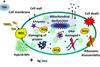
A collaborative study introduces Fe₃O₄@mPEG-Ag nanoparticles (NPs) as a groundbreaking non-antibiotic strategy to combat drug-resistant bacteria, offering the antibacterial properties of silver (Ag) with the stability and biocompatibility of magnetite (Fe₃O₄) modified by methoxy poly(ethylene glycol) (mPEG).
-
 News
NewsPeople’s gut bacteria worse in areas with higher social deprivation
Living in a poorer neighbourhood in the UK could impact the make-up of your gut microbiome, potentially leading to worse health. New research found that people living in areas of higher social deprivation have a less diverse range of bacteria in their gut.
-
 News
NewsScientists uncover mechanism used by three bacteria-killing viruses to target transporter
Biochemists have homed in on an underexplored small transporter called MurJ that is a vital part of the pathway bacteria use to build their chain-mail-like cell wall. Using advanced tools, the scientists have determined the common mechanism used by three different bacteria-killing viruses to block MurJ from doing its job.
-
 News
NewsScientists identify endangered natural pharmacy hidden in coral reefs
The magnitude of the potential loss of the “natural pharmacy” found in the coral microbiome is demonstrated by a new study which identified new microbial species in corals which have the ability to produce novel substances.
-
 News
NewsScientists uncover how engineered biochar and microbes work together to boost plant-based cleanup of cadmium-polluted soils
A new study reveals how specially modified biochar can significantly improve the ability of willow trees to remove toxic cadmium from contaminated soils, offering a promising strategy for restoring polluted land in a sustainable way.
-
 News
NewsEmerging class of antibiotics to tackle global tuberculosis crisis
Researchers investigated how three naturally occurring antibiotic compounds – ecumicin, ilamycin and cyclomarin – act on a vital protein degradation machine inside Mycobacterium tuberculosis, the bacterium that causes TB.
-
 News
NewsMeningococcal B vaccination does not reduce gonorrhoea, trial results show
Contrary to existing evidence from observational studies, the meningococcal B vaccine (4CMenB) has no effect on preventing the acquisition of gonorrhoea, according to the results of the world’s largest randomised control trial (RCT) into possible efficacy.