
All Bacteria articles – Page 91
-
 News
NewsTailored guidelines and reduced stigma needed to tackle leprosy, Irish case study reveals
A case report on an adult with an imported case of leprosy in Ireland shows that there are notable challenges in tackling the disease in settings where it is rare. The affected individual was one of five individuals with leprosy reported in Ireland in the past decade.
-
 News
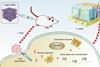
NewsNovel nanoreactor CU@G - AMPs: A promising solution for antibacterial therapy
A novel sustainable antibacterial therapy - an antibiotic-free complex, Cu@G-AMPs, has been developed by a team of Chinese scientists to combat drug-resistant bacteria such as MRSA.
-
 News
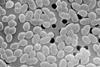
NewsV-161: A breakthrough in the fight against antibiotic-resistant VRE infections
Researchers from Japan have identified V-161, a compound that inhibits Enterococcus hirae V-ATPase activity, disrupting Na+ transport and effectively inhibiting VRE growth.
-
 Careers
Summer placement: Fleur uncovers the world of Cutibacterium acnes and biofilms
Fleur Thorogood (20), from Cheltenham, reveals what happened during her Applied Microbiology International-sponsored Summer Placement at Cardiff University investigating Cutibacterium acnes host adaptation with respect to biofilms.
-
 News
NewsNew study reveals how a ‘non-industrialized’ style diet can reduce risk of chronic disease
Researchers have found that a newly developed diet inspired by the eating habits of non-industrialised societies can significantly reduce the risk of a number of chronic diseases – and are to share recipes with the public. Source: UCC Jens Walter, a University College Cork Professor and a PI ...
-
 News
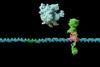
NewsCuriosity-driven experiment helps unravel antibiotic-resistance mystery
An international collaboration has achieved an important breakthrough in understanding the genetic mechanisms that allow bacteria to build resistance to drugs.
-
 News
NewsLooking to Kenya’s Lake Victoria for what may come for Lake Erie
Scientists conducted a genetic survey on cyanobacteria in the Winam Gulf of Kenya’s Lake Victoria, which serves as a model for the cyanobacterial harmful algal blooms (cyanHABs) in Lake Erie under the warming climate.
-
 News
NewsShip sliming study could enable lower costs and emissions in ocean transport
A model was recently developed to find out the correlation between the speed and extent of biofilm growth and the shear stress of the ship hull. Thus, it helps save fuel consumption by preventing fluid friction from slime fouling.
-
 News
NewsWhat microbes tell us about Nonalcoholic Fatty Liver Disease
Using medical data from more than 1,200 people, specific microbiome signatures have been identified that allow precise prediction of Nonalcoholic Fatty Liver Disease (NAFLD).
-
 News
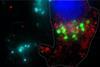
NewsResearch using non-toxic bacteria to fight high-mortality cancers prepares for clinical trials
A promising research study in treating high mortality late-stage cancers with a non-toxic bacterial therapy - BacID - has proven to be safe and more targeted. The newly developed treatment would undergo clinical trials with cancer patients in 2027.
-
 News
NewsSophisticated early warning system: How bacteria respond to threats
Recent research has found that exogenous petidoglycan fragments of Vibrio cholerae and other multidrug-resistant pathogens are able to trigger 3D biofilm formation as an universial danger response.
-
 News
NewsBacteria in polymers form cables that grow into living gels
Scientists have discovered that bacterial cells growing in a solution of polymers, such as mucus, form long cables that buckle and twist on each other, building a kind of “living Jell-O.”
-
 News
NewsExtreme rain heightens E. coli risks for communities of color in Texas
New research shows that communities of color in Texas face pronounced risks of E. coli exposure in nearby waters following storms that dump abnormally high amounts of rain.
-
 News
NewsMachinery behind bacterial nanowires discovered
Almost all living things breathe oxygen to eliminate the excess electrons produced when nutrients are converted into energy. However, most microbes that mitigate pollution and climate change don’t have access to oxygen. Instead, these bacteria—buried underground or living deep under oceans—have developed a way to eliminate electrons by “breathing minerals” ...
-
 News
NewsBioactive compounds with possible industrial applications are identified in extremophilic bacteria from the Andes
Researchers isolated a strain of Pseudomonas alcaligenes that can withstand temperatures as high as 44 °C from a hot spring in Chile, and characterized the substances produced by the bacterium that help it survive extreme conditions.
-
 News
NewsGene-edited soil bacteria could provide third source of nitrogen for corn production
If corn was ever jealous of soybean’s relationship with nitrogen-fixing bacteria, advancements in gene editing could one day even the playing field. A recent study from the University of Illinois Urbana-Champaign shows that gene-edited bacteria can supply the equivalent of 35 pounds of nitrogen from the air during early corn ...
-
 News
NewsOral cancer and microbiome: new insights into tumor growth mechanisms
A recent study has made significant strides in uncovering how the oral microbiome plays a crucial role in the progression of oral squamous cell carcinoma (OSCC), unveiling metabolic pathways and mechanisms that may serve as potential therapeutic targets.
-
 News
NewsStudy takes stock of the known and unknown microbial space
Using publicly available genome sequence data generated over the past three decades, a new study assesses what fraction of the microbial diversity we know about, and proposes a path forward to curate and cultivate what is still unknown.
-
 News
NewsReading the genome and understanding evolution: Symbioses and gene transfer in leaf beetles
A new study shows how repeated horizontal gene transfer and the establishment of symbioses with bacteria enabled leaf beetles to rapidly adapt to a plant-based diet, contributing to their remarkable evolutionary success.
-
 News
NewsIn the US Northeast, 50% of adult ticks carry Lyme disease carrying bacteria
A new study finds that 50% of adult blacklegged ticks in the US Northeast carry the bacteria that causes Lyme disease while 20% to 25% of the younger (nymph) blacklegged ticks carry the bacteria.